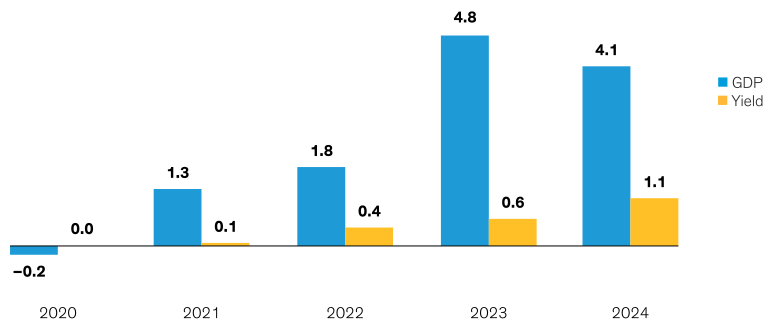
This is the first time in decades that Japan’s growth rate meaningfully exceeds its funding cost—a rare window that makes “responsible expansion” economically plausible. This isn’t a license for unchecked spending. But it does mean that Japan can use fiscal policy more actively without immediately undermining stability.
Implications for Investors
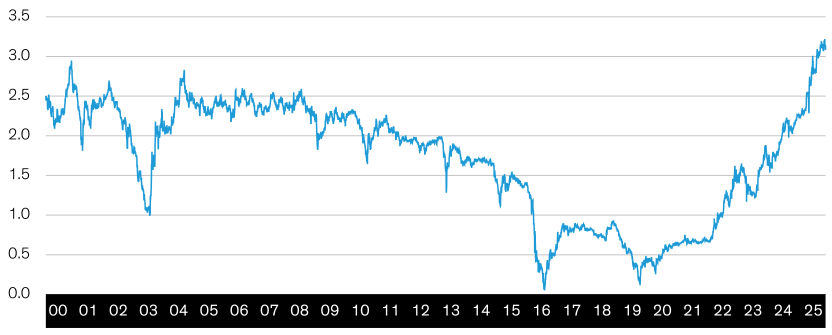
For bond investors, this shift has clear consequences. With the BoJ in a rate-hike phase and less present as a buyer, and with domestic life insurers’ appetite for very long duration fading faster than the Ministry of Finance is trimming issuance, upward pressure has centered on the long end: 30-year JGB yields are up nearly a full percentage point year to date.
The good news is that a steeper, more active JGB curve restores some of the yield and volatility that global investors have missed in Japan for years. For portfolios, that means renewed potential for diversification and relative-value opportunities along the curve.
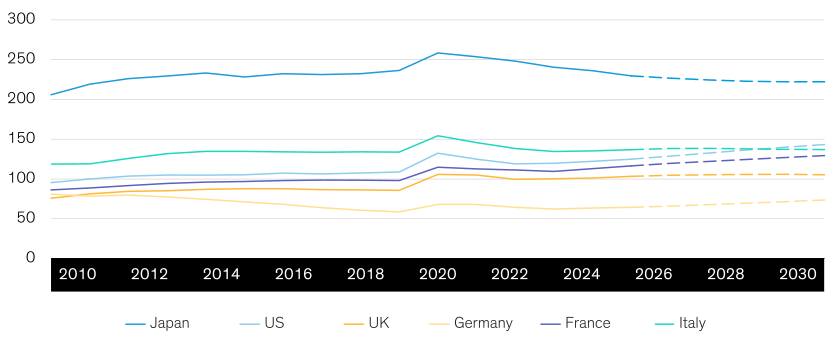
At the same time, Japan’s experience may influence how other developed economies think about fiscal sustainability. The underlying principle—that growth can coexist with moderate deficits when borrowing costs are low—echoes debates in Europe and the US about how to balance stimulus and debt reduction in a post-pandemic world.
What Could Derail the Strategy?
This strategy depends on a fragile equation: nominal growth staying above interest rates. A sharp BoJ tightening cycle or a global slowdown could easily reverse that balance. If growth falters or yields rise too quickly, Japan’s debt trajectory would tilt upward again.
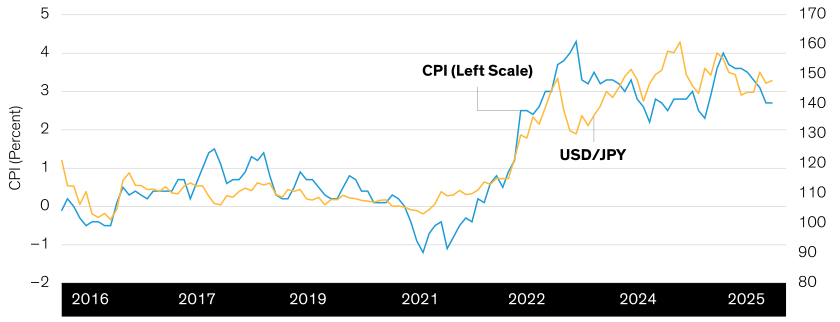
Still, today’s environment is far removed from the deflationary stagnation of past decades. Inflation expectations have stabilized, corporate balance sheets are healthier and wage growth—though modest—shows signs of life. In short, Japan has room to run, provided policymakers maintain credibility and avoid turning short-term stimulus into long-term habit.
A Delicate Balance
Japan’s fiscal reset represents more than a change in leadership. It’s a rethinking of how global growth, inflation and debt interact in a maturing economy. By embracing “responsible expansion,” Tokyo is betting that a little more fiscal flexibility will reinforce, not weaken, long-term stability.
For investors, this means that watching the spread between growth and yields—not just deficit headlines—will be key to understanding where Japan’s bond market, and perhaps the broader global rate environment, goes next.