

-
Past performance, historical and current analyses, and expectations do not guarantee future results.
What is a Defensive Trade Today?
Low Vol vs. Quality vs. Bonds vs. Gold
20 March 2025
3 min read
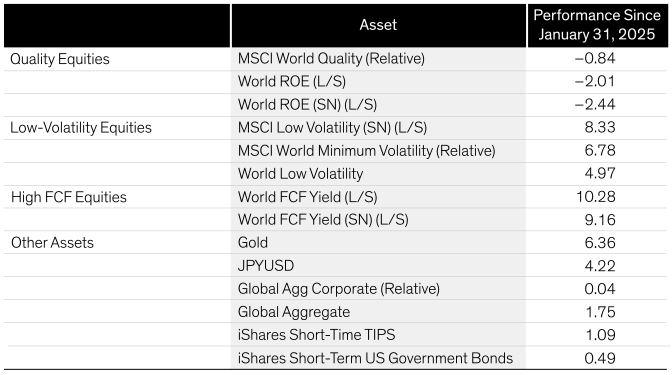
Display 1: Since the End of January, "Quality" Has Failed to Be Defensive
Past performance does not guarantee future results.
Returns are calculated on a total-return basis in USD. MSCI World Quality and Minimum Volatility factors are market-capitalization-weighted, and the performance is measured relative to the MSCI World index. The other quality, low-volatility and high free-cash-flow (FCF) yield factors are constructed by dividing the MSCI into quintiles based on a given factor (or a blend of factors for a “composite” style), and long-short (L/S) portfolios of stocks that are in the top and bottom quintiles, respectively, are formed. The stocks in these portfolios are equally weighted and portfolios are rebalanced quarterly. The sector-neutral (SN) factors are constructed in a way that ensures an equal representation of each sector in the factor portfolios. ROE denotes return on equity.
As of March 17, 2025
Source: Bloomberg, Factset, LSEG Datastream, MSCI and AllianceBernstein (AB)
-
The views expressed herein do not constitute research, investment advice or trade recommendations, do not necessarily represent the views of all AB portfolio-management teams and are subject to change over time.
About the Author