Efforts to reduce the central bank’s autonomy would likely disrupt markets.
Speculation has mounted in recent weeks that US President Donald Trump could fire or force out Federal Reserve Chair Jay Powell. Of course, swirling headlines are nothing new in politics, and we don’t know how likely this outcome really is. But efforts to reduce the Fed’s independence would likely affect asset prices, so investors should have a sense of how markets might react.
History Lessons from Central Bank Independence
The fundamental issue, in our view, isn’t the current Fed chair but the independence of the institution itself. The Federal Reserve Act of 1913 created the central bank to conduct monetary policy with no direct political or electoral oversight. Subsequent amendments have maintained the distinction between the Fed’s functions and the workings of the political system.
There’s a good body of evidence that independent central banks deliver better economic outcomes. In the 1970s, for example, the Fed cut rates at the behest of President Nixon, only to see inflation surge and stay high for the better part of a decade. In the 1980s, Paul Volcker reasserted the Fed’s independence and hiked rates sharply, beating inflation at the cost of recession. This choice would have been painful—or even impossible—for an entity under electoral or political oversight.
Historically, bouts of higher inflation have often emerged when central banks have bent to political influence. It’s not a surprise, then, most economists and analysts believe the Fed is best left to its business, even if the actions aren’t what elected leaders want. Essentially, independence empowers central banks to make unpopular decisions when they have to be made.
How Could Markets React to a Less-Autonomous Fed?
If steps are taken to reduce the Fed’s autonomy, what should investors expect from markets? We think the initial reaction would be a sharp steepening of the Treasury yield curve, with the gap between short-term and long-term Treasury yields widening.
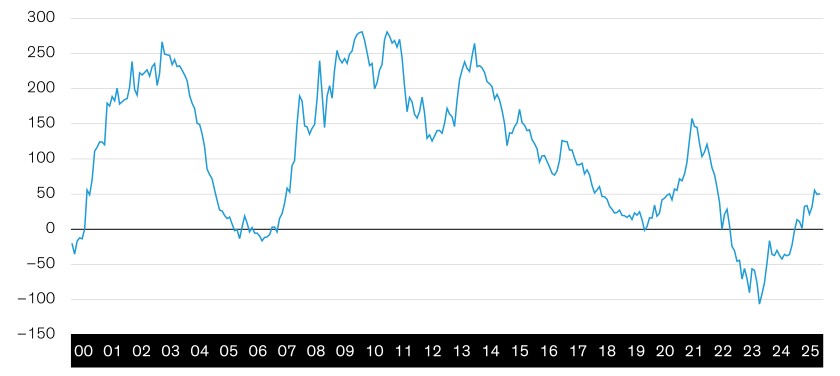
Short-term rates would likely fall, because the next Fed chair would probably favor rate cuts, in keeping with Trump’s aims. Long-term rates might behave differently—possibly even rising. If rate cuts were to happen quickly, inflation expectations would probably surge. Investors would respond by boosting the risk premium on longer-term Treasury bonds, which would lose value under higher inflation. The yield curve has already started to steepen, but has more room to run based on historical experience (Display).