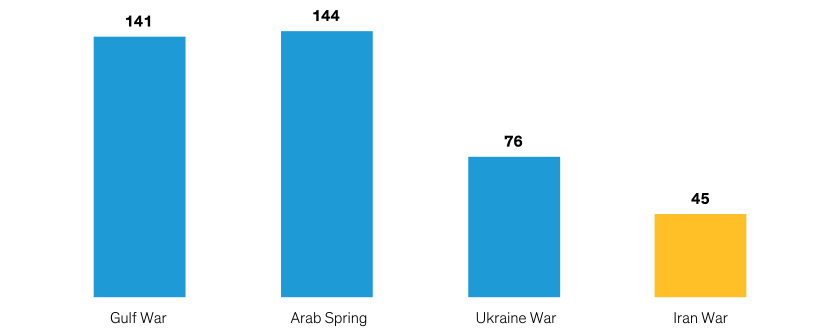
Pain at the Pump Can Spread to Broader Inflation
Drivers often feel the earliest impact of surging oil prices because gasoline prices follow oil upward almost immediately, boosting headline inflation. If the price shock lasts long enough, other prices start to rise, too, as businesses pass higher transportation costs on by way of higher prices on the goods they sell.
These “second round effects” tend to be stickier than gas prices. If oil prices come back down, gasoline prices will come back down too. But businesses are often slower to bring their prices down, if they do so at all, instead enjoying higher profit margins. That effect passes through to the core inflation rate—the rate central banks fret over.
Risk of Stagflation Makes Monetary-Policy Choices Tricky
So, central bankers should raise rates to rein in rising prices from a sustained oil-price shock, right? Not so fast, because there’s a complication. At the same time prices rise, economic growth slows. Consumers and businesses that spend more on energy spend less on other goods and services, and those effects are magnified as they ripple throughout the economy. Overall demand slows, and growth slows with it. That’s the “stagnation” in stagflation.
The answer to what central banks should do in these cases isn’t clear. It depends on the magnitude of the impact on both economic growth and inflation rates—something we won’t know for some time. That quandary suggests that the Federal Reserve is likely to stay on hold until it collects more information. We already didn’t expect a rate change in the near term (the Fed didn’t either), so as of now we don’t see any change to the policy path from the shock.
The same is true in other parts of the world. While Europeans are significant importers of both oil and natural gas from the Persian Gulf, the magnitude of the price shock isn’t yet enough to trigger alarm at the European Central Bank. We expect monetary policy to be patient there too. The one potential outlier is the UK, where the Bank of England seems closer to cutting rates than other major central banks are. It remains to be seen if the war will be sufficient to throw policymakers off course.
Asian economies are, by and large, major importers of oil products. China, however, has accumulated an oil stockpile that should enable it to manage the supply disruption for the time being. Still, emerging Asian economies are vulnerable—most don’t have the ability either to produce or to replace oil that typically comes from the Middle East.
What Does the Oil Shock Mean for Markets?
Stagflation is a nasty mix. Higher inflation with slower growth is the worst of both worlds. So far, financial markets have been volatile but largely well-behaved; there’s been no collapse in either equity or fixed-income markets. Asset prices have moved largely in response to headlines about how long political leaders expect the conflict to last.
That reaction makes sense to us, based on how markets have typically behaved in previous shocks. And again, if the hostilities wrap up in relatively short order, we see little reason for investors to expect a lasting market impact. That’s largely because the economic impact wouldn’t be lasting either. But geopolitical conflicts are complex and unpredictable. If things drag out, the situation—and our assessment of the impact—could change. Time will tell.