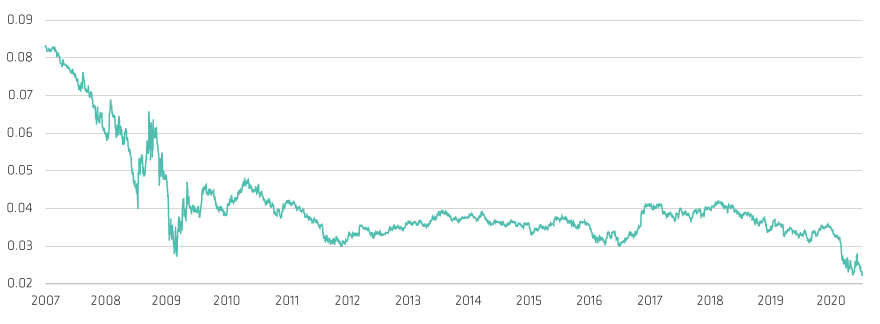
But we think the solvency issue is a red herring. Since the global financial crisis of 2008 and resulting banking rule changes, the two biggest headwinds for the US banking industry now are credit costs and low interest rates, in our view. Since each of the 34 institutions required to undergo the Fed’s stress tests have unique characteristics, we believe a single standardized measure of risk is an inadequate measure of the underlying business.
Investors Should Measure What Matters
Second-quarter earnings announcements should be the great equalizer. That’s because earnings reports take into consideration not only the historic solvency issues measured by the Fed but also the charming quirks that each bank brings to the table in the midst of a global crisis. For example, companies with larger illiquid positions which are marked to market quarterly should benefit from plunging interest rates in the second quarter. Banks with greater exposure to rate compression and credit costs, today’s real bank hobgoblins, may have had a harder time even if their Fed stress tests were strong.
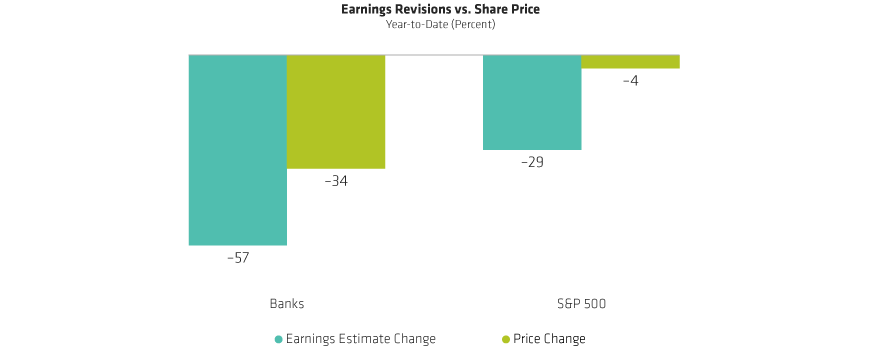
Meanwhile, banks with large investment banking businesses may have advantages in today’s environment. Equity and debt capital markets are booming; May was a record month for global equity issuance, and June appeared to be even stronger. And during the downturn in March and April, clients needed liquidity. So, institutions capable of providing that liquidity through world-class trading businesses should have fared well. Given that bank stocks have already fallen quite sharply amid steep downward revisions of earnings estimates (Display), lenders that deliver positive earnings surprises may be ripe for a share price rebound, in our view.