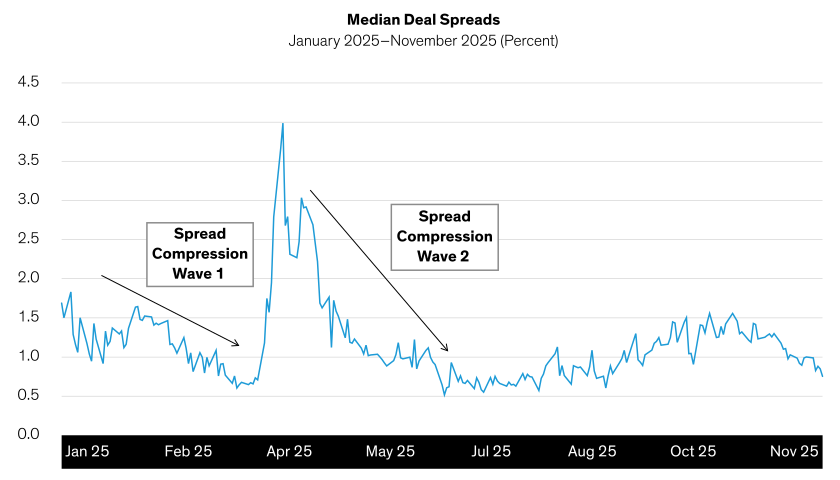
Meanwhile, deal flow—a key driver of merger-arbitrage performance—started to surge. With more deals coming to market and completing, arbitrageurs were able to realize higher returns in the period.
By the third quarter, the number of US deals worth more than $5 billion had risen some 166% compared to the same period in 2024. That included the ongoing merger between freight railroads Union Pacific and Norfolk Southern—the largest M&A deal in the last five years—as well as the deal for video game developer Electronic Arts, the largest take-private deal on record.
A lack of deal breaks—the primary risk merger arbitrageurs face—has been a critical driver, too. Compared to the long-run average, remarkably few deals collapsed, reducing what is often a sizable drag on merger-arbitrage performance.
Supportive Policy, Private Equity Firepower Bode Well for 2026
Will the story end when 2025 does? We don’t think so. Deal flow is a key driver of merger-arbitrage performance, and we expect it to remain strong heading into 2026. Here’s why:
The regulatory environment should remain supportive. The current US administration, which has embraced a lighter touch on regulation, has three more years to run. That’s enough runway for large strategic deals to get negotiated and announced. We expect to see more mergers in Europe and the UK, too.
Monetary policy may get a bit looser. This is most important in the US, where the majority of deal activity occurs. It’s likely to create more room for companies and private equity buyers who are financing deals with debt, allowing management teams to bid on previously unreachable targets.
Private equity firms are under pressure to deploy capital. These investors have substantial stockpiles that can be put to work. We think this suggests that leveraged buyouts will play a key role in deal-making in 2026.
Concern about high equity valuations could create some resistance—but not much, in our view. Many would-be buyers have significant cash reserves, and high valuations provide further opportunities for these firms to use their stock to make acquisitions.
Companies that have underperformed this year may be more tentative about stock-driven acquisitions. But some of these firms may also be attractive targets for others with the capital to pursue them. We think a reasonable correction in equity prices next year may create new buying opportunities and spur competition among buyers, given the favorable regulatory environment.
Parsing the Potential Risks to Merger Arbitrage
Headwinds in 2026 may come from spread compression as more arbitrage capital is deployed to take advantage of a favorable M&A environment. It’s also worth watching equity market valuations—if they stay high, some corporate boards worried about overpaying for companies may offer lower premiums or make fewer counterbids, which might reduce the strategy’s return potential. Geopolitical and regulatory risks should always be on investors’ radar, and we think deal flow may slow if inflation expectations rise and monetary policy starts to lean toward tightening.
Overall, though, we don’t expect to see significant dampening of the merger mood. We expect 2026 to be another strong year.