Factors are just one component of an effective systematic process.
Systematic approaches are gaining traction with investors. In these strategies, a model-driven process drives the investment decisions, using predictive factors with demonstrable links to outperformance. A quantitative decision engine scores and ranks every bond based on its alignment with these factors to generate alpha through security selection. But to be most effective, systematic strategies need to access broader capabilities and expertise.
A Breakthrough in Fixed Income
Systematic strategies appeared first in equity markets and are now gaining popularity in bond markets. The attraction? Systematic fixed-income strategies offer a differentiated approach from traditional discretionary management—one that has the potential to generate attractive returns with different performance patterns and more consistent returns.
By contrast with traditional discretionary approaches, systematic fixed-income models are exclusively data-driven and operate autonomously—ranking securities, constructing optimized portfolios and managing risk without traditional inputs or discretionary overlays.
While this autonomous process is the engine of systematic fixed-income investing, the drive chain is execution and implementation technology, while input from experienced investment professionals from a range of backgrounds and specialties helps lubricate the machinery. We believe that integrating these broader resources may enhance research and execution, strengthen risk management and deliver improved outcomes.
Digital Processes Increase Speed and Accuracy
Systematic processes center on scoring each security in the investable universe based on its sensitivity to various factors. Ideally, scoring should be one component in a streamlined, digitized investment process that integrates tools for research, factor testing, market liquidity assessment, optimization and trade execution.
Such integrated approaches enable several key features of strong systematic processes: for instance, more robust factor testing that features transaction-cost-aware simulations and allows for custom optimizations. A digital platform also enables continuous monitoring of factor exposures, concentrations and liquidity metrics to keep portfolios aligned with risk targets. And it can facilitate seamless factor testing, back-testing and rapid deployment of model improvements that can keep systematic strategies adaptive and cutting-edge.
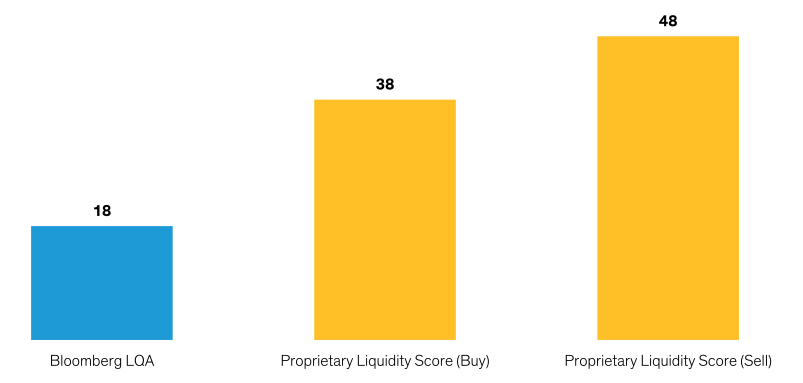
Integrated access to liquidity data is particularly important for translating models into actual portfolios quickly and cost-effectively. For example, advanced liquidity and trading technology can aggregate fragmented corporate bond market data to deliver real-time liquidity intelligence faster and more comprehensively than third-party analytics (Display). This helps reduce transaction costs and improve execution timing, and feeds back into portfolio construction to make for readily implementable portfolios.