Subdued Index Volatility Is Misleading
The market’s risk profile also appears more complex than headline measures suggest. Index-level volatility remains relatively subdued, consistent with a market that has trended higher. Yet volatility for the average stock is substantially higher (Display, above).
This gap highlights a critical distinction: while the index may appear calm, individual companies face very different opportunities and risks. Such conditions often increase the importance of fundamental research and careful security selection. As we see it, investors willing to look beyond index-level signals may find a richer set of opportunities than the market’s narrow leadership would imply.
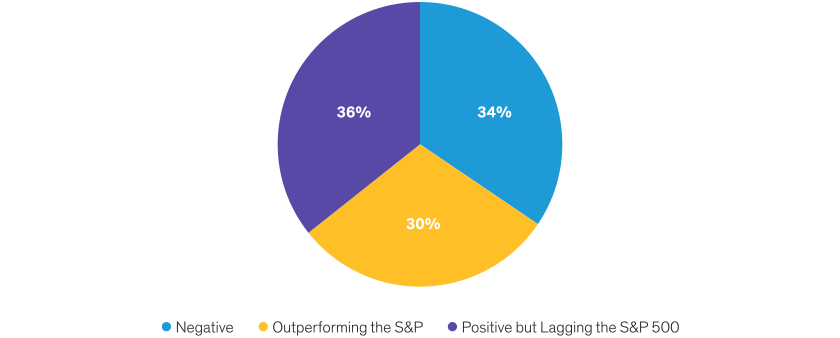
Could Dispersion Lead to More Diverse Winners?
We believe the AI leaders could be vulnerable if sentiment shifts. While the mega-caps include great businesses, we believe holding the entire cohort at or above market weights is risky, and positions should be determined by a portfolio’s research discipline and risk management. In our view, elevated valuations of the technology titans could face pressure as investors question whether massive AI-driven capital spending will create sufficient productivity and profitability benefits.
June offered an example of this tension: markets supported AI-related capital raises, yet the Magnificent Seven underperformed and contributed to a 1.0% decline in the S&P 500. At the same time, the S&P 500 Equal Weight Index, which reflects a broader spectrum of US companies, rose by 2.4%. While these observations apply to a very short time span, we think they illustrate what might happen if the AI leaders face a sustained challenge to their dominance.
Broadening the Mix
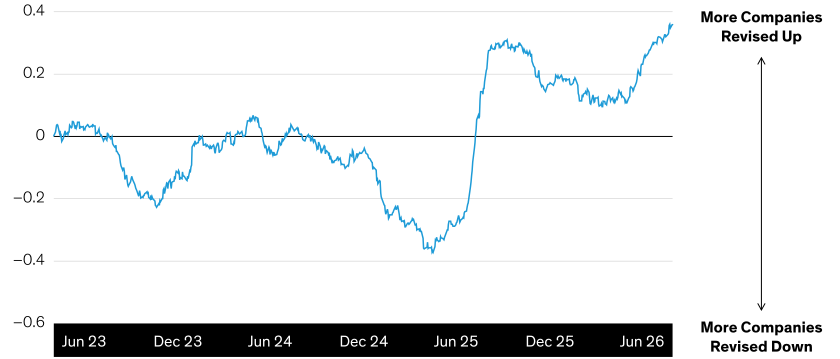
Nobody can say if June’s trading trends reflect the start of a lasting shift in market patterns. But we can say with conviction that improving earnings trends, low stock correlations and elevated stock-level dispersion suggest a more differentiated universe is emerging.
In our view, investors should look beyond today’s performance leaders and consider a broader mix of companies—including AI beneficiaries, successful adopters and businesses less exposed to disruption. If market participation eventually broadens to reflect the widening strength in fundamentals, today’s dispersion could become tomorrow’s reward.