
What You Need to Know

We reflect on the most common questions that have come up in our recent meetings with clients around the world. After such a significant run in risk assets, we are often asked if this, tactically, augurs a painful reversal. While we do think there is complacency about volatility, neither “fundamentals” nor sentiment are signaling excess. We remain positive on equities over the next 12 months.

Nearly every meeting saw clients asking us about the US dollar and gold. The consensus is that the dollar will depreciate; the more interesting conversation is on its correlation with risk assets. We think that non-dollar investors should increase dollar hedging. Everyone wanted to talk about gold, but its actual ownership is much more sporadic by investor type. We retain our view that gold is an important asset to hold from a strategic point of view.

US exceptionalism remains a key topic. Our view is still that an overweight US equity position is justified; the calls to overweight Europe that we heard earlier in the year are now more muted.

There were also many conversations about AI. The key macro issue is: What level of productivity growth is possible, and can it offset downward forces on growth? Clients we met assume that AI will be devastating for labor demand.

A very different topic came up a number of times—the role of a Total Portfolio Approach. We have long been advocates of it. We think it is a rational response to a different set of macro opportunities in return and diversification.


Additional Contributors:
 Alla Harmsworth, Robertas Stancikas, and Maureen Hughes

After the rally, is there something horrible around the corner? 

A common feature in recent meetings is clients expressing anxiety about markets going up too far, too fast. Is this, to use the common phrase, a case of markets being “priced for perfection”? After all, the S&P 500 is up 8% since August 1, investmentgrade credit 2% over the same time, and emerging markets (EM) are outperforming. But at the same time, gold is up 17% and silver up 30%. An odd juxtaposition! Despite this rally, it is hard to articulate a case that investors have let sentiment run out of control, or that this rally is necessarily disconnected from fundamentals. With a caveat about volatility, which we outline below, we are happy to remain positive on risk assets for the next 12 months.

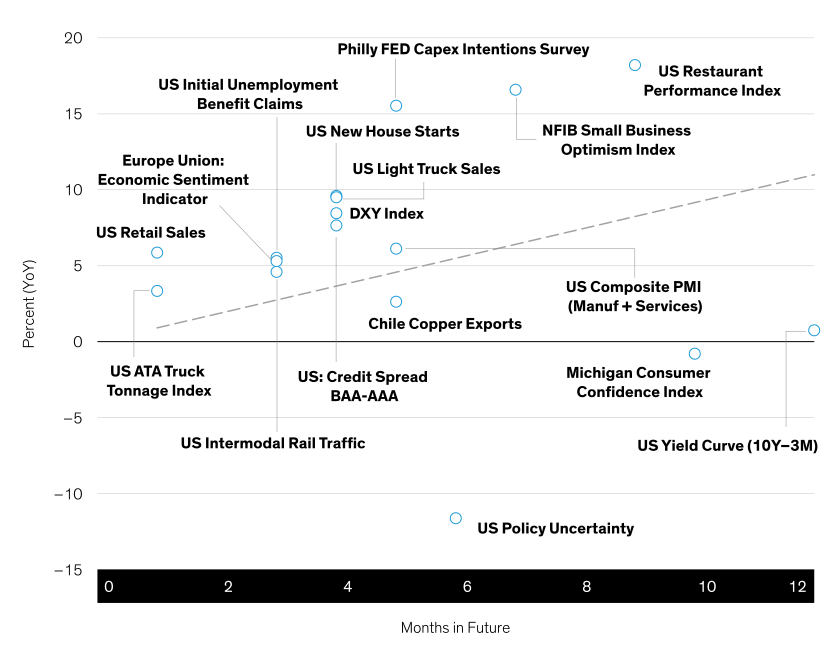
Contrasting indicators have emerged on the cyclical outlook. Our indicator for US earnings (Display 1), which tracks diverse micro and macro economic data points, has been steadily improving in recent months from the low point of April. It currently projects a robust US earnings outlook of 11% growth over the next 12 months. The key areas of improvement in recent months have been the restaurant-performance index, tracking consumers, the composite Purchasing Managers Index (PMI) indicator and capital expenditure (capex) expectations.

Our Proprietary Earnings Indicator Projects 11% Growth over the Next 12 Months

Current analysis does not guarantee future results.
As of September 15, 2025
Source: Federal Reserve Bank of St. Louis, , Macrobond and AllianceBernstein (AB)

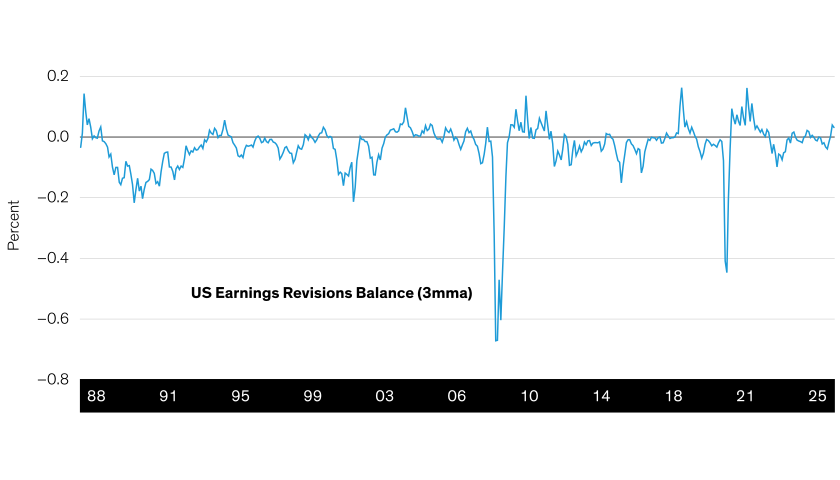
As a result of these trends, the consensus earnings-revisions balance has also turned decisively positive in recent months (Display 2), suggesting growing confidence in the near-term earnings outlook.

US Consensus Earnings Revisions Have Turned Decisively Positive

Current analysis does not guarantee future results.
As of September 30, 2025
Source: FactSet and AB


About the Author