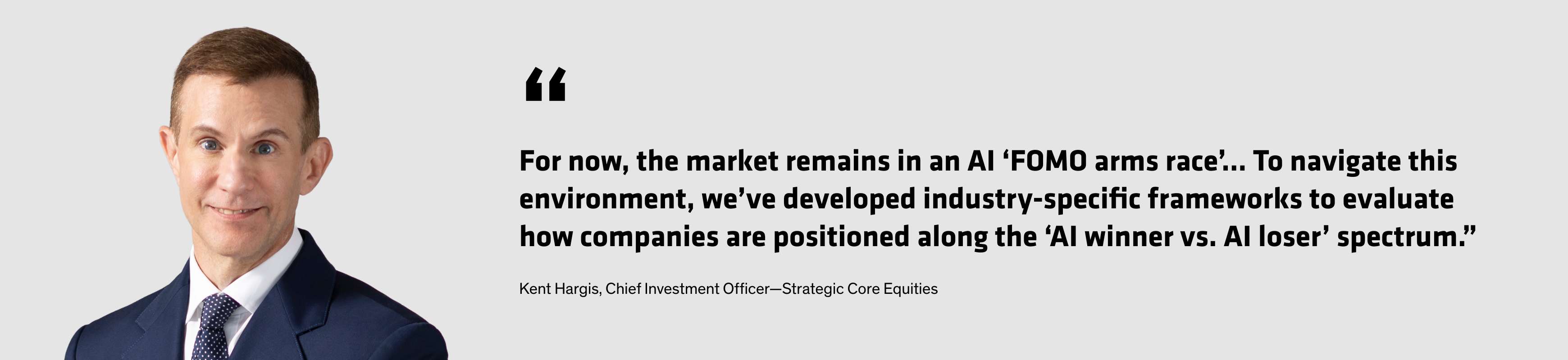
Kent: In any bubble, speculative and lower-quality companies often outperform in the short term. But as speculative excesses continue to build across parts of the AI ecosystem, it’s increasingly important to stay disciplined and focus on quality. I think the most effective long-term approach is to identify companies that offer both meaningful upside from AI exposure and the risk reduction that comes from strong fundamentals in their core businesses. There’s always risk in any investment—particularly in a rapidly evolving growth theme like AI—but our strategy’s objective is to deliver attractive risk-adjusted returns while minimizing downside risk. That means investing in durable, high-quality businesses capable of compounding value over time, rather than chasing the transitory gains of speculative AI stories.
Shri: Investors need a nimble and basket approach to investing in AI while avoiding concentrated bets, as it is nearly impossible to call winners and losers early on. There are lessons to learn from the dot-com boom. In 1999, if you were investing in dot-com winners, you would have bought AOL and Yahoo—two early movers that were eventually disrupted. The eventual big winners, like Google, Meta and Apple, weren’t obvious early on. That’s why it’s critical to be nimble in a changing landscape and to be active and selective in approaching AI investing. I think a prudent approach is to get broader exposure to three baskets of AI: direct AI beneficiaries, indirect AI beneficiaries and AI users.
AI will be highly disruptive for many industries in which current leaders will face the innovator’s dilemma. So it’s equally important for investors to avoid companies that will be disrupted by AI, including certain types of software companies, IT services groups and staffing companies.
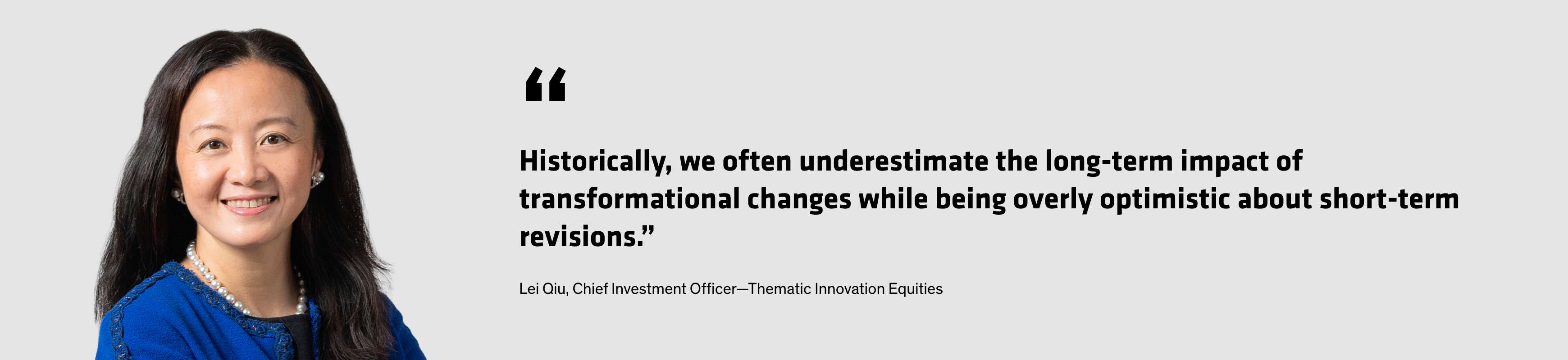
Lei: Historically what “bursts” a bubble is usually the debt market, when a company fails to pay interest owed because it is strapped for cash. Given the players involved, I think it’s too early to call it a bubble that is about to burst. In the meantime, though, we should monitor developments in the private credit market. If there is a bubble, I think it will begin to show there first.
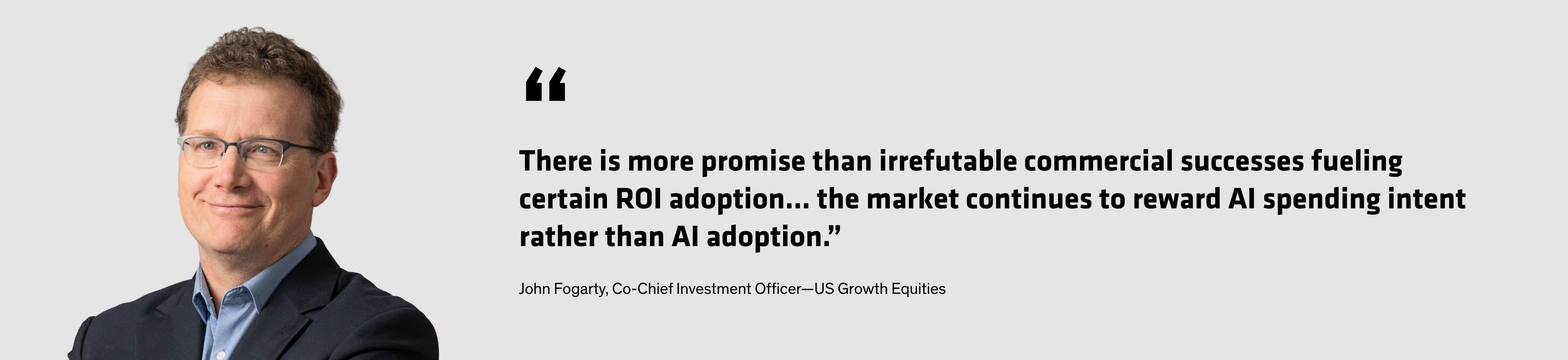
John: There are noted differences between this infrastructure build versus the telecom internet build around 2000, namely less debt financing so far and satisfying immediate demand versus the dark fiber build-out at the time. Nonetheless, capex intensity to current revenue for the hyperscalers has doubled, just like the internet boom. Capex cycles peak, as do associated valuations, regardless of a benign or steep fall off in spending. Looking beyond how this picks-and-shovels phase ends, like the eventual dot-com era, I think it’s likely that companies capitalizing on the application of AI have not yet emerged as market leaders. Identifying those adopters will generate alpha, regardless of the duration and ROI of the build-out.
Thorsten: Those are all valid observations. That said, our strategy focuses AI-related investments on the “picks and shovels” rather than the gold diggers. When investing in the AI enablers, we always pay attention to which part of future revenues is explained by “regular” business and how much is AI hype that might be canceled or postponed tomorrow.