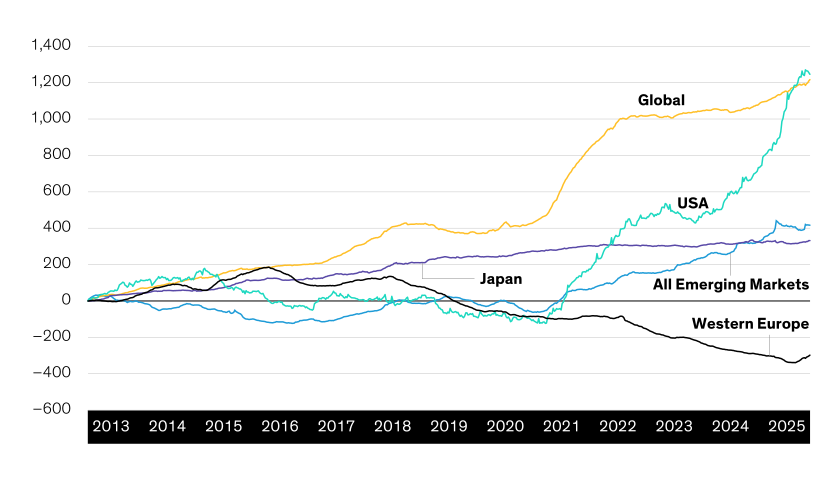
In a series of recent meetings in Asia, one of the key questions that kept coming up was: “Is the US still exceptional?” The implicit follow-up question is: “If the US is indeed less exceptional, then how large should the reallocation away from the US be?”
The new consensus, and at least the sense in meetings and three weeks of flow data that can be analyzed, indicate that sentiment has clearly turned against the US. Given the unanimity of the pro-US view among investors after Donald Trump won the presidential election, and the scale of the flow into US assets that resulted, this new anti-US consensus implies that more outflow from US assets is to come in the short term. But what about strategically? Also, is it really the case that US exceptionalism has suddenly ended? And do investors need to think differently about what this means for equities, bonds and the US dollar?
A lot of the commentary that we hear is based on the idea that US exceptionalism has ended. However, this belies a misunderstanding. The true exceptionalism is strategic, not tactical. Yes, US corporations enjoyed a particularly strong business cycle in recent years (does anyone still recall the hard-versus-soft landing debates of early 2024?), with US earnings growth exceptional compared with the rest of the world. The shock of tariffs with the knock-on dramatic curtailment of capex plans and a hit to consumer expectations has rapidly undone that cycle, and the US now faces a 40% chance of recession this year, and consumers and businesses face sharply higher prices on some goods. There is even the possibility of empty shelves in shops later this year, given the rapid drop-off in shipments from China. At the same time, though, the near-term growth outlook is declining elsewhere in the world as well. We don’t mean to belittle this at all, as it is hugely important, but it is a tactical development, not strategic. Does the strategic US exceptionalism still stand?
It will be unpopular for us to say “yes,” as we sense that view is not in line with the new post “Liberation Day” new consensus, but we think that US exceptionalism with respect to equities still stands. Yes, it has taken a knock, but some elements are genuinely sticky. For US bonds, the reason to own them and hence the risks are somewhat different, as we discuss below.
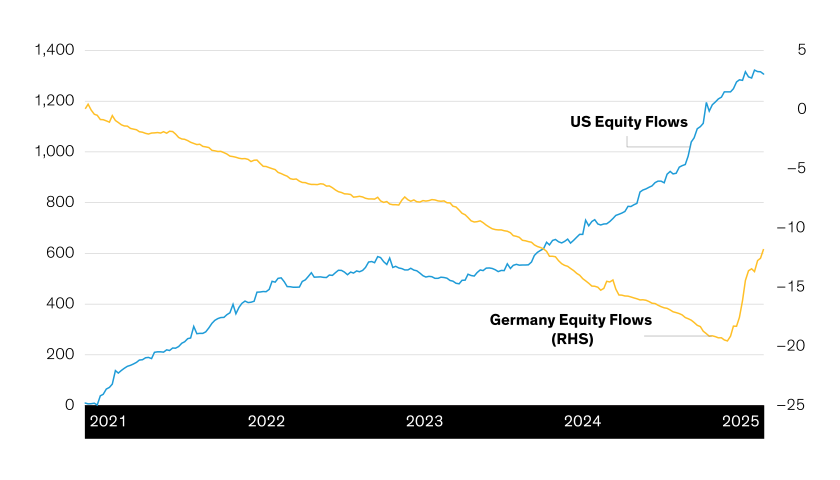
The scale of the recent change is apparent in the relative net flows into the US and Germany since the US election. The euphoric flows into US equities abruptly stopped around the date of the tariff announcements. Germany, meanwhile, which had been deeply unloved by investors (for many good reasons), saw inflows that in one go unwound all outflows since the end of 2023 (Display 1). It should be noted that while both domestic and international investors bought German (and other non-US) equities, the picture in the US was split. US domestic retail aggressively “bought the dip;” institutional and international investors sold.