
The Full Picture: How Factors Work Together in Systematic Fixed Income

08 July 2026
1 min read
A Multifactor Approach in Action
How a Bond’s Total Multifactor Score Affects Buy Signals: An Example
For illustrative purposes only
Not all factor styles are shown. Spreads are option-adjusted and measured versus the Bloomberg US Corporate Bond Index. 
As of June 30, 2026
Source: Bloomberg and AllianceBernstein (AB)

Systematic fixed-income investing is an active approach that aims to beat market returns by identifying and harnessing the factors that drive bond performance. Factors such as value and momentum are historically recognized to have predictive power, but advanced systematic approaches seek to identify additional performance drivers to integrate into their models. By looking at factors collectively, investors can gain a more complete view of an opportunity.

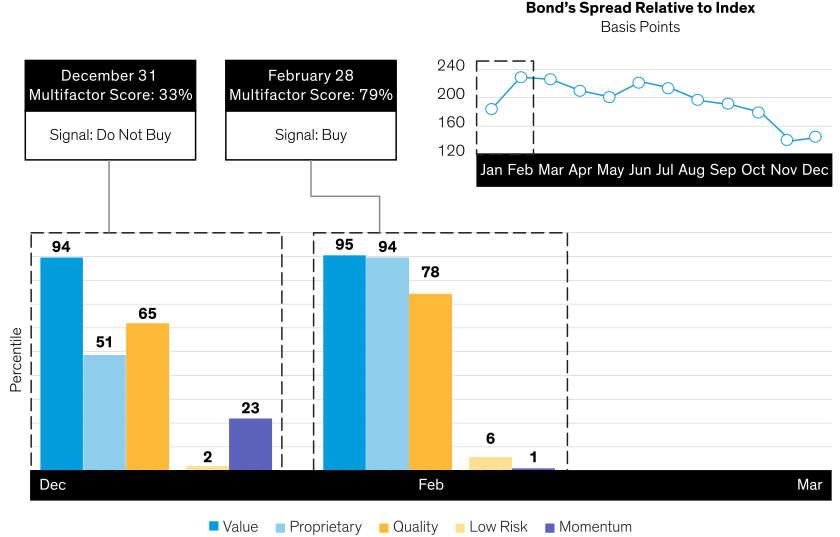
In our example (Display), a multifactor model determined a total score for a bond based on its underlying factor scores. At the start of the year, the bond scored high on value and quality but low on other factors, including proprietary ones. This reduced the total multifactor score, helping avoid a premature purchase. 

By the end of February, several of the factors’ scores had improved significantly, leading to a higher total score and a buy signal. In systematic investing, there’s strength in numbers. 

The views expressed herein do not constitute research, investment advice or trade recommendations, do not necessarily represent the views of all AB portfolio-management teams and are subject to change over time.