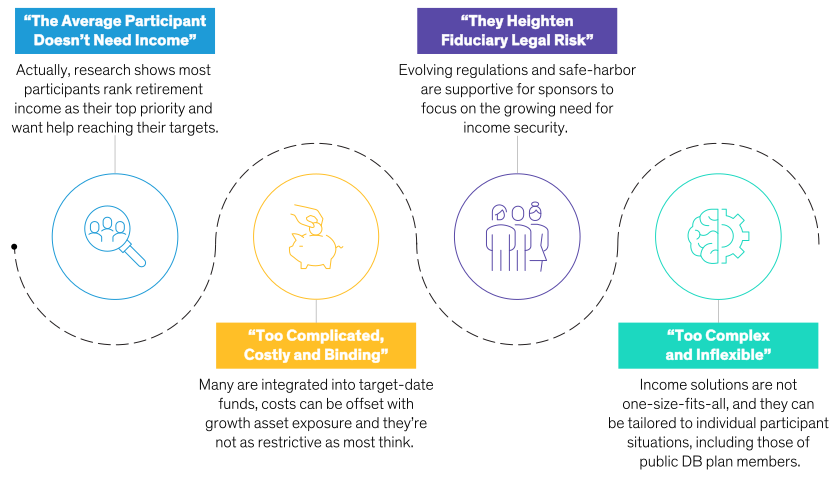
Myth One: The “Average” Participant Doesn’t Need Lifetime Income
Actually, research and our experience suggest that participants need—and want—lifetime income. A 2025 study showed that adding just five more years to retirement boosts the chances of running out of money by 41%. That longevity risk is very real for nearly everyone, which we think explains why most participants would try to deal with it given the opportunity.
In fact, according to AB’s 2025 Inside the Minds of Plan Participants survey, nine of 10 participants said they’d be at least “somewhat likely” to invest in a guaranteed income solution if it were offered in their plan, including 73% that were “very likely.”1 The impact of this year's market turmoil on retirement savings has only amplified the need, as we see it.
Myth Two: Lifetime Income Solutions Increase Plan Sponsors’ Fiduciary Risk
It’s understandable that DC plan sponsors have concerns about fiduciary liability, but we think it may be overstated. From our perspective, fiduciaries should prioritize doing the right thing for participants, not simply making decisions based on avoiding lawsuits. What’s more, the clarity provided by the SECURE Act and SECURE Act 2.0 safe-harbor umbrella seems to have resolved many, if not all, fiduciary concerns surrounding retirement-income solutions. With that as a starting point, we see an opportunity for robust dialogue around the topic of guaranteed income, which could help plan sponsors holding out for a “magic bullet” move forward.
Myth Three: They’re Too Complex, Expensive and Like Tattoos—Permanent or Painful if You Change Your Mind
On the contrary, some lifetime income solutions can be cost-effective, transparent and integrated into familiar vehicles like target-date funds. In fact, many solutions don’t impose surrender penalties or force participants to give up access to their assets when they lock in income. Still, not all solutions are alike, so we believe comparing the net impact of both explicit fees and implicit costs can help plan sponsors level the playing field when shopping for one. Some insurance types are fully liquid and portable—familiar qualities that participants see in other retirement options.
Myth Four: Default Income Solutions Are “One Size Fits All” and Can’t Be Customized
Not exactly. There have been advances in tools that help personalize income solutions at the sponsor and participant levels—based on age, salary, savings, other income benefits and even retirement goals. Sponsors and recordkeepers should be able to up their game in this area as data from more experience is factored into plan designs—and AI will likely contribute to the drive for personalization. Tailorable DC lifetime income solutions may even play a supporting role for workers who rely on public DB plans and Social Security: many DB plans are reducing benefits to newer workers, and 25% of public employees are ineligible for Social Security.
We believe the stars have aligned for lifetime income. The participant need is there, regulators seem increasingly supportive, and product innovation and implementation technology have advanced. Plan sponsors now just need to connect the dots, starting with separating fact from fiction about how guaranteed income solutions may help.
1 Response breakdown: “Very Likely,” 73%; “Somewhat Likely,” 21%; “Not Likely, 4%; “Don’t Know, 3%. Numbers may not sum due to rounding.