Guaranteed Income Design: Assessing the GLWB

25 September 2025
2 min read
How a GLWB-Based Retirement Income Solution Works
Illustration of Guaranteed Income Solution
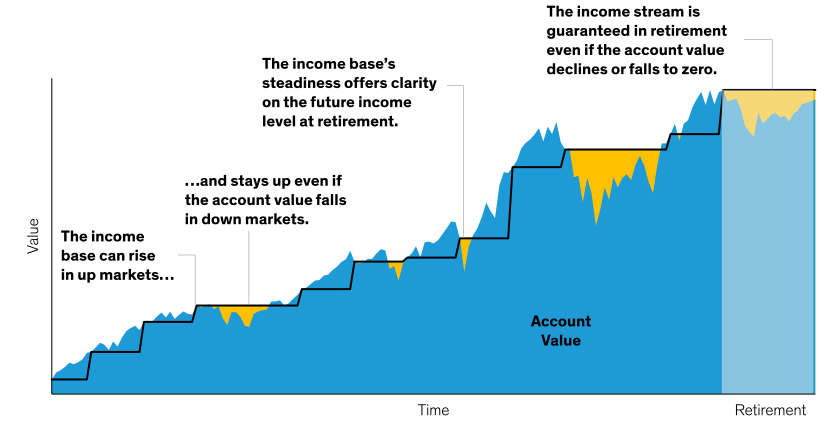
A conceptual illustration of asset growth and guaranteed income step ups over time.

For illustrative purposes only. There can be no assurance that any investment objectives will be achieved.
In an actual investment portfolio, the account balance would be subject to market fluctuations. Income guarantees would be based on the financial strength and claims-paying ability of each insurance company.
As of September 15, 2025
Source: AllianceBernstein (AB)

Secure income in retirement. It’s a straightforward objective for guaranteed-income solutions, but there are different ways to deliver on it. Understanding how each solution works is key to assessing their value—including helping to keep participants on track through turbulent markets.

The Guaranteed Lifetime Withdrawal Benefit (GLWB)–based solution uses a lifetime income insurance contract on an investment portfolio that participants own, in contrast with some annuity-based solutions that require asset surrender up front. The portfolio typically invests in a mix of stocks, bonds and inflation-sensitive assets.

Every dollar contributed to the account with this insurance builds, dollar for dollar, another value called the “income base,” which is unaffected by the portfolio’s market performance. Guaranteed income is calculated as a percentage of the base; since it can’t fall with markets, it’s essentially guaranteed. If the account value exceeds the income base on an annual basis, the base rises.

The guarantee enables higher exposure to growth assets in the portfolio than in a typical target-date fund (since any volatility in the account value won’t impact the guaranteed income), so it may help participants keep their investment plans on course.

Once participants retire, they withdraw income tied to the income base’s highest value. If portfolio assets run out, an insurance company provides the income for life. Any portfolio balance remaining when the participant dies can be transferred to beneficiaries. Participants can buy insurance before or at retirement and cancel it without restriction. The GLWB’s annual insurance premium is typically 1% of the insured part of the portfolio, which higher growth exposure may offset over time.

There are meaningful differences among guaranteed income solutions. We think a comprehensive framework is needed that focuses on the individual, assesses key participant risks, evaluates needs beyond income and measures total insurance cost.

The views expressed herein do not constitute research, investment advice or trade recommendations, do not necessarily represent the views of all AB portfolio-management teams and are subject to change over time.

“Target date” in a fund’s name refers to the approximate year when a plan participant expects to retire and begin withdrawing from his or her account. Target-date funds gradually adjust their asset allocation, lowering risk as a participant nears retirement. Investments in target-date funds are not guaranteed against loss of principal at any time, and account values can be more or less than the original amount invested—including at the time of the fund’s target date. Also, investing in target-date funds does not guarantee sufficient income in retirement.

The Guaranteed Lifetime Withdrawal Benefit (GLWB) is a type of annuity that sets a withdrawal amount that will last throughout a participant’s retirement, even if the market falls or the account’s assets run out. The insurers will continue the withdrawal payments, if needed. Guarantees are based on the financial strength and claims-paying ability of each insurance company.