Private Thoughts: DC Plan Participants Warm to Private Markets

July 29 2026
4 min read

Most DC participants see private-market potential, and plan sponsors can help pave the way.

Private assets are starting to see broader adoption in defined contribution (DC) plans, as more sponsors see their growth potential and diversification beyond traditional public markets. New product structures are also simplifying access through professionally managed solutions, and evolving regulatory guidance will likely enhance clarity. Our latest survey shows participant interest is growing too, suggesting possible ways sponsors can offer them.

Getting to Know You: Public Views on Private Markets

The current landscape makes private markets a natural fit, in our view, especially since they’ve been a successful building block of pensions and endowments for decades and as diversifiers in individual investor portfolios beyond retirement plans.

We believe DC plan sponsors considering private assets might appreciate that participants can relate to their potential to boost diversification and return. Our 2026 survey, Inside the Minds of Plan Participants, explored awareness, perceptions and comfort levels around private equity, credit and real estate. Generally, participants see them as positive contributors to long-term performance—a top priority, since many still worry they’re not saving enough.

But awareness doesn’t always translate into understanding. While 56% of participants reported at least some familiarity with private markets, only about one in four said they understand them “well” or “very well” (Display). It seems that many respondents still don’t understand how private markets work as fully as they understand public markets. This is not surprising, as we often see that participants generally aren’t well versed in investment types. Still, we think it’s insightful and timely to hear their sentiments toward private markets as more sponsors weigh their potential fit in the pursuit of better participant outcomes.


Participants Have Mixed Awareness of Private Market Investments
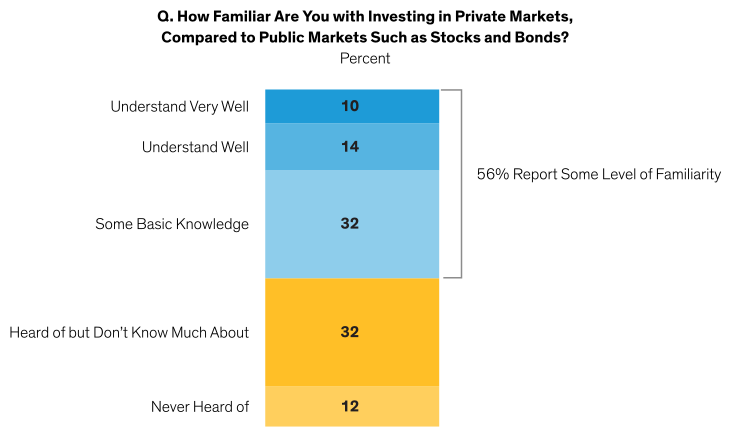
A larger percentage of workers are familiar than not familiar with private market assets.

Survey findings are based on the expressed opinions of respondents and do not guarantee specific outcomes.
As of May 2026
Source: Inside the Minds of Plan Participants, AllianceBernstein (AB), 2026

More Private Asset Knowledge Boosts Sentiment

After participants were given background on what private equity, private credit and private real estate are and their role in a retirement portfolio, their views were largely positive. Nearly three-quarters believe private markets could play a role in their investment strategies, including 28% who said “definitely” and 43% who support them despite concerns around risks and cost (Display).


Participants See Potential for Private Markets to Improve Outcomes
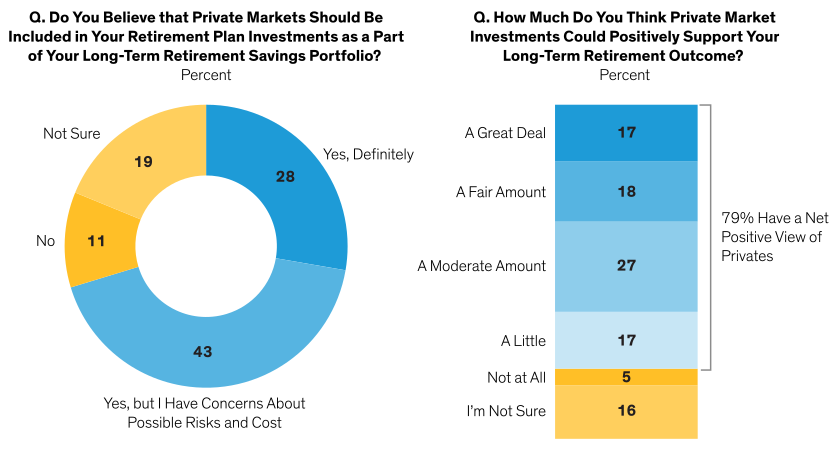
Most participants think private markets potentially boost returns and should be included in retirement plans.

Survey findings are based on the expressed opinions of respondents and do not guarantee specific outcomes.
Numbers may not sum due to rounding.
As of May 2026
Source: Inside the Minds of Plan Participants, AB, 2026

Confidence in the potential benefits was also high once the added color was provided: 79% of participants believe private markets can help long-term retirement outcomes, with 17% expressing strong conviction. Among those who were less enthusiastic, concerns centered on investment risk, a lack of understanding and higher relative fees.

Because participants generally embrace private markets as their understanding grows, we see a clear opportunity for educational initiatives to move the needle for DC plans. Providing access to private markets is also important, and we believe professionally managed solutions such as target-date funds are the right tools for the job. These vehicles are more front-and-center to participants today, and they offer potential diversification, growth and risk management. Moreover, we believe portfolio managers of target-date funds are better equipped to manage allocations to private markets, while keeping them simple for plan participants.

The Private Market Transition May Improve Retirement Readiness

While participant education remains important, private markets are increasingly drawing sponsor interest as a potential tool for improving retirement plan outcomes. Some sponsors remain cautious about liquidity, fees and complexity. Yet professionally managed solutions, collective investment trust structures, daily valuation mechanisms, liquidity-management features and stronger governance frameworks are helping address many of these concerns. Anticipated US Department of Labor guidance could provide additional fiduciary clarity as well.

As access, education and understanding continue to improve, private markets are well positioned to play a larger role in DC plans, helping sponsors enhance diversification, strengthen retirement readiness and potentially improve long-term performance.

“Target date” in a fund’s name refers to the approximate year when a plan participant expects to retire and begin withdrawing from his or her account. Target-date funds gradually adjust their asset allocation, lowering risk as a participant nears retirement. Investments in target-date funds are not guaranteed against loss of principal at any time, and account values can be more or less than the original amount invested—including at the time of the fund’s target date. Also, investing in target-date funds does not guarantee sufficient income in retirement.

The views expressed herein do not constitute research, investment advice or trade recommendations, do not necessarily represent the views of all AB portfolio-management teams and are subject to change over time.


About the Authors