
Affordable Housing and LIHTC: Off the Beaten Path, but a Compelling Muni Segment
What You Should Know
Low-Income Housing Tax Credit (LIHTC) transactions are a less-traveled municipal segment with sophisticated structures. AllianceBernstein’s (AB) distinctive experience, access and analytical depth are uncovering opportunities with a yield advantage and fundamental strength.
A Creative Tool for Incentivizing Affordable Housing
The LIHTC federal program, created in 1986, seeks to incentivize affordable rental housing by awarding tax credits to developers who commit to build or refurbish low-income properties. Developers often sell the credits to banks, combining the equity with municipal debt and state/local grants. With this structure, they can offer lower rents and keep property economics strong.
The result is attractive housing developments that have a market-rate look and feel but serve lower-income tenants. Occupancy has been consistently high and foreclosure rates low—under 0.5% since the program started, according to CohnReznick’s 2025 Affordable Housing Credit Study. That rate is comparable to investment-grade municipal bonds.
Niche Sector That Features Sizable Potential
Affordable housing has been a niche sector in the municipal bond market, but it’s a compelling proposition for investors who put the work in and have the insight to understand sophisticated transactions. In our experience, LIHTC transactions stand out as one of the most resilient and rewarding market segments, with a rare combination of yield and solid fundamentals.
Deals typically offer between 200 and 250 basis points of added spread over high-grade municipals, even though default rates are similar. And their multiple financing layers—equity via the tax credit, municipal bonds and grants—provide strong structural support. LIHTC properties have been resilient even in downturns, aided by Section 8 subsidies and lasting demand for affordable housing.
Attractive Yields in Affordable Housing vs. High-Grade (AA-Rated) Yields
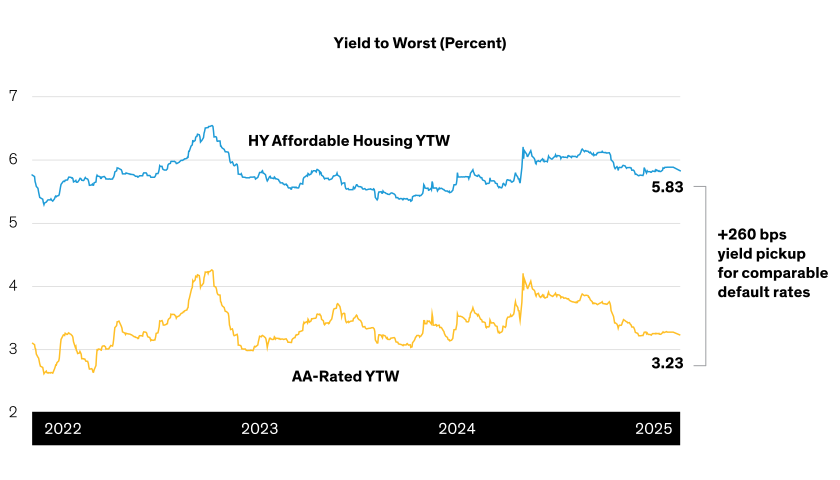
HY: high yield
As of December 31, 2025
Source: Bloomberg and AllianceBernstein
AB: The Depth of Expertise to Navigate LIHTC Nuances
Despite its merits, the LIHTC transaction segment remains off the beaten path. The typical deal is a limited offering, not a broad market transaction, which thins the ranks of interested parties. For a handful of specialized investors like AB, though, it’s an opportunity to connect with investment banks and developers to explore viable financing frameworks.
Understanding the complexities of the capital hierarchy is a must, given the layers of tax-credit equity (30%–40% of total capital), state/local grants and debt. AB seeks to leverage its uncommon expertise to hone-in on less-risky deals with structural sophistication and experienced sponsors in strong markets. With our access and analytical depth, we’re confident that we can execute LIHTC transactions that seek to deliver attractive, risk-adjusted returns in a resilient sector that's seeking to meet a social need.
Takeaway: Opportunity has many dimensions. Affordable housing isn’t cyclical, it’s structural. The sector has enduring relevance, nuanced deals with strong credit fundamentals and a yield advantage, and it aims to expand housing opportunity. But many investors aren’t equipped to capitalize on them. AB’s ability to decode the complexities may tee up opportunity for muni investors.
There is no assurance that a separately managed account will achieve its investment objective. Separately managed accounts are subject to market risk. The market values of securities owned will fluctuate so that your investment, when redeemed, may be worth more or less than its original cost.
The views expressed herein do not constitute research, investment advice or trade recommendations and do not necessarily represent the views of all AllianceBernstein portfolio management teams