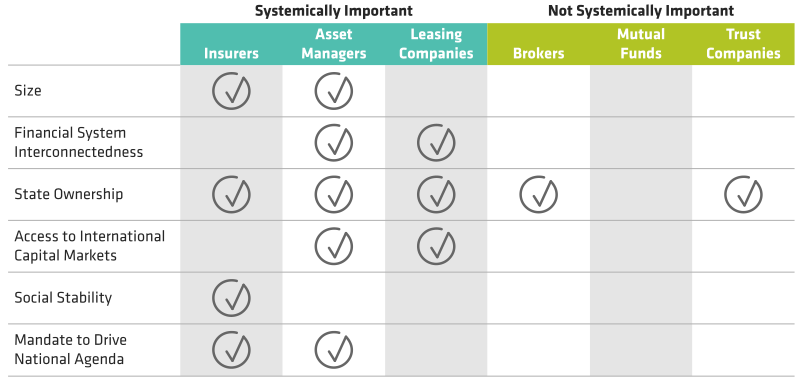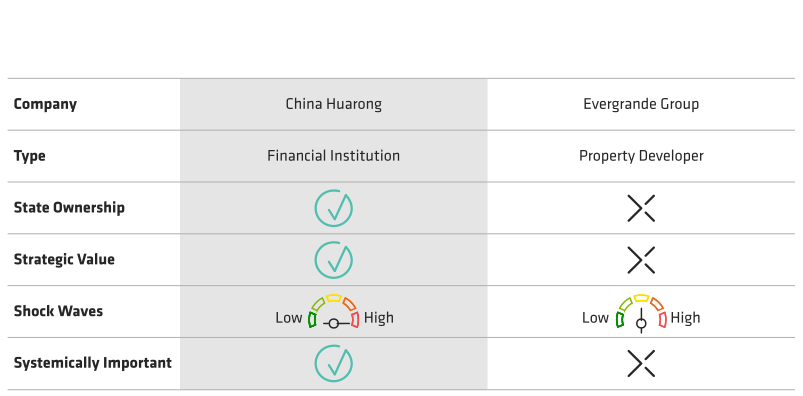
The same applies to China’s other privately-owned property companies.
But, while neither Evergrande nor its peers are systemically important, China’s property sector, taken as a whole, is. Property developers and the sectors that depend on them, such as suppliers of heavy equipment and building materials, have total debts of RMB 101 trillion—amounting to 35% of China’s financial system and equivalent to 100% of the country’s GDP.
So, while individual property developers might be allowed to default or fail, Chinese authorities are very likely to take steps to ensure that the fallout for the sector will be limited. Our analysis suggests that the government will intervene when conditions in the sector start to move from mild stress (a default rate of 4%) to medium stress (10%).
Since we conducted our stress-test analysis, the default rate for Chinese property developers in high-yield offshore bond markets has already crept up to 4%. This is where, for active investors, opportunities might develop.
Fortune Favors The Well Prepared
Of course, aiming to take advantage of a fall in a property company’s bond price in the hope that the government will step in and cause the price to recover is a risky strategy—particularly given our view that Chinese property defaults and failures are likely. Investors should rigorously research each credit on a stand-alone basis before making a decision.
In investing, fortune doesn’t favor the brave, but it often favors the well prepared. That’s why an active investment approach and sound fundamental analysis are, in our view, the keys to investing successfully in Chinese credit.
The authors wish to thank Rob Hopper and the team for their contributions.