Global Macro Outlook: Second Quarter 2026

Apr 02, 2026
1 min read

What You Need to Know

US foreign policy became the key variable for financial markets in the first quarter. As the Middle-East conflict expands, oil price shocks could become stagflationary, but it’s too early to know the magnitude. Our base case is that the global economy will remain resilient to this shock—as it has to many others this cycle.

Key Forecast Trends

  • Economics moved to the back burner in the first quarter, as geopolitical risks quickly dominated the narrative.
  • Oil price shocks can push up costs while slowing growth, but if oil prices drop as quickly as they rose, we think the impact is likely to be quite small.
  • We expect inflation to be somewhat higher and growth lower than previously forecast, but the economy seems resilient and has weathered other recent storms.
  • Monetary policy response to the energy price shock will depend in part on the differing mandates of central banks, as well as the eventual economic impact of the war.
  • Overall, the underlying growth dynamics seem stable, but the risk of persistently higher energy prices threatens to slow growth.
Global Macro Outlook: The Next Six Months
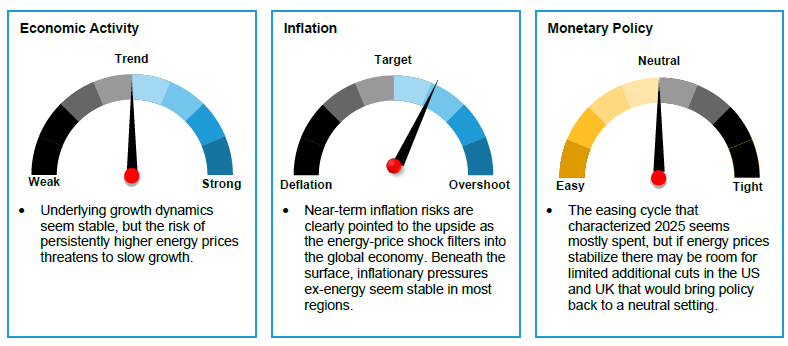
Current analysis and forecasts do not guarantee future results.
Source: AllianceBernstein (AB)

Global Forecast

Forecast Overview
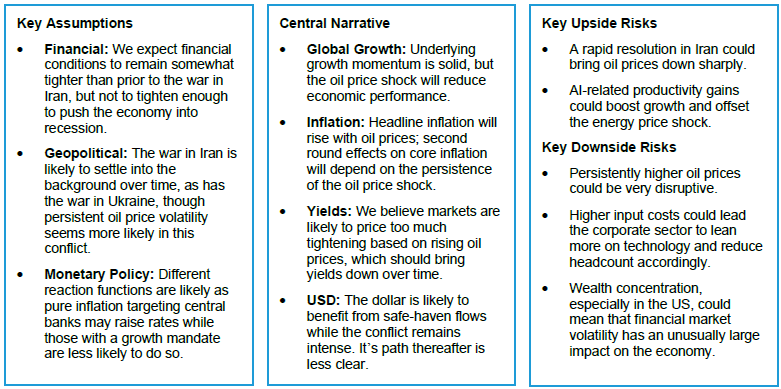
Current analysis and forecasts do not guarantee future results.
Source: AB

The views expressed herein do not constitute research, investment advice or trade recommendations, do not necessarily represent the views of all AB portfolio-management teams and are subject to change over time.