What Does Higher Inflation Mean for the US Economy and Fed?

May 14, 2026
2 min read

With inflation rising, consumers are feeling the pinch and the Fed is weighing its options.

The conflict in Iran choked the Strait of Hormuz, causing a widespread surge in energy prices. Now, several months after hostilities started, costlier energy is starting to show up in US inflation data. We expect price levels to heat up further, putting further strain on household budgets and complicating the Federal Reserve’s policy options.

Based on the latest readings, US inflation is rising at the headline level and in other key components (Display). The year-over-year rate of change in the headline Consumer Price Index (CPI) has risen from 2.4% in February to 3.8% in April, accelerating by almost 1.5 percentage points. Unless oil prices fall sharply—and soon—we expect headline inflation to continue rising. Core CPI, which omits volatile food and energy prices, has accelerated by roughly 0.3 percentage points. It tends to move more slowly than headline inflation but is more persistent. We think there’s more to come here.

US Inflation Rates Have Started to Rise
Consumer Price Index (CPI) and Core CPI, Year-over-Year Percent Change
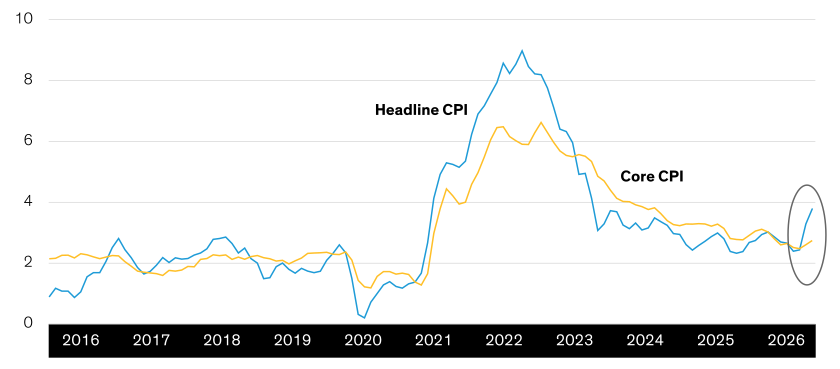
Year over year Consumer Price Index and Core CPI percentage changes since 2016

Historical analysis does not guarantee future results.
Through April 30, 2026
Source: Bloomberg and AllianceBernstein (AB)

The Ripple Effects of Higher Energy Prices on Consumers

Households are starting to feel the pinch of higher price levels, and the risks of slower economic growth are mounting. Every dollar a family pumps into its gas tank is a dollar not spent on something with a higher multiplier effect on the rest of the US economy. A purchase with this bigger ripple effect, whether it’s a trip to a restaurant or a home-improvement job, helps magnify economic activity.

With inflation eroding the purchasing power of income, many households may feel the need to pull back on spending in the months ahead. We don’t expect enough of a retreat to cause a recession, but the consumer is still the biggest engine of the US economy by far—to the tune of about 70% of total activity. If the consumer weakens, the broader economy will weaken, too.

Gasoline prices are the main culprit in higher inflation, but rising energy prices reverberate further. Gas prices are up about 50% so far this year, approaching levels last seen in the post-pandemic inflation surge. But “second-round” effects make airline tickets more expensive and boost freight costs. These costs worry policymakers because they tend to be sticky. Fees like “fuel price surcharges” on airfares or goods deliveries hang around even after initial energy shocks fade, keeping core inflation higher.

US Households Have Been Treading Water with Paychecks

Right now, though, our concern centers on how energy prices affect the broader economy, and there’s enough evidence here to be concerned.

Our go-to gauge of consumer health is the household-paycheck proxy. Take the number of people working, multiply them by the average hours worked and then by the average hourly wage. Over the past year, this metric has risen by 3.8%—exactly the same amount as inflation. In other words, after adjusting for inflation, the US household paycheck hasn’t risen for 12 months (Display). Broadly speaking, households are treading water.


Household Paychecks Have Been Flat Over the Past Year
Inflation-Adjusted Household Paycheck, Year-over-Year Percent Change*
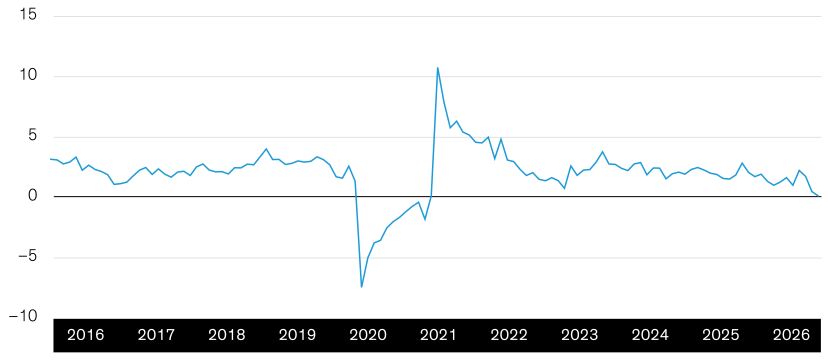
Changes in a proxy measure for the US inflation-adjusted household paycheck over time

Historical analysis does not guarantee future results.
*The household paycheck is proxied as the number of people working multiplied by the average hours worked multiplied by the average wage earned per hour. Household paycheck numbers are adjusted for inflation. 
Through April 30, 2026
Source: Bloomberg and AB

If inflation rises further, which seems likely, households will have to tap into their savings, borrow money or sell financial assets just to keep consuming at the same level. Even if they’re able to hold consumption steady, it won’t likely be enough to increase gross domestic product, leaving the economy relying entirely on other sectors for growth. While we expect corporate investment in artificial intelligence to continue, that may be only a partial offset to fading consumer strength.

How Resilient Is the K-Shaped Economy?

The paycheck-proxy estimate understates the inflation challenge for many households. Those with lower incomes spend a higher share of that income on the essentials—food, energy and rent. For many years, the cost of those essentials has been rising faster than overall inflation (Display). Lower-income consumers no longer have the excess savings to cushion the blow that they did during the post-pandemic inflation surge, so we expect them to cut back on spending a bit.

Prices for Essentials Have Been Rising Faster than CPI
CPI and Inflation Components, Indexed
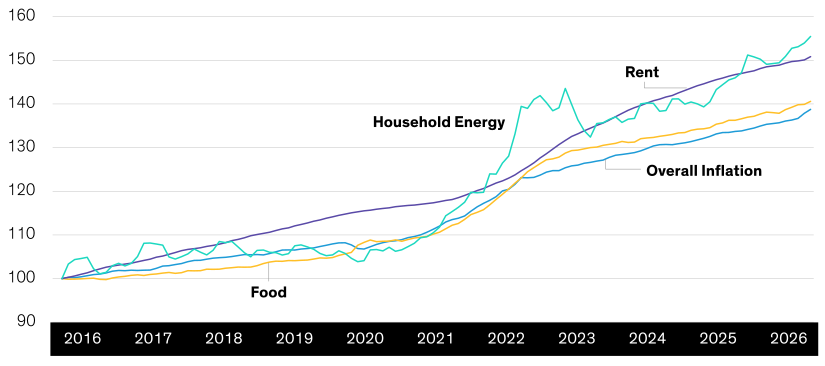
Indexed growth of CPI and inflation components including household energy, food and rent

Historical analysis does not guarantee future results.
April 1, 2016 = 100
Through April 30, 2026
Source: Bloomberg and AB

That leaves two big questions for the broader US economy. First, can higher-income consumers keep picking up the slack as lower-income consumers—the bottom leg of the K-shaped US economy—start pulling back? And second, if higher earners do step up, can they maintain that support if financial markets don’t continue their strong performances of the past few quarters? The answers will go a long way toward determining the growth path for the US economy in the second half of the year.

A Conundrum for the Federal Reserve’s Dual Mandate

From a monetary policy perspective, supply shocks like the rising price of oil are hard to manage. The Federal Reserve can’t free up oil supplies by moving interest rates. Rising energy costs push the economy away from the Fed’s dual mandate of full employment and price stability—in both directions. Slower growth risks weakening the labor market, while rising oil prices boost inflation. If the Fed responds aggressively to the threat on one side, it risks making the situation worse on the other.

Given this conundrum, we expect the Fed to watch and wait. In the coming months, we’ll see more data on how the oil shock is affecting the economy and whether the bigger threat is to growth or inflation. Until then, we don’t believe that new Fed chair Kevin Warsh will push for rate moves. We do think the eventual next step will be a cut, though the war has delayed it.

The views expressed herein do not constitute research, investment advice or trade recommendations, do not necessarily represent the views of all AB portfolio-management teams and are subject to change over time.


About the Authors