Aircraft Financing: Sunny Skies and Constrained Supply

Oct 02, 2025
4 min read

Aircraft undersupply is outweighing slower economic growth.

Commercial air travel has endured its share of turbulence in recent years, from a global pandemic that suppressed travel to US tariffs that are raising costs for airline operators. There have been high-profile airline bankruptcies, too. But for investment strategies rooted in leasing in-service aircraft to airlines that need them, we still see blue skies.

Aircraft financing, in our view, remains an attractive way for investors to generate steady cash flow with a return profile that’s uncorrelated to broad market indices, including the listed commercial airlines sector . It does so in part by providing investors with long-term exposure to global growth and to consumer spending in emerging markets, where rising income levels are making it possible for people to spend more on leisure travel.

For  investors in aircraft-financing strategies, we think a cycle of reorganizations at airlines will create opportunities to provide much-needed liquidity to operators in need. We see several recent developments that suggest investing in a global portfolio of airplanes—hard assets with intrinsic value—and leasing them to airline operators may generate attractive returns, even as concern about trade and global growth increases.

Capitalizing on Constrained Aircraft Supply

The first development is simple: serviceable aircraft are in short supply. There are fewer than 30,000 commercial jets in operation today, and about half are leased. Production cuts at Airbus and Boeing during the pandemic worsened shortages, and new deliveries remain well below their pre-pandemic trend. These cuts have resulted in a “lost generation” of almost 3,000 aircraft.  By our estimate, orders made today may take as long as six years to deliver.

As a result, industry experts believe the global aircraft shortage may persist for another decade—a period during which demand for travel and global income levels are likely to grow. The International Air Transport Association forecasts air traffic will increase on average by 3.6% annually through 2043, driven in large part by passengers from Asia and the Middle East.

To meet that demand, carriers are keeping planes in service for longer (Display), disrupting the natural replacement cycle.

Aging Aircraft: Shortages Suppress Natural Replacement Rate
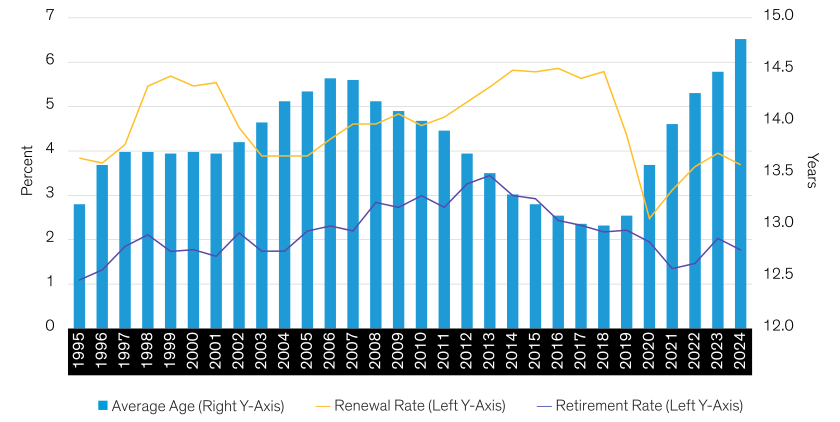
Bars representing average plane age rise starting 2020; line shows plane retirement rate declining

Renewal rate measures the proportion of an airline's fleet that is being replaced with newer models over a specific period of time. Retirement rate is the rate at which aircraft are removed from service, usually expressed as a percentage of the total fleet per year.
As of December 31, 2024
Source: Cirium and International Air Transport Association

Tariffs Make Older Planes Attractive

US president Donald Trump’s extensive tariffs on imported goods are also having an impact, because airline manufacturers rely heavily on a global supply chain. A single US-made Boeing 737 requires parts from hundreds of suppliers, many located in Canada and Mexico. As new planes grow more costly, operators have yet another reason to keep flying older ones for longer.

The longevity of these aircraft should favor lessors who own a global portfolio of planes that they can lease to carriers in need. Investors, meanwhile, gain access to global aviation without being too closely tied to individual airlines. If one air carrier struggles or declares bankruptcy, a plane can be leased to another one.

Recent Bankruptcy Filings in Focus

Trouble among low-cost US carriers has led to headline bankruptcies, including Spirit Airlines, which recently filed for protection for the second time in a year. This trend may signal a paradigm shift that allows lessors to acquire modern narrow-body aircraft at a discount in exchange for providing liquidity to carriers who need it.

We expect struggles at some carriers to speed up consolidation among airline operators. After rising steadily for two decades, the number of US carriers started to fall around 2010 and by 2024 was the same as it was in 1990. As we see it, this shakeout should improve airline operator credit quality. But annual departures over this period increased.

Airline Consolidation: The Future Is the Past
Number of US Airline Operators Has come Full Circle
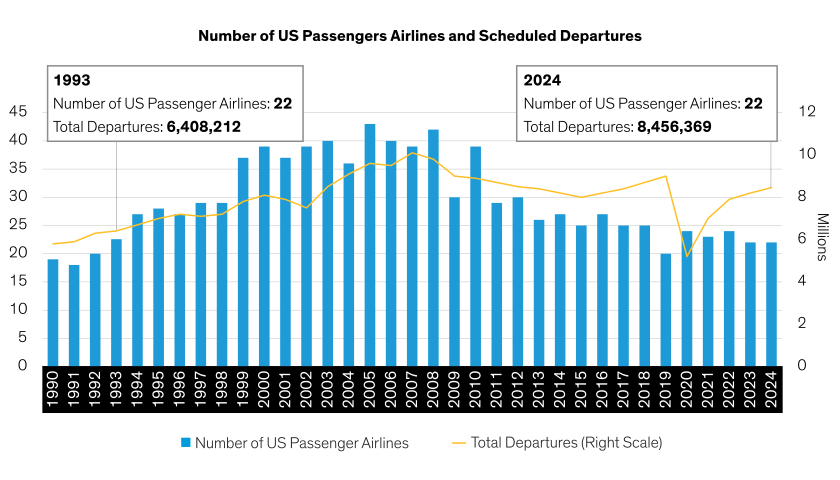
Bars show number of US carriers 2024 same as 1993; line shows departures increased in same period.

As of August 14, 2025
Source: Bernstein

Lessors Are Leaving the Market

A smaller supply of new planes is causing aircraft lessors to consolidate, too. Unable to get their hands on new supply, many large players are growing their fleets by acquiring planes from airline operators, then leasing them back to the airline to use.

These arrangements can benefit all parties involved:

  • The operator gets a lump-sum payment, often above cost, and increased liquidity.
  • Large lessors hold onto the newest-generation planes for use on routes to the largest markets.
  • Midsize lessors often step in to acquire midlife narrow-body aircraft, known as the workhorses of a fleet for their versatility and lower operational costs.


When the time comes to sell, narrow-body aircraft can be monetized in multiple ways, including sale, trade or even conversion to freighter.

Lessors with a fleet of older planes are also likely to benefit if slower global growth and tariff-related costs prompt airline operators to cut back on new plane orders.  

Assessing Economic and Geopolitical Risks

A global recession would slow air travel. So would reduced travel to the US should the administration toughen visa restrictions. But risk would be highest for airline operators, whose position in the capital structure puts them first in line to absorb losses. Aircraft, on the other hand, are portable assets. Lessors are free to redeploy them from a slow market to a healthier one.

An escalation of conflicts in Ukraine and the Middle East could do more damage through higher fuel prices and reduced demand for air travel. But short of a global geopolitical conflict, we continue to see aircraft financing as a compelling way to capture global growth.


About the Authors