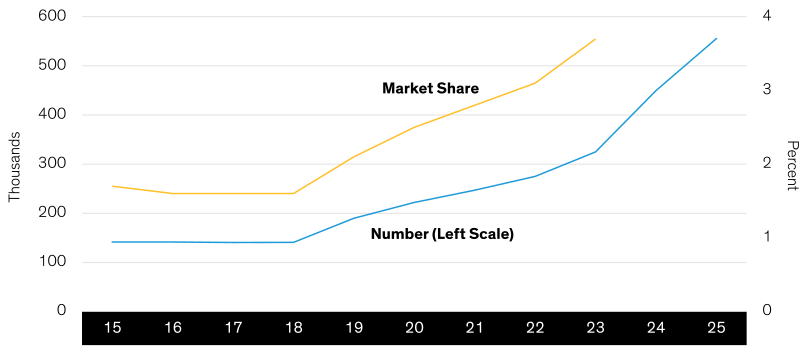
The 2025 fires overwhelmed California’s FAIR fund, which had only $377 million in its account when the blazes began. The state quickly authorized a $1 billion assessment, which insurers passed on to policyholders in higher premiums. FAIR plans may provide interim relief, but in our view, they aren’t sustainable solutions. Indeed, some states have begun to move homeowners off them and back to the private market.
Rethinking the Indemnity Model
As traditional insurance becomes more challenging in high-risk areas, research has turned to possible alternatives.
One is parametric insurance, widely used by crop growers. It differs from indemnity insurance because it is triggered not by property loss or damage but by a predetermined condition. In crop insurance, this might be a specified amount of rainfall that could lead to flooding and crop loss.
Premiums are lower than for indemnity insurance, and payouts are quicker, but there are risks. For example, a weather event may not be strong enough to trigger a payout but may still cause damage. Parametric insurance’s application to wildfire coverage hasn’t been widely tested, but we see potential for it as a risk overlay used in conjunction with indemnity insurance.
Another approach under discussion is community-based insurance, in which coverage is offered to defined groups of homeowners rather than individuals. Advocates argue that it could help communities coordinate resilience measures and improve risk pricing. Regulatory barriers remain significant, however, limiting its use in many states.
Home hardening offers a more direct way to reduce risk. Homeowners can take steps to reduce their property’s vulnerability to wildfire, have the work professionally certified, and submit the certificate to an insurer. This may result in lower premiums or reversal of a previous denial. Such outcomes are not guaranteed, but the approach may make homes safer.
Understanding Insurance Risk Is Critical
We believe investors should understand where insurance markets are breaking down, where alternative risk-transfer mechanisms might emerge and how policy responses evolve. Understanding these dynamics will be key to managing exposures to insurers, real assets, mortgage portfolios, municipal bonds and insurance-linked strategies.
In our analysis, extreme weather is no longer merely a localized underwriting issue but a material factor shaping credit risk, asset valuation, municipal finance and long-term insurability.