-
“Target date” in a fund’s name refers to the approximate year when a plan participant expects to retire and begin withdrawing from his or her account. Target-date funds gradually adjust their asset allocation, lowering risk as a participant nears retirement. Investments in target-date funds are not guaranteed against loss of principal at any time, and account values can be more or less than the original amount invested—including at the time of the fund’s target date. Also, investing in target-date funds does not guarantee sufficient income in retirement.
Private Thoughts: DC Plan Participants Warm to Private Markets
Jul 29, 2026
4 min read
Participants Have Mixed Awareness of Private Market Investments
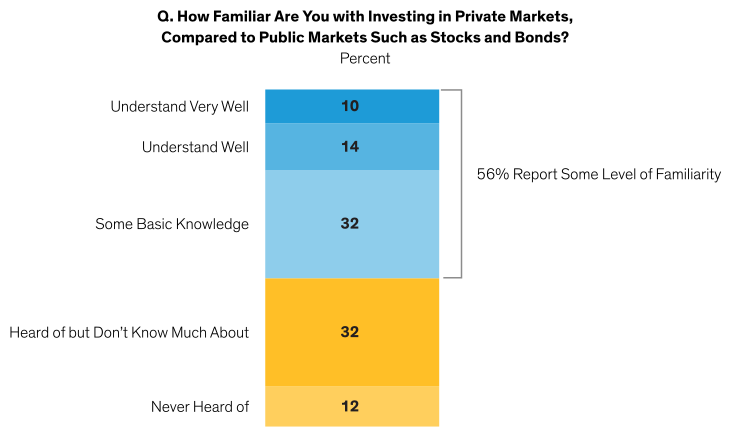
Survey findings are based on the expressed opinions of respondents and do not guarantee specific outcomes.
As of May 2026
Source: Inside the Minds of Plan Participants, AllianceBernstein (AB), 2026
Participants See Potential for Private Markets to Improve Outcomes
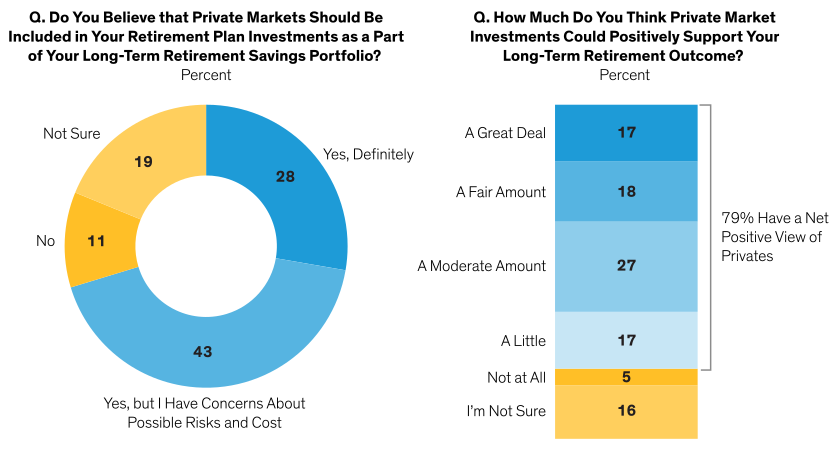
Survey findings are based on the expressed opinions of respondents and do not guarantee specific outcomes.
Numbers may not sum due to rounding.
As of May 2026
Source: Inside the Minds of Plan Participants, AB, 2026
-
The views expressed herein do not constitute research, investment advice or trade recommendations, do not necessarily represent the views of all AB portfolio-management teams and are subject to change over time.
About the Authors