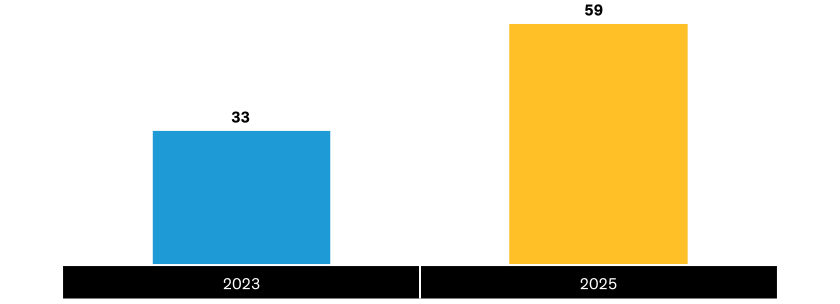
This certainly explains why inflation remained the biggest financial concern, with 85% including it in their top three. Other leading anxiety sources for retirees were whether they’ve saved enough (60%) and knowing how much to withdraw without outliving their savings (57%).
Many retirees felt they’d have prepared a little differently given the chance, especially with a few post-working years under their belts. “Save more money” each month was the biggest standout (57%), followed by “learn more about personal finances” (24%) and “get professional financial advice” (21%).
Retirees Need Financial Advice, but Most Don’t Pursue it
Retirees typically face a slight dilemma when it comes to financial advice. Even though there’s a lot of concern about spending down their savings or outliving their income, only 42% actually reach out to a licensed financial advisor for help.
And financial guidance is more accessible than ever, especially as social media and AI contribute more to the mix. Yet, retiree trust in digital sources may still be lagging: 76% over the age of 65 tend to prefer humans over AI for financial advice, compared to 54% across all ages that want a human touch.
How Employers Can Help Smooth the Transition
In our view, seeking financial advice—even for the first time—is one of the few course corrections retirees can still make. But advice can be more effective and lasting when it comes earlier in participants’ careers, ideally through their employer’s retirement plan. In fact, we think employers can do much more to ensure retirement readiness, not just during the transition but long before it.
Guaranteed retirement income planning is an ideal place for sponsors to start, given how longer lifespans, inflation and market volatility are risks to everyone’s retirement income potential. Sponsors can help debunk the common myths of guaranteed income solutions especially, and show participants they’ll have the income they’ll need. Participants are usually tempted to reduce contributions, allocate more conservatively or, worse, withdraw savings when markets get bumpy. But research shows the presence of guaranteed lifetime income alone may help reinforce sound investment principles, leading to better participation rates and greater long-term savings.
Retirees see the value of guaranteed income, too, with nearly 75% either participating (or wishing they had) in their employer’s guaranteed income option, according to our survey. We think employers who offer income solutions may also see workforce management benefits: longer-serving, higher-paid employees are less likely to delay retirement when they’re prepared for it much sooner.
Other related areas employers could focus on to bolster preparedness include:
- Regularly reminding their employees about tax-related incentives to help them save, including the “saver’s credit” and “catch-up” contributions.
- Targeted information and education programs for pre-retirees, especially as they transition. These should include resources for financial advice, understanding their distribution options and the income strategy they own, unpacking Social Security, managing health care costs, and planning for estate or wealth transfers.
- Career continuation coaching, to help them supplement their retirement income or volunteer in their communities after separation.
To sum things up, most retirees in our survey are managing well, while many feel they’d be doing better if they had enhanced their approaches while still working. We can all learn from this, since retirees’ experiences will eventually be ours. The key is to repeat their successes and avoid their mistakes, especially with the help and guidance of plan sponsors.