-
The views expressed herein do not constitute research, investment advice or trade recommendations, do not necessarily represent the views of all AB portfolio-management teams and are subject to change over time.
For DC Savers, Better Returns May Translate into Longer-Lasting Income
July 09 2026
2 min read
The Potential of Enhancing Returns: Spending for Longer
Hypothetical Retirement Saving and Spending Illustration (US Dollars)
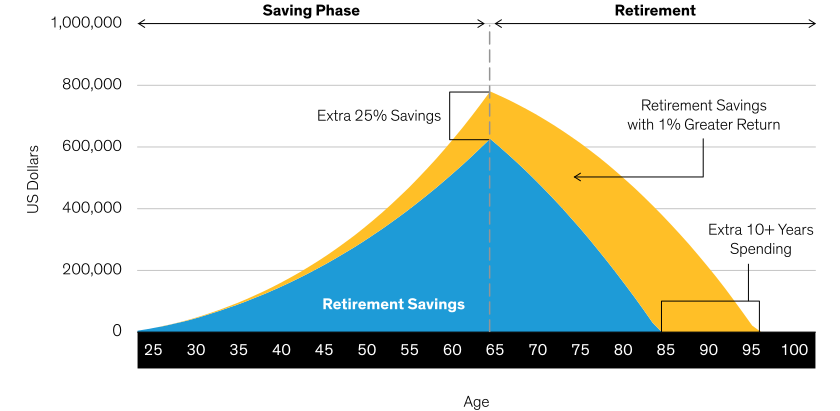
This is a hypothetical return illustration only and does not guarantee future results. Simulated or hypothetical trading programs in general are also subject to the fact that they are designed with the benefit of hindsight. No representation is being made that any account will or is likely to achieve returns or a volatility profile similar to those being shown. The retirement savings phase simulates an inflation-adjusted salary of $45,000 at age 25, increasing linearly to $75,000 by age 65. Yearly total contributions (employee plus employer) begin at 9% of salary at age 25, rising by 0.5% per year up to a maximum 13%. The spending phase estimates a $22,500 (30% of final salary) inflation-adjusted Social Security benefit. $41,250 (55% of final salary) inflation-adjusted spending is deducted at the start of each year. The yearly real investment return is 4% until age 40, declines linearly to 2.5% at age 80 then stays constant. In the “1% Greater Return” scenario, real return is increased by 1%. Inflation is a constant 2.5%, and dollar values are in real purchasing-power terms. As of December 31, 2025. Source: AllianceBernstein (AB)
-
“Target date” in a fund’s name refers to the approximate year when a plan participant expects to retire and begin withdrawing from his or her account. Target-date funds gradually adjust their asset allocation, lowering risk as a participant nears retirement. Investments in target-date funds are not guaranteed against loss of principal at any time, and account values can be more or less than the original amount invested—including at the time of the fund’s target date. Also, investing in target-date funds does not guarantee sufficient income in retirement.