Why Higher US Bond Yields Will Likely Stick Around

September 17 2026
5 min read

The key factors holding Treasury bond yields up don’t seem likely to ease anytime soon.

The Federal Reserve raised policy rates by 25 basis points at its September meeting, providing some relief to the bond market. But longer-term yields are still sharply higher over the past few months, drawing focus from policymakers and investors. Some factors driving Treasury yields up may be exaggerated, but others seem likely to last. Investors should expect yields to stay higher in the months ahead.

It may seem counterintuitive for a Fed hike to bring yields down, but we think it makes sense in this case, because it bolsters the central bank’s credibility. If the market doubts the Fed’s ability and willingness to control inflation, long-term yields should rise. The rate hike underscored the central bank’s resolve to battle inflation, reducing one source of pressure on bonds. That credibility is good news from an economic and policy perspective: stable inflation expectations suggest less worry about accelerating price pressures. 

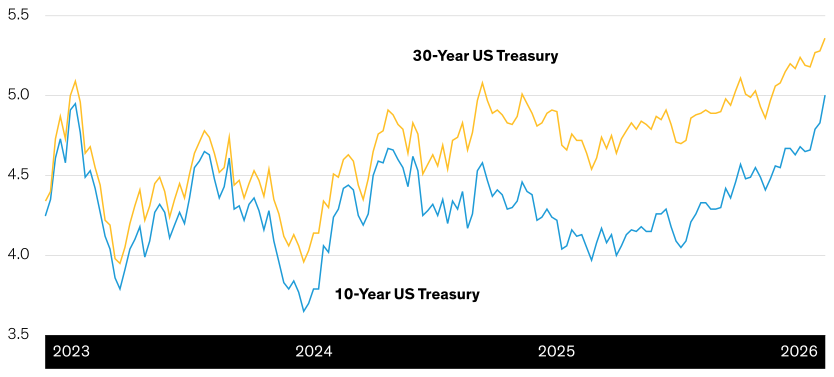
If inflation expectations and Fed credibility aren’t behind the higher Treasury yields (Display), what is? Explaining yield moves is always complicated. Many factors are at play and it’s impossible to be precise about their contributions. However, we see four primary explanations. 

Longer-Term US Bond Yields Are Still Sharply Higher
Yield (Percent)
Gradually rising US 10- and 30-year Treasury yields since mid-2025

Historical analysis does not guarantee future results.
Through September 16, 2026
Source: Bloomberg and AllianceBernstein (AB)

Expectations for US Economic Growth Are Higher 

The good news is that rising growth expectations seem to be one reason for higher long-term bond yields. The capital-spending boom on artificial intelligence has bolstered near-term growth, and the view that productivity will rise in the future implies a faster growth trajectory. That means interest rates should be somewhat higher over time, too. It’s too early to be sure that AI will boost long-term growth, but we generally share the market’s optimism that it will—even if it may take some time to play out. 

The US Debt Burden Is Rising—and So Are the Interest Payments 

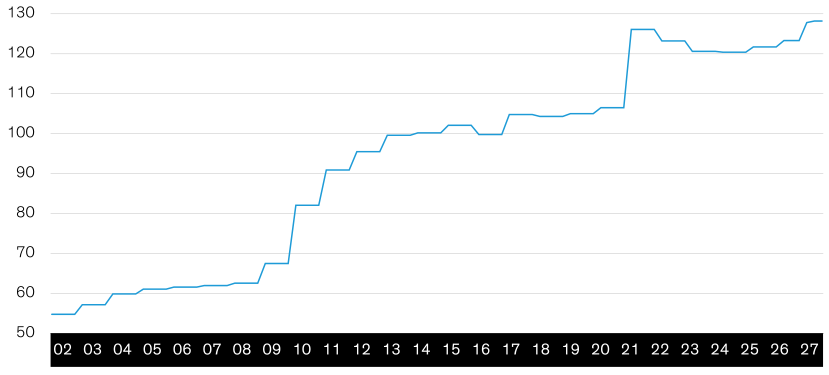
Not all the news is good, though. Gross US federal debt recently topped $40 trillion, which is more than 120% of GDP (Display). There’s no magic tipping point beyond which the debt burden becomes unstable, but the numbers are still eye-catching. The trajectory is even more important. The budget deficit is still well above pre-pandemic levels and there’s little relief in sight. A higher and stickier deficit demands more debt to finance it. 

The US Federal Debt Burden Is Sizable
US Government Debt as a Percent of Gross Domestic Product
US government debt as a percentage of gross domestic product climbing since 2002

Historical analysis does not guarantee future results.
Through June 30, 2027. Includes forward estimates
Source: Bloomberg and AB

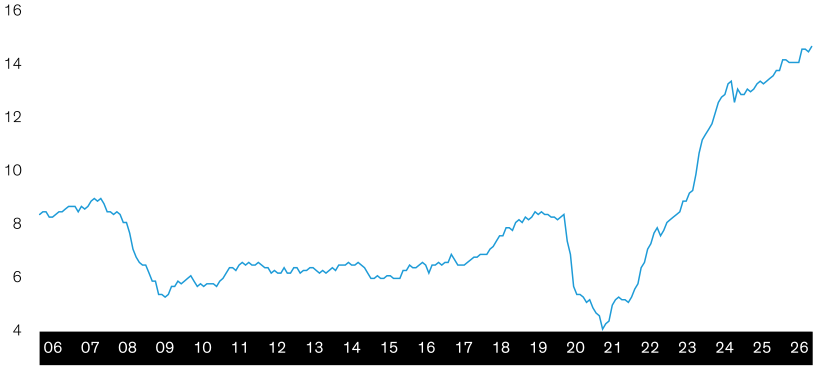
Higher yields make the debt situation worse, making new government debt more costly and requiring more money just to pay the interest. We’ve seen these payments surge as a percentage of both GDP and the federal budget (Display). Tax hikes or cuts to entitlement programs seem unlikely, so deficits, debt and debt-service costs will probably be persistent. A debt crisis isn’t necessarily looming, but more debt issuance means a lower price, and in bond markets that lower price means higher yields.

The Weight of Interest Payments on US Debt Is Mounting
Interest Payments on US Government Debt as a Percent of Total Outlays (Percent)
Interest payments on US government debt rising as a percent of total outlays since 2021

Historical analysis does not guarantee future results.
Through July 31, 2026
Source: Bloomberg and AB

Volatile Policymaking Means Less Clarity for Markets 

Another factor pointing toward higher yields is policy-induced volatility. Fed credibility aside, Chair Kevin Warsh’s communication strategy is a clear break from past practice. Typically, the Fed has shared insight into its economic outlook and how policy should respond. Warsh has refused to do either. He believes it’s more important for the Fed to get signals from asset prices that aren’t influenced by Fed guidance. 

We don’t think the Fed should make explicit commitments about the path of rates for the most part, but it should still explain its reaction function. In other words, what would motivate it to change rates over time? Warsh has refused to do even that, stoking volatility in bond markets. If the market doesn’t get a better answer to that question, higher volatility will stick around. That means the “term premium,” the extra compensation investors require for holding bonds, will also stay elevated, keeping yields higher. 

The Treasury Department has introduced policy volatility, too, becoming more active in markets as yields have risen. It intervened in currency markets, buying yen and selling dollars to help Japan shore up its currency. The Treasury also deviated from its “regular and predictable” bond issuance and buyback schedule, tripling the amount of longer-term bonds it intends to buy back. Increased bond purchases pushed yields down briefly, but we think more frequent intervention over time will more likely push yields up. After all, irregular, unpredictable bond buying could just as easily turn into bond selling. That argues for a higher risk premium in Treasury bond yields.

AI Debt Issuance Has Stiffened Competition in the Bond Market 

AI firms have dramatically boosted their corporate debt issuance, particularly in the case of so-called “hyperscalers,” large cloud-computing companies with massive data center networks. The scale and speed of that bond issuance seem likely factors behind rising Treasury yields. The surge in AI debt issuance creates more competition for Treasury bonds, broadening the choices for investors. To keep Treasuries an attractive destination, their yield has to be higher than it otherwise would be. 

Higher Rates for a While, with Fiscal Challenges Growing 

Most of the factors driving bond yields up recently seem set to last, so we expect yields to stay elevated relative to their recent history. They won’t necessarily keep rising as fast as they have in recent weeks, but we don’t expect them to drop back to previous levels in the near term, either, unless there’s a significant policy innovation. 

Higher yields generally slow economic growth, but we believe the US economy is strong enough to withstand higher rates for the next few quarters. AI-related capital spending is likely to be unusually insensitive to a higher cost of capital, enabling it to continue supporting the economy.

We see fiscal policy as the more likely friction point. Higher funding costs will bite into the federal budget increasingly over time, and we see little reason to expect Washington to rein things in—even after the US midterm elections. The US can continue kicking the fiscal can down the road, but those kicks will become more costly.
The views expressed herein do not constitute research, investment advice or trade recommendations, do not necessarily represent the views of all AB portfolio-management teams and are subject to change over time.


About the Authors