Fixed Income
Overview
An actively managed ultra short fixed income bond ETF that seeks to provide current income, consistent with preservation of capital
About this Fund
- Seeks to deliver higher levels of yield relative to cash or cash-like investments, while aiming for capital preservation and liquidity in all market cycles
Investment Approach
- Primarily invests in high quality, investment-grade short duration fixed income and cash equivalent securities with a duration of one year or less
- May invest in corporate securities, Treasuries, repurchase agreements, money-market funds and high-quality money-market instruments such as commercial paper and certificates of deposit
- Leverages the strength of AB’s award-winning fixed income platform and a three-pronged approach to prioritize yield, stability and liquidity
Why Invest in the AB Ultra Short Income ETF?
- Seek Attractive Income with Low-Rate Sensitivity
The AB Ultra Short Income ETF (YEAR) invests in high quality, short-duration fixed income securities across sectors, seeking to deliver competitive income with limited exposure to interest rate volatility - Enhance Your Cash Management Strategy
Designed to increase total return and reduce opportunity cost of traditional cash management approaches, YEAR offers enhanced yield potential while maintaining a conservative risk profile and liquidity - Leverage Active Management for Short-Term Markets
YEAR actively manages duration, sector exposures and security positions to capitalize on changing market conditions and uncover opportunities beyond passive approaches - Diversify Short Term Fixed Income Allocations
The Fund’s multi-sector approach provides exposure to government bonds, corporate bonds, money market assets, and asset-backed securities, balancing risk and return potential across varying economic environments - Maintain Liquidity and Flexibility
YEAR’s active ETF wrapper offers intra-day transparency, liquidity, and the potential for greater tax efficiency compared with other investment vehicles
Meet the Team


Putting Cash to Work: Yield, Liquidity and Taxes
Excess cash isn’t just about parking funds—it’s about strategic allocation.
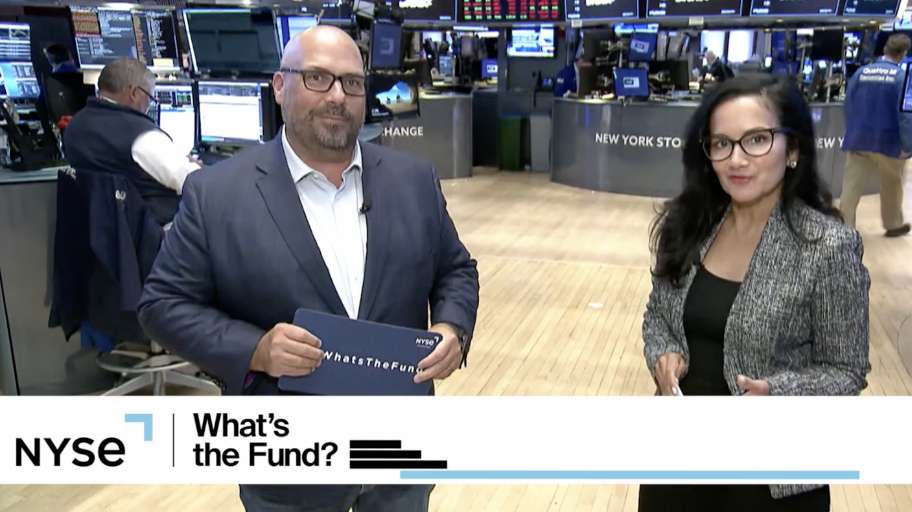
NYSE What's The Fund - Ticker: YEAR

The opportunity to transition from cash into an ultrashort bond fund like the AB Ultra Short Income ETF (YEAR) has rarely seemed more compelling.
Additional Information
AB Ultra Short Income ETF (YEAR) FAQs
Risks To Consider
-
Investing in ETFs involves risk and there is no guarantee of principal.
Investors should consider the investment objectives, risks, charges and expenses of the Fund/Portfolio carefully before investing. For copies of our prospectus or summary prospectus, which contain this and other information, visit our Literature Center or contact your AB representative. Please read the prospectus and/or summary prospectus carefully before investing.
Shares of the ETF may be bought or sold throughout the day at their market price on the exchange on which they are listed. The market price of an ETF's shares may be at, above or below the ETF’s net asset value ("NAV") and will fluctuate with changes in the NAV as well as supply and demand in the market for the shares. Shares of the ETF may only be redeemed directly with the ETF at NAV by Authorized Participants, in very large creation units. There can be no guarantee that an active trading market for the Fund’s shares will develop or be maintained, or that their listing will continue or remain unchanged. Buying or selling the Fund’s shares on an exchange may require the payment of brokerage commissions and frequent trading may incur brokerage costs that detract significantly from investment returns.
-
Below Investment Grade Securities Risk: Investments in fixed-income securities with lower ratings (a/k/a junk bonds) are subject to a higher probability that an issuer will default or fail to meet its payment obligations. These securities may be subject to greater price volatility due to such factors as specific municipal or corporate developments and negative performance of the junk bond market generally and may be more difficult to trade than other types of securities.
-
Credit Risk: A bond’s credit rating reflects the issuer’s ability to make timely payments of interest or principal—the lower the rating, the higher the risk of default. If the issuer’s financial strength deteriorates, the issuer’s rating may be lowered, and the bond’s value may decline.
-
Derivatives Risk: Derivatives may be more sensitive to changes in market conditions and may amplify risks.
-
Foreign (Non-U.S.) Investment Risk: Investments in securities of non-U.S. issuers may involve more risk than those of U.S. issuers. These securities may fluctuate more widely in price and may be more difficult to trade than domestic securities due to adverse market, economic, political, regulatory, or other factors.
-
Inflation Risk: Prices for goods and services tend to rise over time, which may erode the purchasing power of investments.
-
Interest Rate Risk: As interest rates rise, bond prices fall and vice versa, long-term securities tend to rise and fall more than short-term securities.
-
Investment Securities Risk: To the extent the Fund invests in other funds, shareholders will bear to layers of asset-based expenses, which could reduce returns.
-
Leverage Risk: Trying to enhance investment returns by borrowing money or using other leverage transactions such as reverser purchase agreements—magnifies both gains and losses, resulting in greater volatility.
-
Market Risk: The market values of the portfolio’s holdings rise and fall from day to day, so investments may lose value.
-
New Fund Risk: The Fund is a recently organized, giving prospective investors a limited track record on which to base their investment decision.
-
Distributed by Foreside Fund Services, LLC. Foreside is not affiliated with AllianceBernstein.
-
AB funds may be offered only to persons in the United States and by way of a prospectus. This website should not be considered a solicitation or offering of any investment products or services to investors residing outside of the United States.
Investment Products Offered:
Are not FDIC Insured | May Lose Value | Are Not Bank Guaranteed
The [A/B] logo and AllianceBernstein® are registered trademarks used by permission of the owner, AllianceBernstein L.P.