For companies that suffer big swings in earnings growth, the road to recovery from a bad year is very challenging. Here’s why: after company B’s earnings growth falls by 10% to $9.0 in year one, earnings must surge by 35% to catch up with company A. If earnings decelerated by just 5% the next year, the company would need to post a 20% gain to get back on par with the stable grower.
The Compounding Power of Steady Growth
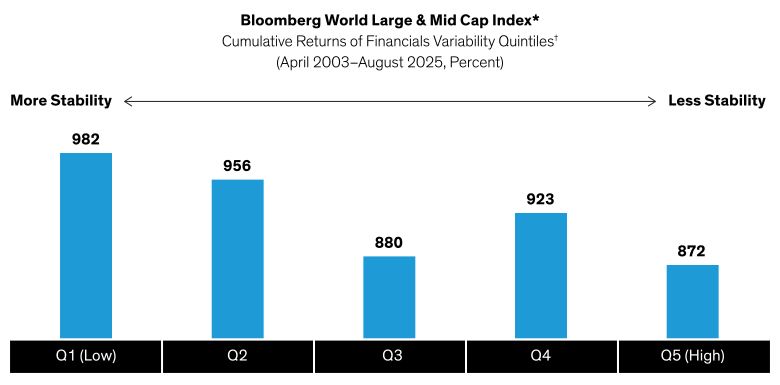
This simple math explains why “smooth and steady” often wins the investment race in absolute terms, not just risk-adjusted terms. Avoiding deep losses builds gains on a higher base. It’s like climbing a mountain at a moderate, steady pace, which will help you reach the summit faster than someone who sprints and slides back repeatedly.
Given these advantages, why doesn’t every investor gravitate toward these types of growth strategies? We offer three explanations.
1. Allure of the “Next Big Thing”: It’s human nature to be captivated by exciting stories and rapid rewards. Promises of breakthrough technology or meteoric growth grab investor dollars—even if a company’s path to profitability is uncertain. Glamor stocks make stable businesses look boring.
2. Recency Bias and Overreaction: Recent performance is often extrapolated too far into the future. So investors might expect a company that had a stellar growth year to keep accelerating. Conversely, if a solid company has a rare soft quarter, short-term holders might flee, assuming the worst. Overreactions like these can punish stable stocks that stumble briefly, while rewarding volatile stocks coming off a winning streak.
3. Closet Indexing: Many active managers who aim to keep pace with their benchmarks hold the same popular names, especially during bull markets dominated by hot sectors. As a result of “closet indexing,” consistent, lower-profile businesses are overlooked and only gain recognition after their steady compounding becomes impossible to ignore. By then, it’s too late; much of the value creation has already happened and many portfolios have missed out on the rewards of reliable growth.
Business Models That Can Withstand Recurring Stress
Heightened volatility isn’t going away. Tariffs, geopolitical tensions and macroeconomic trends remain huge uncertainties. In these tricky conditions, which type of stock would you rather own in your equity portfolio?
We believe that companies with enduring, consistent growth offer an anchor for uncertain times and can help investors build wealth more effectively than volatile businesses with higher, but irregular return patterns. And when investors find companies like these at attractive share-price valuations, it adds another layer of resilience, especially in down markets when expensive stocks may get hit harder. Equity portfolios that maintain a disciplined focus on durable growth at the right price may experience lower annual returns in a given year or two—yet by the power of compounding on consistent returns, they might actually end up ahead of the pack over time.