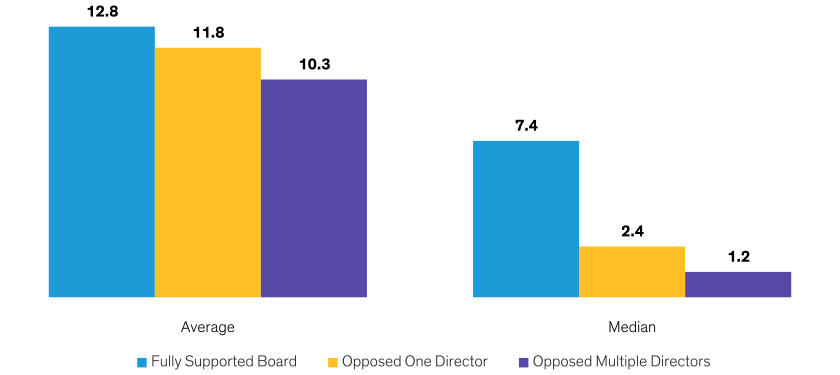
These findings reinforce our view that board effectiveness is a material investment consideration—and that director elections are among the most important votes an investor can cast.
What Makes a Board Effective?
The board of directors is critical in overseeing management’s performance, composition and compensation. An effective board is necessary to managing the risks to a company’s operations and financial performance. Directors of public companies are ultimately responsible for ensuring that management acts in the best financial interests of all shareholders. Effective governance is often most visible during corporate turnarounds, where alignment between management and shareholders is essential.
No matter the company or sector, effective boards are defined by their composition, structure and actions. High-quality board composition entails majority-independent oversight, and a variety of skills and backgrounds, without attendance issues or excessive outside commitments. Structural mechanisms such as formal board committees, majority-vote standards and annual director elections ensure accountability. Lastly, boards demonstrate effectiveness through their actions: aligning pay with performance, ensuring disciplined allocation of capital and engaging with shareholders.
Naturally, not all boards meet these criteria. If we determine that a board’s structure or actions aren’t aligned with our clients’ best financial interests, we may hold relevant directors accountable, which is consistent with our fiduciary duty.
How does this work in practice? At a major US bank, we recognized historical governance shortcomings such as fraud, risk-management failures, workplace misconduct and broad misalignment with shareholders. We then engaged* in a multiyear dialogue with its board and senior leaders, consistently voting against relevant directors. Ultimately, the bank implemented improved oversight mechanisms as a part of a larger cultural overhaul, in addition to improving management incentives.
Keep Your Eye on the Board
We believe that investors should stay focused on a simple question: Is the board delivering for shareholders? Our research shows a clear connection: disappointing boards tend to deliver disappointing results, while boards earning our full support historically outperformed in the following year.
Boards perform best when they know investors are watching. Director-election votes may not make headlines, but they’re where investors’ voices matter most.