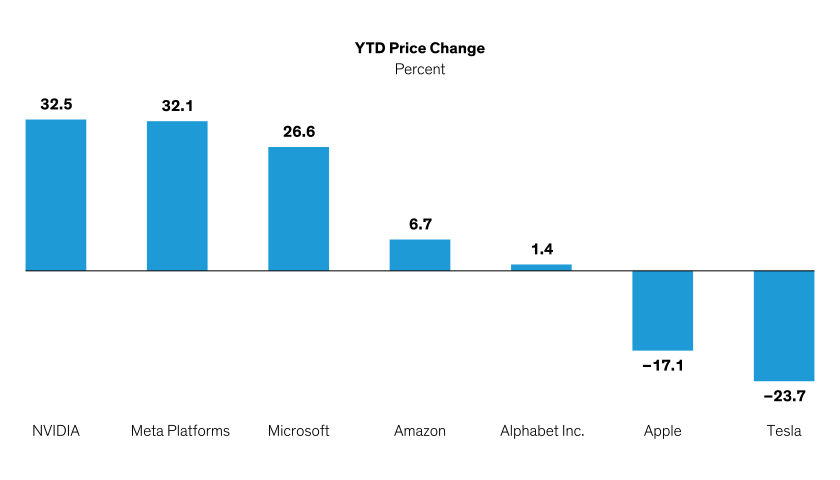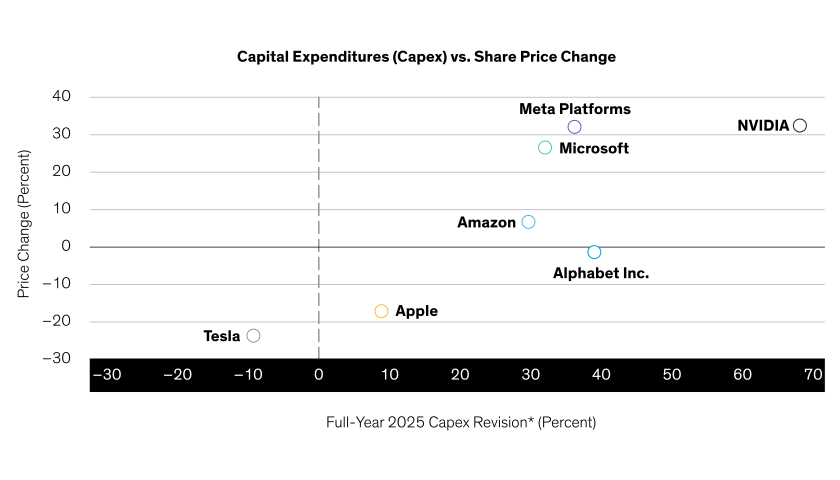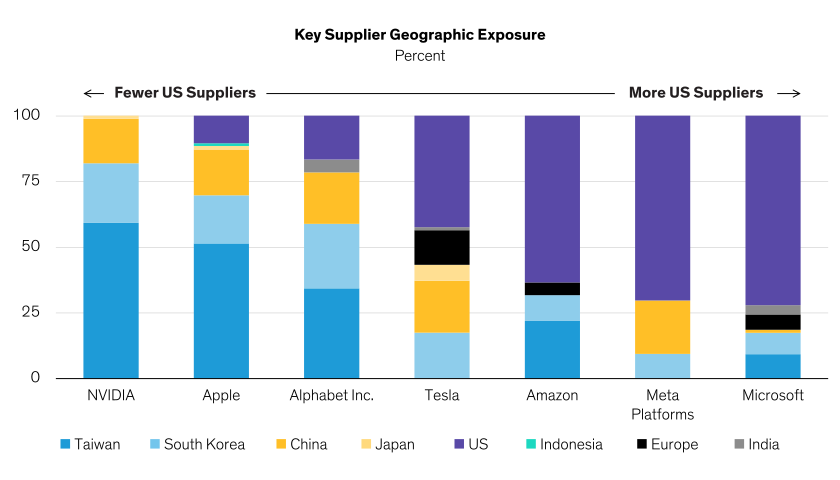
To be sure, NVIDIA is an outlier, as the company has been the best performing Mag Seven stock this year, even though it sources almost its entire supply of chips from Taiwan. This shows why we believe investors must apply rigorous fundamental research to understand the complex set of business factors that affect a company—and its share price performance.
Business Models Shape the Future
It’s not surprising that these stocks are charting different paths after a powerful surge. History shows that the largest stocks by market cap often change as new leaders emerge. Catalysts for such shifts have ranged from macro-trend changes to technological disruption.
Even dominant companies may see their competitive advantages erode over time. New innovations can challenge incumbents or customer demand might fall short of management expectations. And each Mag Seven company has a different business model. Microsoft and Alphabet are focused on services, rather than goods, which makes them less vulnerable to tariff risk. Apple faces trade-war risks because its manufacturing footprint is largely in China.
Distinct Investment Stories
Of course, all the Mag Seven companies have strong business foundations and may enjoy continued upside. But in our view, when investing in the mega-caps—as in any stock—factors such as valuations and management execution can alter the course of their growth and return outlooks. Investors must also consider which companies are doing a better job at adopting and enabling AI in this fast-changing landscape. In January, the AI breakthrough of China’s DeepSeek triggered sharp declines in the Mag Seven stocks and showed how technology challengers can emerge from nowhere to disrupt industry leaders.
Treat these mega-caps as distinct investment stories—not a monolithic group. As we see it, passively investing in the entire Mag Seven cohort may expose a portfolio to concentration risk, given their huge weight in key benchmarks. Active equity investors must research each company to gain conviction in their strategic investing plans and to determine whether their business model advantages will be sustained over the long term.
Don’t assume that all these stocks will continue to sharply outperform indefinitely. Each company is subject to dynamic fundamental forces. Thoughtful position sizing and selectivity, aligned with a portfolio’s philosophy, are likely the best playbook to capture the return potential within the Mag Seven group of stocks—while prudently managing the associated risks.
The authors wish to thank Bryan Chang, Investment Strategist—Equities, and Steffi Napoli, Product Analyst, for their research contribution to this blog.