The challenges of the COVID-19 pandemic have reinforced the importance of organizational wellness and made it more challenging to maintain. But the stakes are high, with wellness a major driver of organizational performance, talent retention and recruitment.
We asked experts in the medical and investment management industries to provide a deeper perspective on organizational wellness, how to maintain and assess it, and the moving parts as leadership teams lay out a pathway for returns to offices.
Every organization is made up of individuals, and the pandemic has had profound effects on so many people. Can you share with us some of the lingering issues that firms should expect employees to still be coping with even as they return to offices in some form?
Dr. Lindsey McKernan, PhD, MPH, Associate Professor, Psychiatry and Behavioral Sciences, Vanderbilt University Medical Center: The pandemic created a unique mix of challenges. Many people have suffered elevated levels of anxiety and depression, trauma, physical strain (such as chronic fatigue), grief and burnout. Protecting themselves and loved ones from the pandemic while logging many work hours was an intense and protracted source of stress.
We all cope differently when met with stress. While one person may retreat, another could dive into work for distraction or to feel more in control. Some workers endured periods of withdrawal and may have seen work performance suffer—being late on deadlines they normally would have met, missing or being late for meetings. Other staff may have coped by being extreme overproducers who sacrificed much more than normal—late-night emails, green lights always on, severely blurred lines between professional and personal.
We need to be mindful of grief and loss when reconnecting with our employees. Grief was a common factor among many. Some may have lost loved ones and friends, and many of us have lost out on parts of our lives and our children’s lives that we never expected to miss. A number of studies have shown that connections to people who have died from COVID-19 are surprisingly widespread. In one US survey, one in three respondents knew someone who passed away from the virus. Grief is complex and lasting.
All of these aftereffects will be present to some extent in returning colleagues. It’s also important to know that grief can be intensely private for some, and you may not know the extent of loss a person has suffered through the pandemic.
Remote work necessarily balances safety and collaboration. What considerations (safety, logistics, productivity, personal interactions, flexibility) are in the mix as you enter the “return to office” era, whether it’s hybrid or fully in office? What’s top of mind?
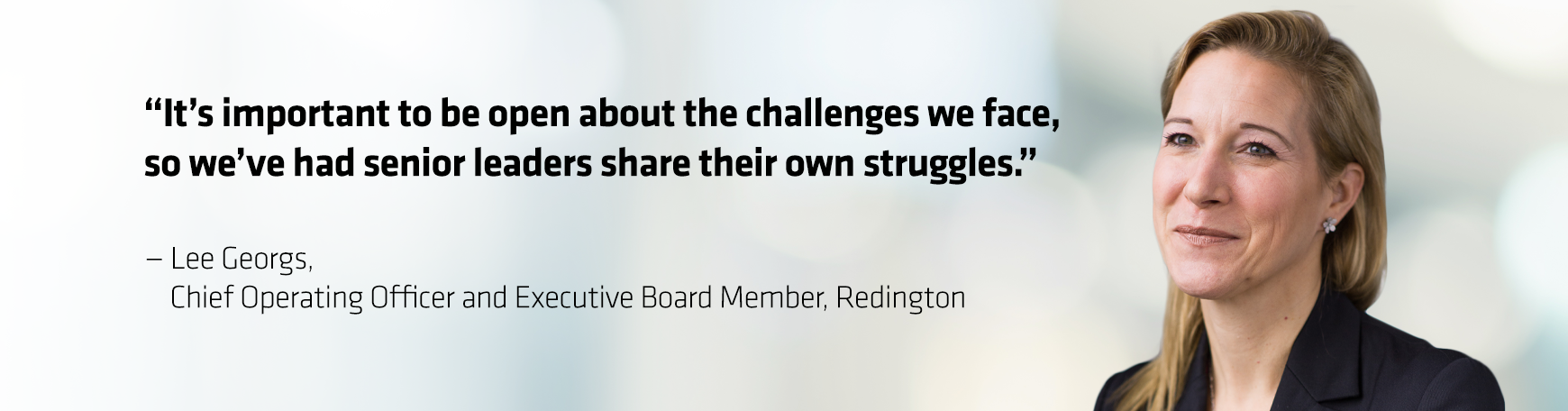
Lee Georgs, Chief Operating Officer and Executive Board Member, Redington: Our Health Committee, which was set up during the first few weeks of the March 2020 lockdown, is driving our return-to-office policies. But we’re also listening to team leaders, business leaders and individual employees. We hope to phase back into the office gradually once the government lifts restrictions.
It’s a bit complex logistically: we've hired extensively during the pandemic, but our office footprint hasn’t grown so we need to implement both a hybrid working model and hot-desking system at the same time. We want to stay connected in the phased return, so we’ll experiment until we get it right. Our headquarters in London is a traditional open floor plan arrangement, which means we’re looking at ways to keep people focused and efficient in a naturally louder, more energetic environment. Headphones are a start, but there’s more to be done.
We’re planning to start with a three/two model, with most people in the office three days and home two. Initially, we’ll bring full teams in together, rather than splitting them. We’ll need to balance intra and inter-team touch points and collaboration but, with many new people, we feel strongly about the need to solidify teams. Of course, we’ll learn and adapt as we go.
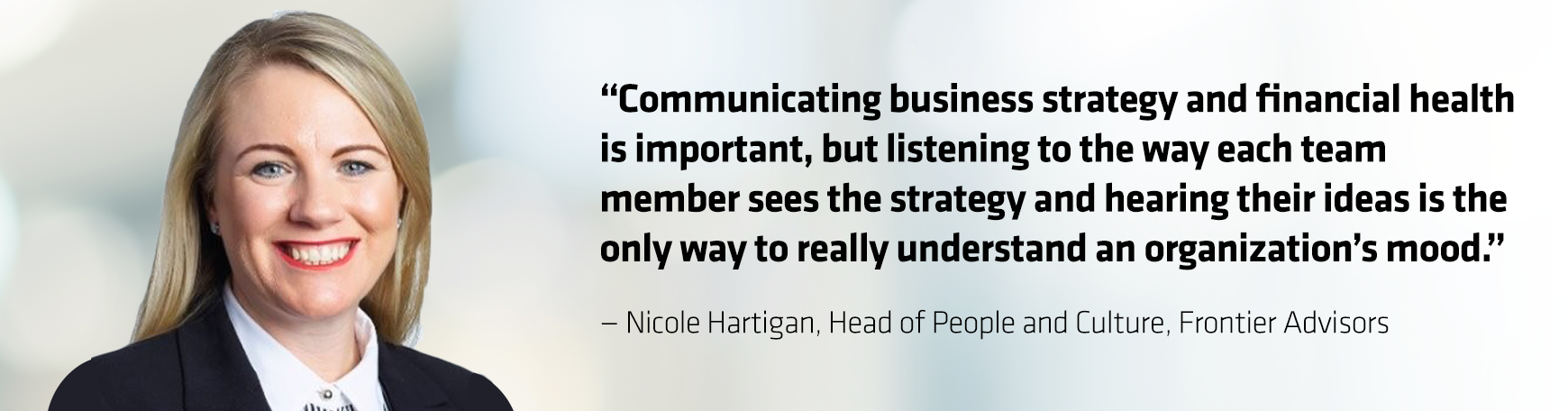
Nicole Hartigan, Head of People and Culture, Frontier Advisors: Top of mind is retaining the benefits of collaboration and the synergies from many minds working toward solutions for our clients. You can collaborate remotely, but there’s a lot of value from interactions that happen in person and within groups—often from those who may otherwise be on the periphery of an issue. Good solutions are often an amalgam of ideas or observations that might not otherwise connect without the extra dimension that in-person interactions provide.
We’re encouraging our team to aim to be together two days each week (Tuesday and Thursday). On those days, we can more easily hold team meetings, including firmwide meetings. Having as many of our people together as possible is also invaluable in keeping that sense of camaraderie and connection that is so important in maintaining our strong culture. And being a part of a strong team culture is critical to the personal satisfaction and fulfillment we each gain from our jobs.
Dr. Lindsey McKernan: Even for workers initially coming in on a limited number of days, it’s their first time in an office in over a year—and a massive environment change. Any transition is fertile ground for a stress response, and could resurface pre-existing or dormant mental health challenges.