

-
The views expressed herein do not constitute research, investment advice or trade recommendations, do not necessarily represent the views of all AB portfolio-management teams and are subject to change over time.
Emerging-Market Debt: The Next Frontier for AI Disruption?
25 September 2026
4 min read
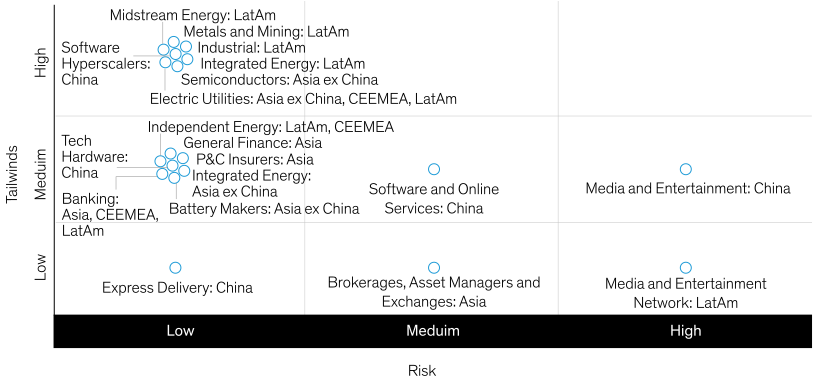
AI Creates Diverging Credit Exposures Across EM Industries
Framework Mapping EM Industries: AI-Driven Tailwinds vs. Risk of Disruption
Current analysis does not guarantee future results. For illustrative purposes only.
CEEMEA: Central and Eastern Europe, Middle East and Africa; LatAm: Latin America; P&C: property and casualty
As of April 30, 2026
Source: AllianceBernstein (AB)
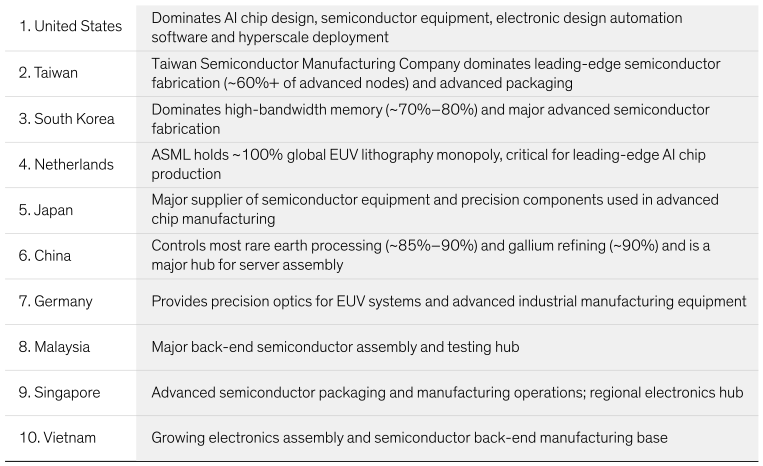
AI Structural Leverage Is Concentrated in a Few Critical Countries
Countries Ranked by Control over Key Supply-Chain Chokepoints
Historical and current analyses do not guarantee future results.
EUV: extreme ultraviolet
As of April 30, 2026
Source: AB
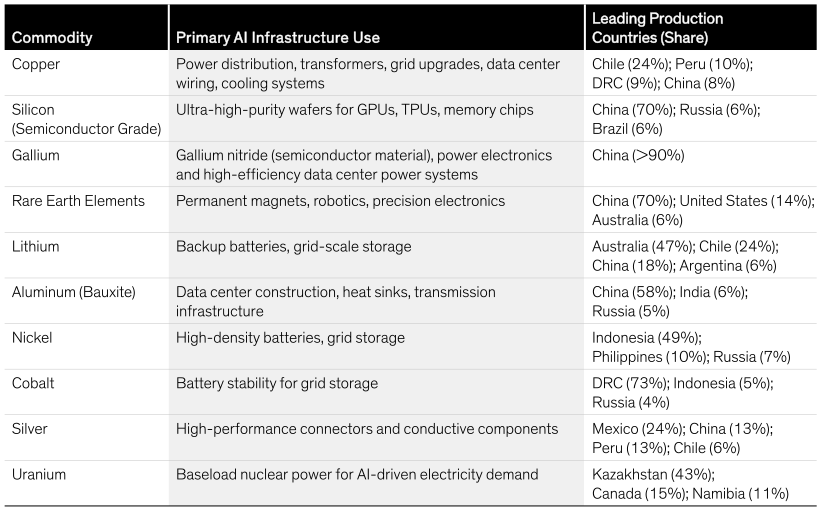
AI Infrastructure Relies on Commodities Concentrated in EM
Key Commodities Needed for AI and the Countries That Lead Their Production and Processing
Historical and current analyses do not guarantee future results.
GPU: graphics processing unit; TPU: tensor processing unit; DRC: Democratic Republic of the Congo
As of April 30, 2026
Source: AB
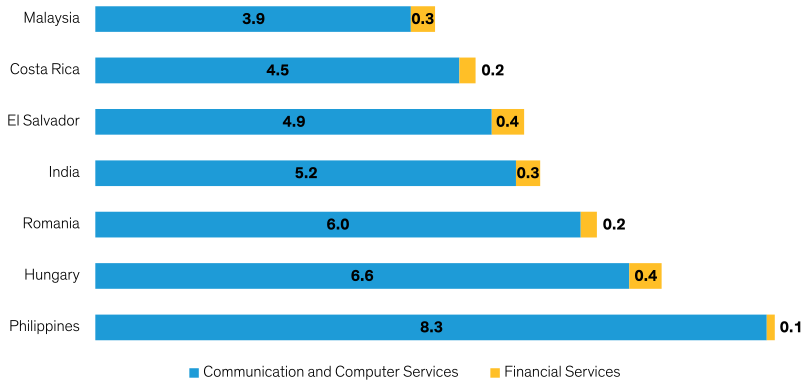
AI-Exposed Services Play an Outsize Role in Some Emerging Economies
Services as a Share of GDP in 2024 (Percent)
Historical and current analyses do not guarantee future results.
As of February 28, 2026
Source: World Bank and AB
About the Authors