The US economy is important, but it’s not the only one in a global approach.
It’s been a volatile few months for US debt and the dollar, with sudden shifts in trade and fiscal policy raising some concerns about the safe haven status of dollar-denominated assets. With US policy questions likely to remain front and center, we think bond investors wrestling with tariff-related volatility may want to lean into a more global approach.
We’re certainly not ready to call an end to the dollar’s preeminent role in the global economy. It remains the world’s most liquid currency, supported by the world’s deepest capital markets.
What’s more, there simply isn’t an obvious alternative to take the dollar’s place. Evidence of global reserve managers selling dollar-denominated Treasuries has been scarce too, though it’s possible some are hedging the dollar exposure that comes with those bonds. For investors who carefully manage their duration risk, we think dollar-denominated Treasuries will continue to stabilize portfolios in times of stress.
Policy Change: Dealing with the Unpredictable
But if there’s a gap in the dollar’s armor, we think it’s the increasingly unpredictable nature of US policy. The sheer scope of the tariffs that President Trump announced in April, for example, took markets by surprise; the policy twists and turns and temporary pauses since have intensified the sense of whiplash.
When Israeli air strikes on Iranian military and nuclear infrastructure began in mid-June—later supplemented by targeted US strikes—Treasuries initially rallied with gold. But yields rose shortly thereafter, partly due to concern about oil supply disruptions.
On the fiscal side of the ledger, the One Big Beautiful Bill Act is expected to increase the fiscal deficit by anywhere from $1.5 to $3 trillion over the next decade, with proposed tax cuts exceeding potential savings from cuts to clean-energy subsidies and Medicaid.
Going Global Could Boost Income and Trim Volatility
Investors worried about tariffs and wondering if US exceptionalism still holds may find opportunities in hedged global bonds. With a global fixed-income allocation, investors get access to a wider range of issuers, credit profiles and yield curves, which may add up to more income with less volatility.
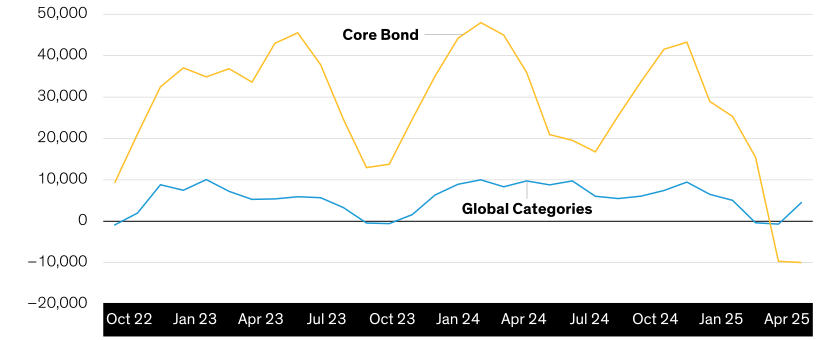
What’s more, different countries operate under distinct economic, monetary and inflation regimes. For investors, those different paths may add up to less correlated return streams and alternative sources of income and risk. This may explain why recent data has shown signs that individual US investors have started to add exposure to global bonds (Display).