-
The views expressed herein do not constitute research, investment advice or trade recommendations and do not necessarily represent the views of all AB portfolio-management teams. The views should not be considered to be legal or tax advice. The tax rules are complicated, and their impact on a particular individual may differ depending on the individual’s specific circumstances. Views are subject to revision over time.
Should Inflation Defense Be Strategic or Tactical? Both
September 14 2026
4 min read
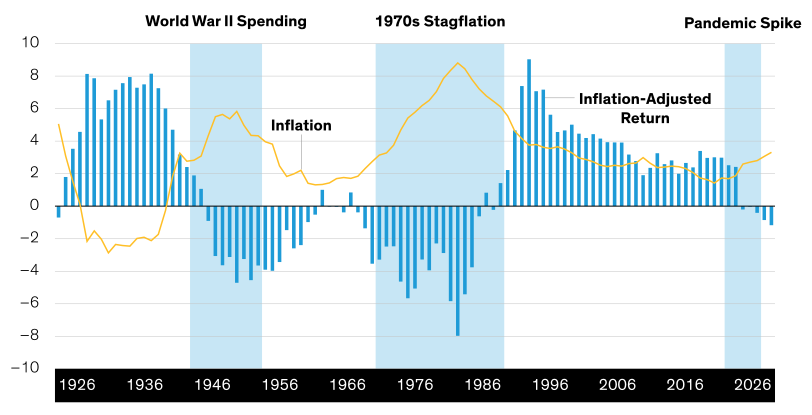
High Inflation Can Damage Bond Portfolios
Rolling 10-Year Annualized Municipal Bond Returns Less 10-Year Inflation (Percent)
Historical analysis does not guarantee future results.
Inflation is measured on a step-up basis using quarterly data. Index returns are based on the S&P Muni Bond Index from 1926 to 1949, the Moody’s 10-Year AAA Muni Bond Index from 1950 to 1980 and the Bloomberg Municipal Index from 1980 to June 30, 2026. Indices are used for comparison purposes only. An investor generally cannot invest in an index.
Through June 30, 2026
Source: Bloomberg, Moody’s Investors Service, S&P, US Bureau of Labor Statistics and AllianceBernstein (AB)
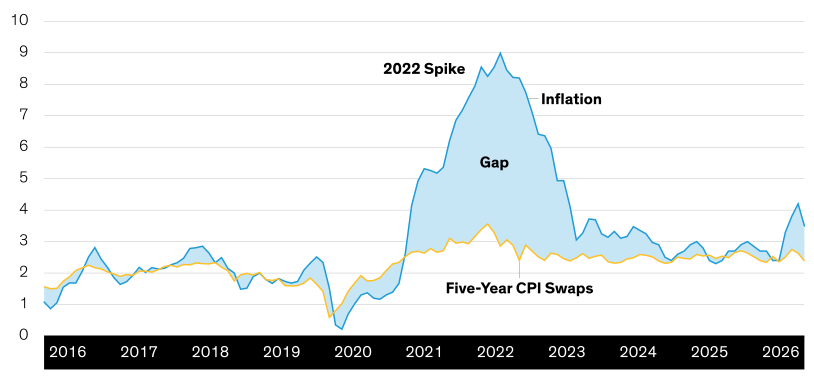
Opportunities Arise When Expected and Realized Inflation Diverge
Realized Inflation Less Five-Year CPI Swaps (Percent)
Historical analysis does not guarantee future results.
Inflation is measured by the Consumer Price Index, which includes price changes for all goods and services, including food and energy; Five-year CPI swaps represent the fixed inflation rate that market participants are willing to exchange for realized CPI inflation over the next five years; five-year CPI swaps serve as a widely used proxy for inflation expectations.
Through June 30, 2026
Source: Bloomberg, US Bureau of Labor Statistics and AB
About the Authors