AB Equity’s 2026 Grassroots Research Trip Day 3

01 June 2026
7 min read

Hangzhou --> Shaoxing


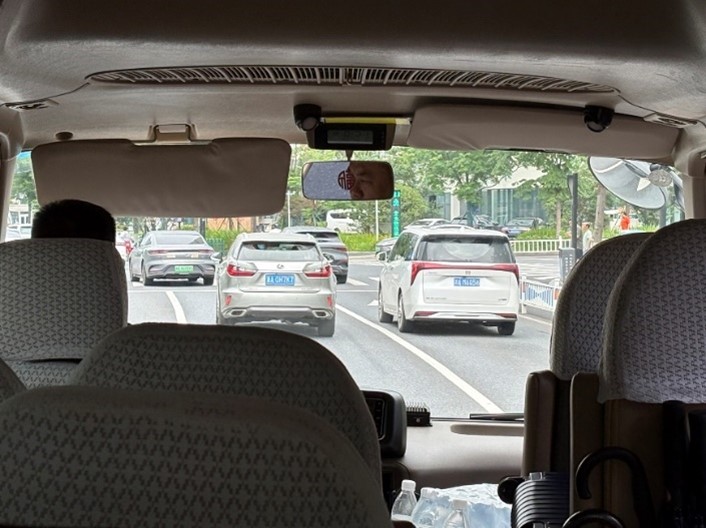
After a night of rain, the humidity finally lifted somewhat this morning.  The skies over Hangzhou remained stubbornly grey, but the air felt noticeably lighter and cooler, more like a proper spring day and putting a bit more energy back into our steps as we embarked on Day 3 of company meetings.  We began the morning driving from our hotel toward Hangzhou’s CBD near the famous West Lake, only to be immediately caught in heavy rush-hour traffic.  The roughly 20 km (12.4 miles for my American friends) journey to our first meeting with property developer Greentown took a solid hour and 15 minutes in our mini-bus.  As frustrating as traffic can sometimes be, it was also a reminder that despite all the concerns around China’s economic slowdown and property downturn, Hangzhou still feels like a very busy and economically vibrant city on the ground.


Greentown China

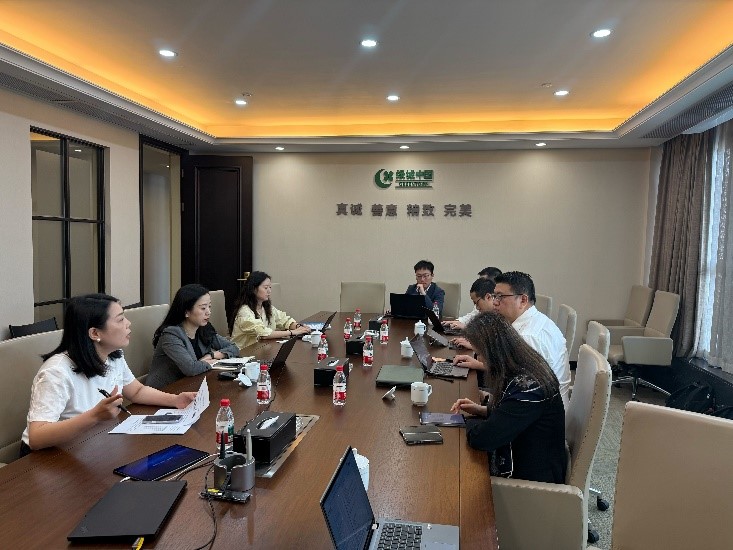
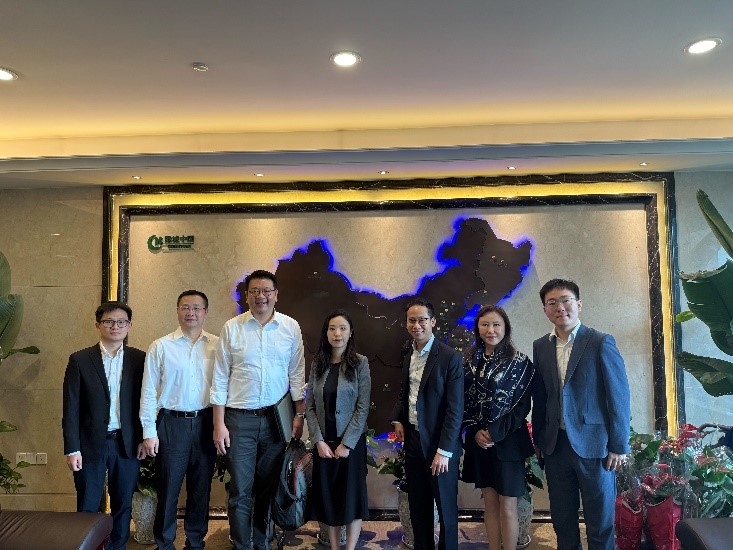
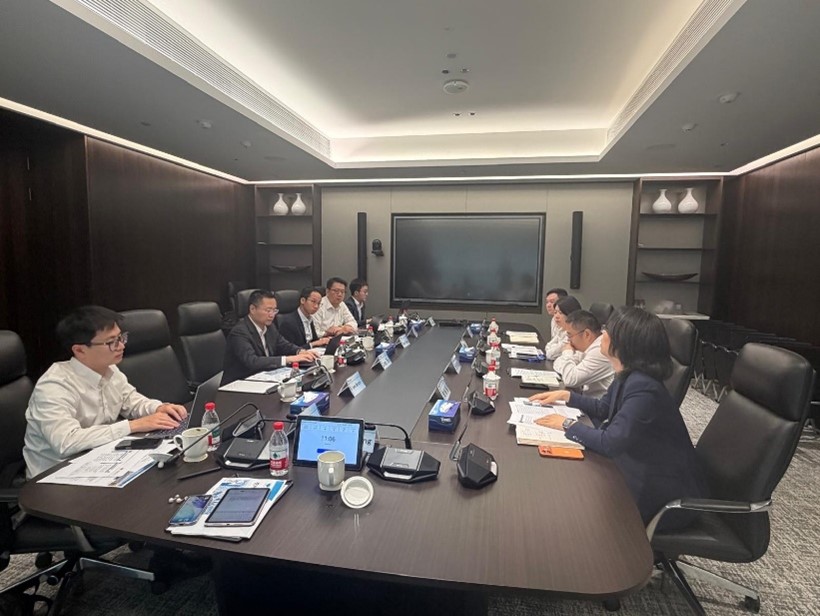
Our first company meeting today was with Greentown China, one of the country’s best-known premium residential property developers.  Once called “the most important sector in the world” by some investors, no discussion about China today can really avoid the property sector.  Nationwide residential property sales peaked in 2021 at roughly 1.6 billion square meters, and by 2025 had fallen to just over 700 million square meters — a staggering adjustment in only a few years.  Long-term annual end-demand for housing in China is typically estimated somewhere between 400–600 million square meters.  In other words, the market has already corrected substantially toward what may be considered a more “reasonable” or sustainable long-term level of demand, although perhaps the adjustment process is not yet entirely complete.  At the same time, the severity of the bubble and therefore the pace of correction differ substantially across regions.  In some of China’s largest and economically strongest cities, especially places such as Hangzhou and the broader Yangtze River Delta, the adjustment process appears further along and perhaps closer to stabilisation.

Against that backdrop, Greentown appears to have survived the downturn relatively well precisely because it was less aggressive during the boom years and because of its strong SOE backing through China Communications Construction Group.  The company today ranks itself as the No. 6 property developer nationally by sales, with quite a lot of exposure in Hangzhou and in Zhejiang more broadly.  Interestingly, management noted that the recent rebound in property activities appears increasingly driven by genuine end-demand rather than speculative purchases, particularly for smaller 90–120 square meter units aimed at first-time homebuyers.  March and the May holiday period both saw strong visitation growth, with conversion rates also improving modestly.  Management believes supply-side policies — especially restrictions on new land supply under the so-called “Document No. 38” framework — have likely been more impactful than demand-side easing measures in stabilising stronger cities.  As a side observation, Greentown was notably the first company we met this trip that did not mention AI at all during the meeting.  Then again, to be fair, what happens to China’s property market is arguably still even more important to the overall Chinese economy — and to the livelihoods of most Chinese households — than AI.

Bank of Hangzhou

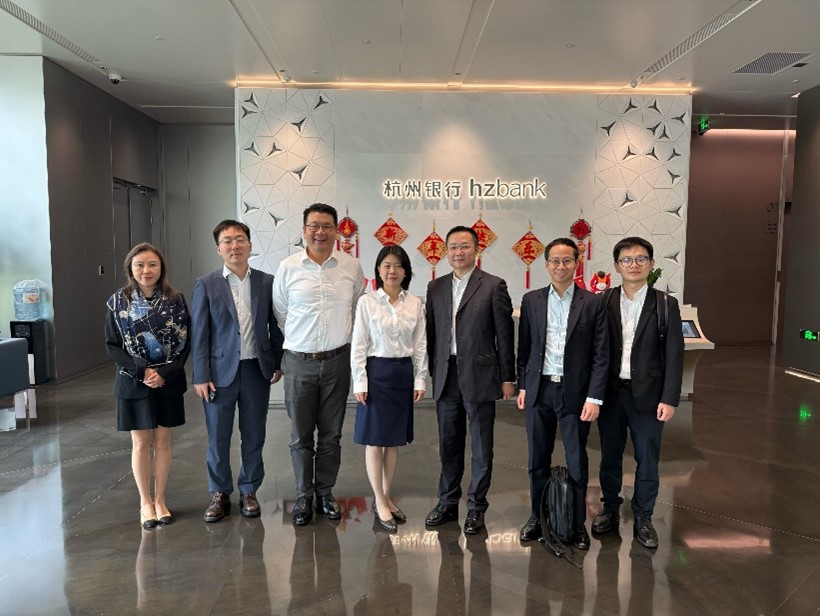
Our next meeting was with Bank of Hangzhou, one of the leading city commercial banks in the Yangtze River Delta and a lender with particularly deep ties to Zhejiang’s private-sector manufacturing economy.  The macro message from the bank was broadly consistent with what we have been hearing throughout this trip so far — namely that the Chinese economy is still slowly digging its way out of the downturn of the last few years.  Loan demand remains relatively muted across both corporate and retail borrowers, including through Q1, despite the gradual stabilisation in growth.  Management noted that while manufacturing and technology-related lending in Zhejiang continues to hold up better than many other parts of the country, broader demand for credit remains soft, reflecting still-cautious consumer sentiment and relatively subdued private-sector investment appetite.  At the same time, the bank does not expect substantial additional cuts to central bank policy rates or reserve requirements from here.  In other words, the economy still appears somewhat mired in the same muck that has characterised much of the post-COVID recovery period — stabilisation, yes, but not yet a strong cyclical rebound.

Against that backdrop, Bank of Hangzhou continues to distinguish itself through relatively conservative risk management and stronger asset quality than many weaker regional peers, especially given its lower direct exposure to troubled property developers.  Bad debt formation has edged up somewhat, as one would expect in a softer economic environment, but management emphasised that asset-quality deterioration remains relatively contained overall.  The bank is also seeing tentative signs that property conditions may be stabilising in stronger cities, although management’s attitude remains very much “wait-and-see.”  Interestingly, AI returned to the discussion again here as well, as the bank highlighted some of its lending relationships with regional technology companies currently benefiting from rising AI-related capex and infrastructure demand.  We also spent time discussing governance reform and shareholder returns, drawing parallels to the Japanese governance reforms and Korea’s “Value Up” initiatives that helped improve ROEs and valuations for banks there.  Management, however, argued that China’s economic development stage — and therefore the capital needs of its banking system — remain somewhat different, suggesting that maximising shareholder payouts is still not necessarily the immediate priority.


Nongfu Springs

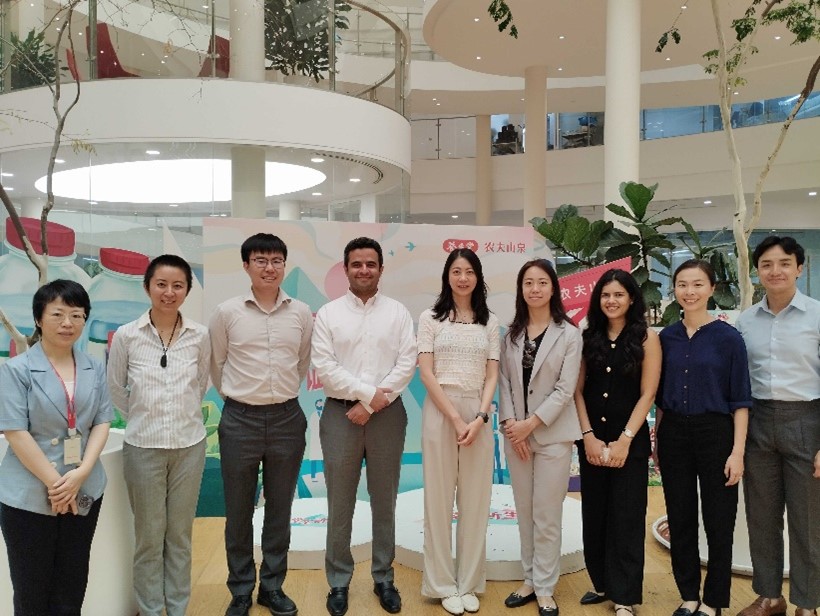
If there has been one constant companion throughout our meetings in Hangzhou so far, it has probably been Nongfu Spring bottled water sitting quietly on virtually every conference table.  Founded in 1996 and originally focused on purified water before pivoting decisively toward natural spring water in 2000, Nongfu today has become one of China’s strongest consumer brands, built around its long-standing “natural and healthy” positioning.  Over the years, the company expanded from bottled water into tea drinks, functional beverages, electrolyte drinks and sugar-free teas, with tea beverages now reportedly becoming its largest category.  Interestingly, management emphasised repeatedly the importance of long-term product incubation rather than chasing short-term fads.  Oriental Leaf, its sugar-free tea brand, was launched back in 2011 but took nearly a decade before demand truly inflected.  In many ways, the company’s philosophy appears very consistent with broader trends we have been observing across Chinese consumption this trip — namely that consumers today are increasingly focused on health, quality and value-for-money rather than conspicuous consumption.  Competition in beverages has intensified substantially since 2018 and even more so after the economic slowdown beginning in 2023, yet Nongfu continues to focus heavily on channel discipline, healthy distributor relationships and steady rather than overly aggressive growth.  The company is also cautiously exploring overseas markets including Hong Kong, Malaysia and Singapore, although management characterised international expansion very much as a gradual, long-term process.

Lunch and Refuel

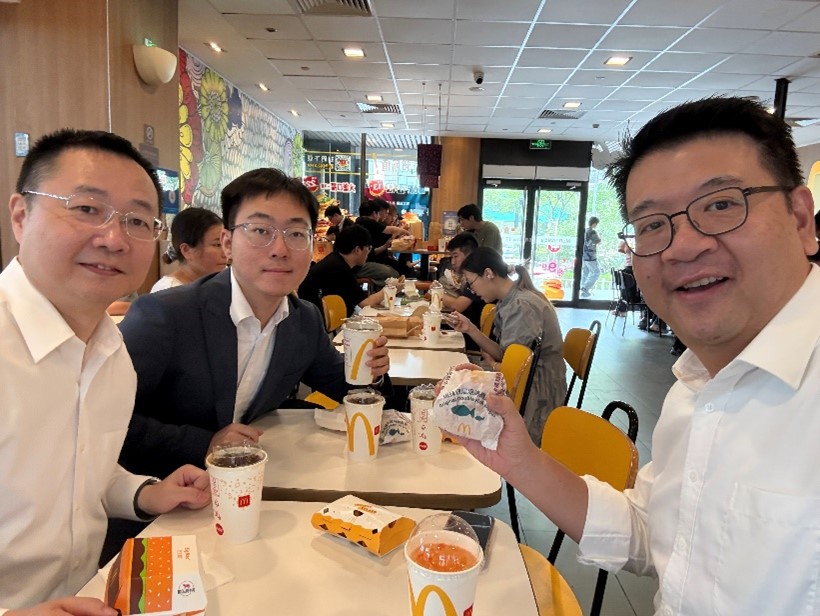
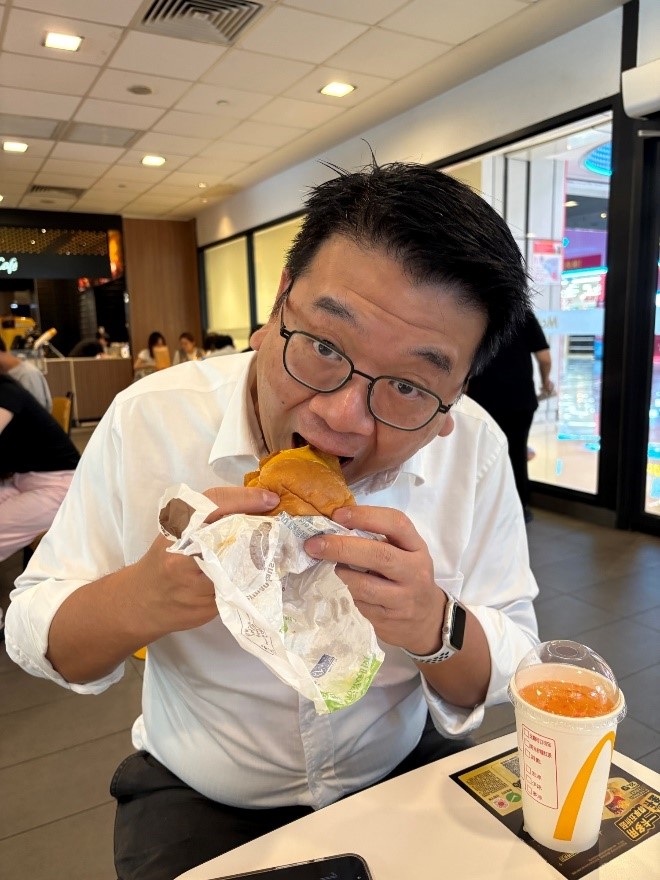
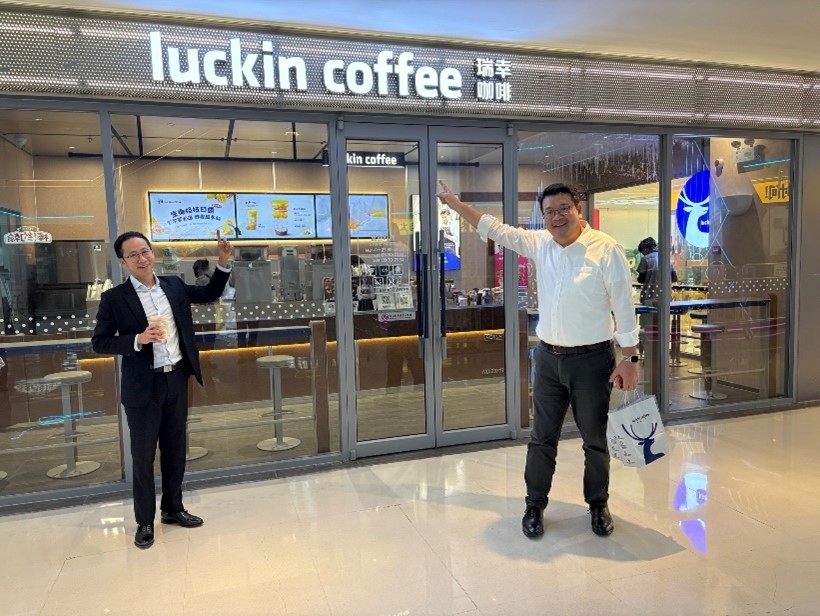
The China research trip schedule can get fairly tight, and when combined with bad traffic, there are often days where we simply do not have time to sit down properly for lunch between meetings.  The good news, perhaps, is that this can also be quite friendly to our travel budget.  Today, we grabbed some quick bites at a McDonald’s conveniently located next to our next meeting venue, with various combinations of burgers, fries and chicken wraps disappearing quickly before everyone rushed back onto the mini-bus.  Of course, no afternoon of research meetings could continue without a caffeine refuel as well.  As has become something of a tradition for us over the last few years, the team also made a quick stop — and obligatory group photo — in front of a Luckin Coffee before heading off to the next company visit.

NetEase

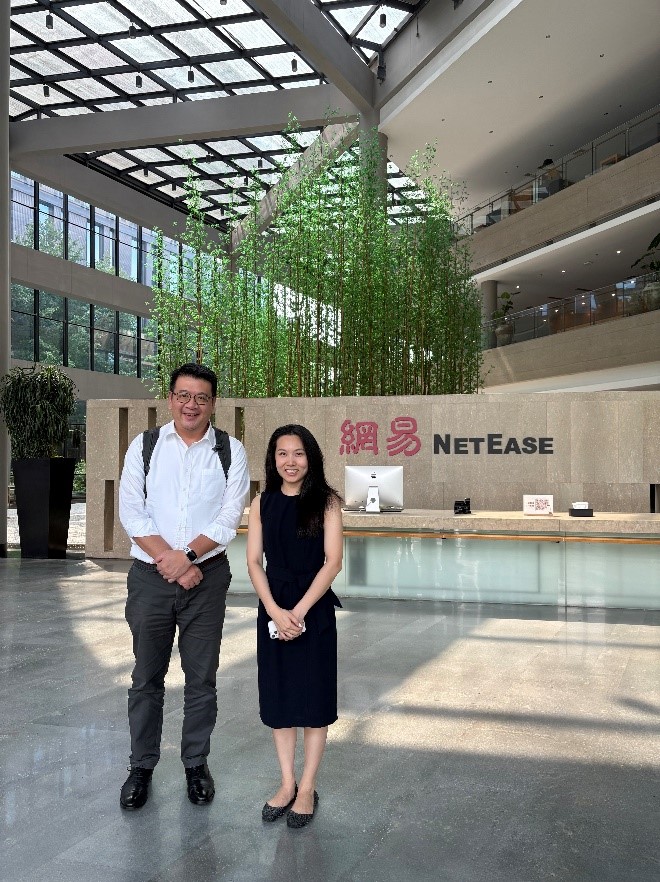
Our next meeting was with NetEase, one of China’s largest gaming companies and increasingly a globally relevant game publisher through titles ranging from long-running domestic franchises to newer international games such as Marvel Rivals.  Much of our discussion centered around one of the biggest debates currently facing the global gaming industry — namely whether AI ultimately helps incumbent game developers through efficiency gains, or whether it lowers barriers to entry and therefore intensifies competition even further.  This controversy has weighed on gaming and software stock valuations globally, both in the US and increasingly in China as well.  NetEase’s management was understandably more constructive on the technology.  The company noted that AI has now been fully integrated throughout the game development process, from content creation to coding support and especially quality assurance, where AI can run enormous numbers of gameplay scenario simulations far more efficiently than human testers.  Management argued that AI is helping increase the cadence of game updates and improving productivity rather than disrupting the company’s core strengths.  At the same time, the company also acknowledged that competition in gaming today has become increasingly concentrated around a smaller number of blockbuster titles, leading NetEase to become more selective internally about which projects receive full development support.  In other words, the strategy now appears to be launching fewer but higher-quality games, especially as player engagement increasingly gravitates toward the top handful of successful titles with stronger community ecosystems and longer gameplay longevity.

Hailiang

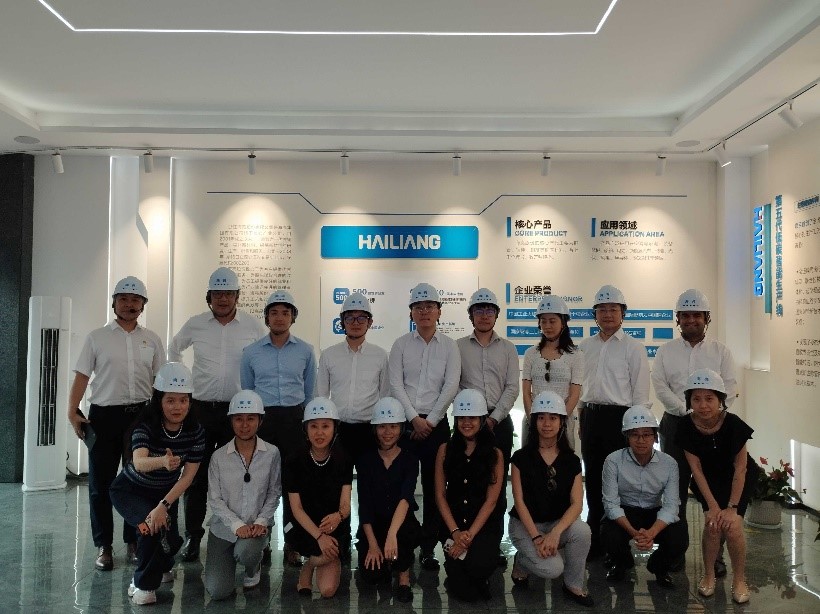
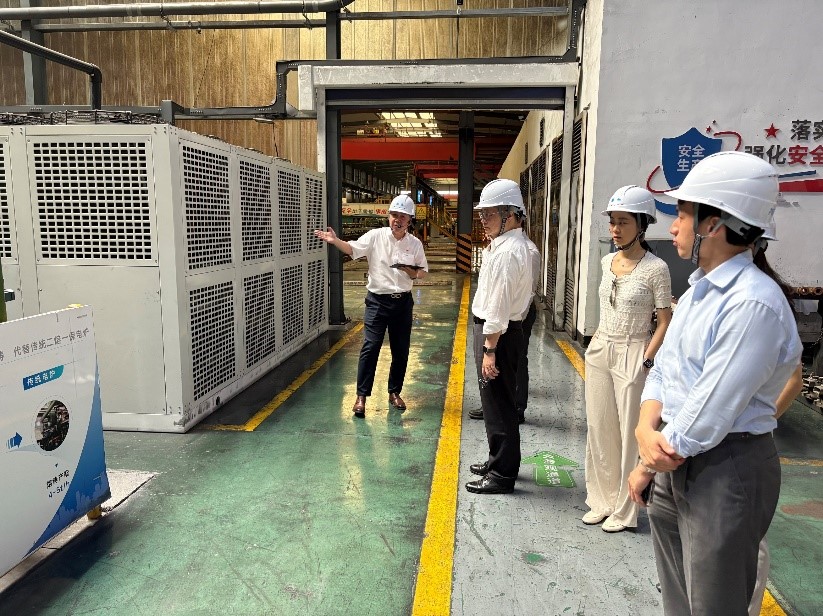
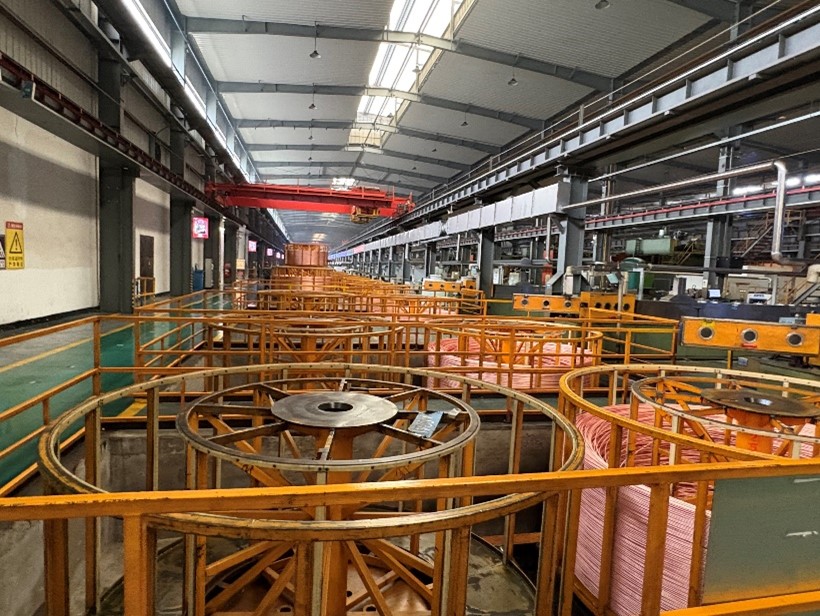
Our last meeting of Day 2 took us from Hangzhou toward Shaoxing, where we visited Hailiang, one of the world’s largest manufacturers of copper tubes and copper-processing products.  To be sure, part of the attraction was also the obligatory hard-hat team photo on the factory floor.  But the direction of copper demand and copper-processing profitability is genuinely one of the more interesting investment controversies today, especially as industries ranging from EV batteries to AI servers require increasing amounts of ever-finer copper foils, conductive materials and cooling-related products.  In many ways, Hailiang demonstrates how even relatively traditional industrial companies are now being swept up by both AI enthusiasm and geopolitics.  Following US tariff increases, processing fees for copper tube products reportedly jumped materially, benefiting Hailiang given its manufacturing footprint in both China and the US.  Meanwhile, management described current conditions as a clear industry-wide upcycle, driven by robust demand from AI infrastructure, power-grid investment and electrification trends.  What also stood out during the factory tour was just how highly automated the operations had become.  Over roughly half an hour walking the production floor, we could barely see any workers as machines and robotic systems whirred continuously in the background.  It is a theme we have now observed repeatedly for several years across China — from traditional industrial sectors to advanced technology manufacturing — as companies increasingly adopt automation throughout the supply chain in response to rising labor costs and the need for greater efficiency.

Our Team Unwinds with Ice Cream and Bubble Tea

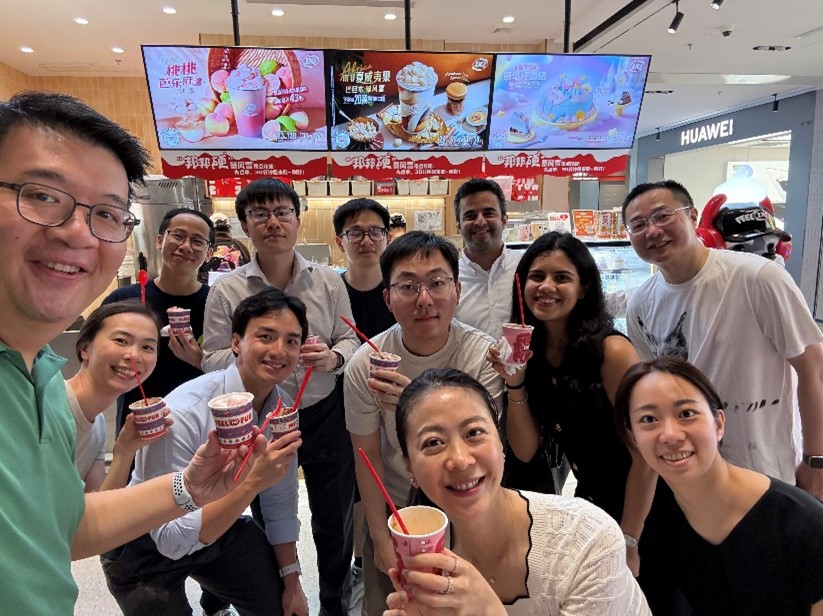
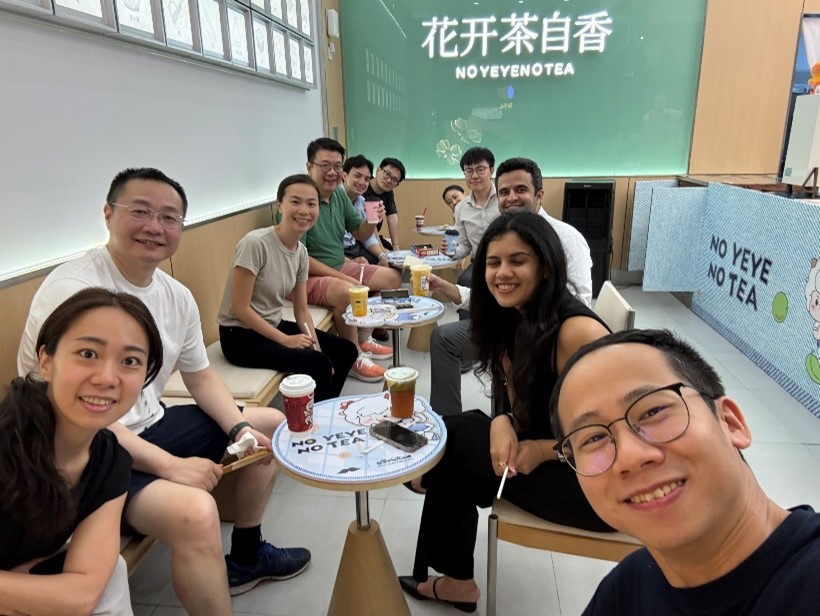
Some people relax after a hard day of work by grabbing a glass of wine or heading to a bar.  Our team, apparently, prefers ice cream and bubble tea.  Starting more than a decade ago during one of our earliest China research trips, we somehow developed a tradition of making a Dairy Queen stop at some point during the journey.  I am happy to report that we successfully continued the tradition today, with a slightly chaotic procession of analysts ordering Blizzard flavors while still debating property inventories, AI capex and copper-processing spreads.  It is these small rituals, perhaps more than anything else, that help build a strong team culture over time.  And as with every year, it is also refreshing to have younger members on the team bringing new energy, new perspectives and occasionally new bubble tea recommendations — even if some of their flavor choices remain highly questionable to the more “experienced” members of the group.

Best,

John

This material is provided by AllianceBernstein Australia Limited (ABN 53 095 022 718 AFSL 230 698) (“ABAL”). This information does not constitute “personal advice,” as defined in the Corporations Act. The views expressed and information contained here may change at any time after the date of this material. This material is intended only for persons who qualify as “wholesale clients” as defined in the Corporations Act.

References to specific securities are presented to illustrate the application of our investment philosophy and portfolio construction process and are not to be considered recommendations by ABAL. The specific securities identified and described in this presentation do not represent all of the securities purchased, sold or recommended for the portfolio, and it should not be assumed that investments in the securities identified were or will be profitable. The views of any specific securities identified and described in this document are those of a specific portfolio management team and portfolio strategy at a point in time and which may differ from the views of other portfolio managers managing other strategies.

No reproduction of the materials in this email may be made without the express written permission of ABAL.


About the Author