On the ground in Shenzhen: Robo Taxi, Bus and Drones – day 2

17 June 2025
6 min read

Shenzhen was overcast but stifling humid and hot as we began Day 2 of our grassroots research trip, which took us deeper into the heart of Shenzhen’s innovation engine.

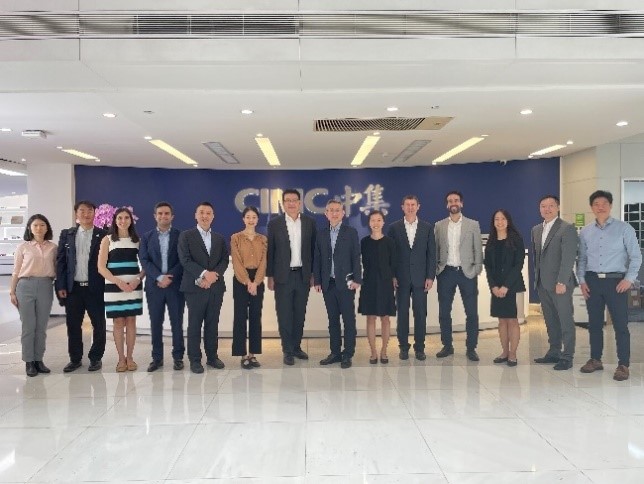
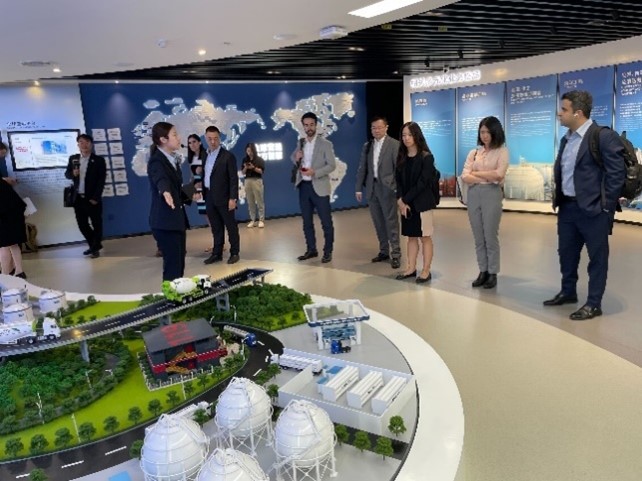
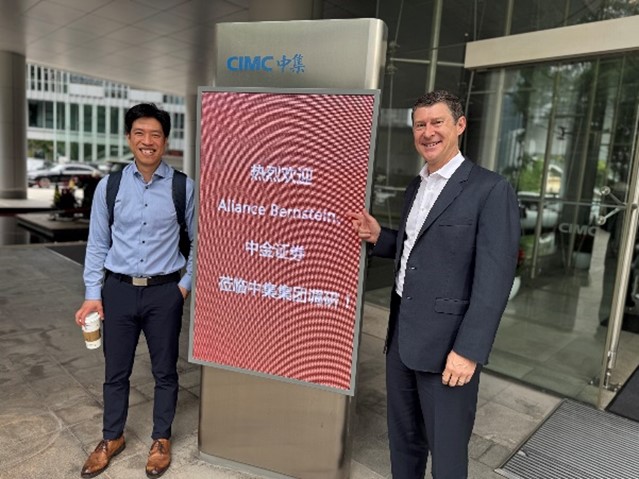
We kicked off the day with a visit to CIMC, the world’s largest manufacturer of shipping containers and a bellwether for global trade. While the company is best known for its iconic steel boxes — with a commanding 45% global market share — the conversation quickly turned to the aftershocks of last year’s tariff-driven inventory surge. In 2024, global shipping customers rushed to front-load orders ahead of anticipated trade restrictions, pushing container volumes to over 8 million units. This year, demand has slumped to an expected 3 million, and the company now expects its order book backlog to last only through July. The result is a volatile demand environment, which makes managing the factory staffing difficult.  CIMC is addressing this through automation and AI — for example replacing human safety officers with smart surveillance systems that flag safety violations in real time.

Beyond containers, CIMC is evolving into a diversified industrial conglomerate with growing exposure to green energy infrastructure and emerging markets. Management was clear that the real growth opportunity is coming from the Global South, where CIMC is expanding its footprint in deep-sea platforms, jetways, and green methanol solutions. This mirrors a broader trend we’ve heard across our meetings in recent years — Chinese industrials are increasingly pivoting away from the West and doubling down on the next wave of global growth in places from Southeast Asia to the Middle East and Africa.

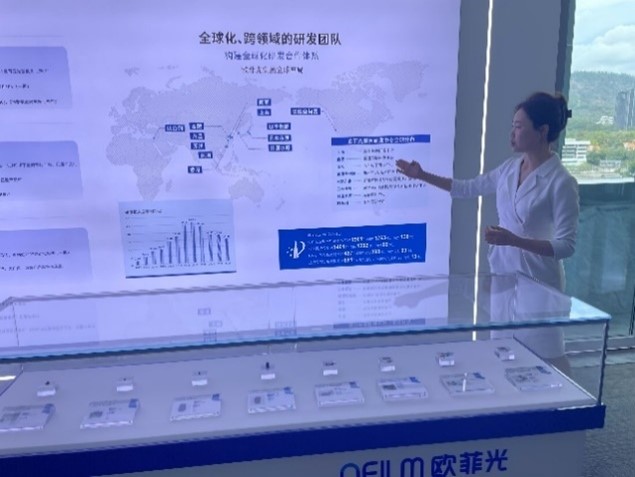
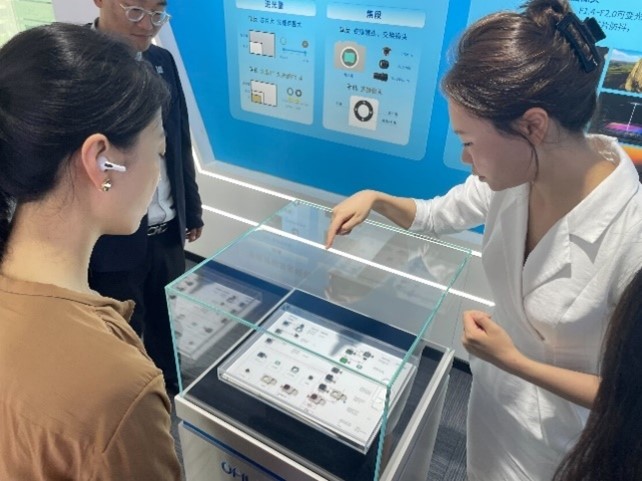
Our second meeting of the day was with Ofilm, a major supplier of smartphone camera modules and a frontline player in China’s hyper-competitive tech hardware landscape. Roughly 70% of its revenues still come from smartphones, and the company has weathered a brutal stretch — in 2022 and 2023, competition was so fierce that some peers operated at negative margins. While there’s been some recovery as phone makers now push for more advanced camera setups (some flagship models will potentially feature two periscope lenses), margins remain tight. The same story is playing out in the auto supply chain, where component makers are locked in a price war, especially as new entrants like Xiaomi aggressively price their EVs to gain share. Ofilm’s experience is a vivid reminder that China’s manufacturing edge lies in its relentless internal competition — it’s painful for suppliers, but it’s also why Chinese consumer electronics and EVs remain globally competitive on price and innovation.

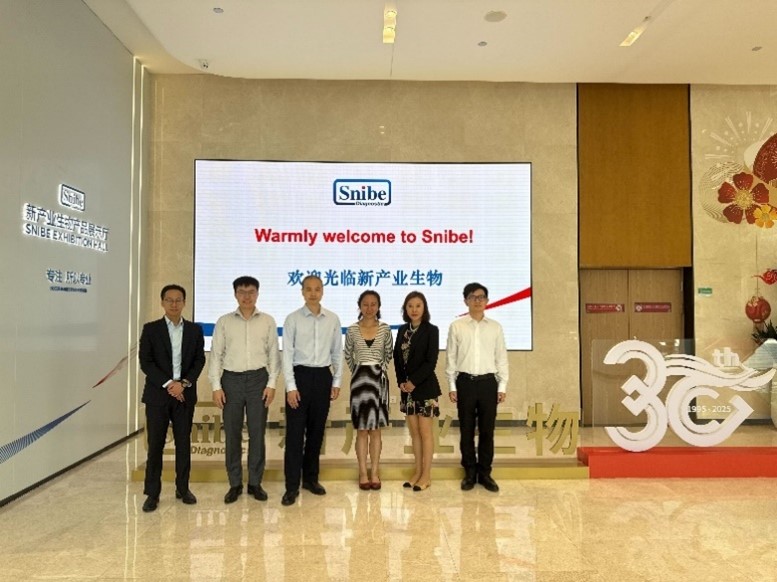
Next is Shenzhen New Industrial, a medical device firm specializing in blood testing equipment and reagents. Unlike many peers, the company boasts an eye-catching 40% net margin — a result, they say, of full vertical integration and proprietary IP. Their business model mirrors the classic printer-and-cartridge setup: machines are often sold at cost (or even given away), with profits coming from high-margin consumables. While China’s volume-based procurement (VBP) policy has pressured domestic prices, the company is offsetting this with rapid international growth — particularly in India, Russia, and Western Europe, which now account for a third of revenues. With minimal exposure to U.S. tariffs and a strong domestic substitution story (international giants like Roche and Danaher are losing share), Shenzhen New Industrial is a standout example of how Chinese medtech firms are quietly scaling up, innovating fast, and going global — often with better margins than their Western peers.

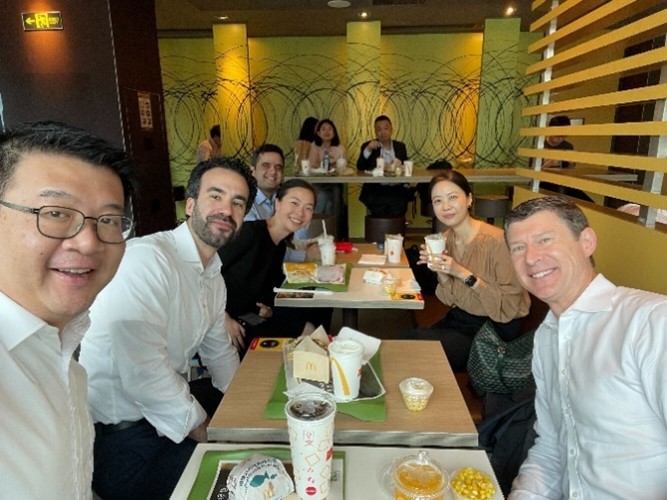
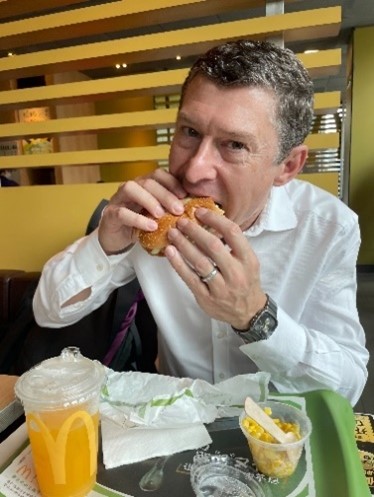
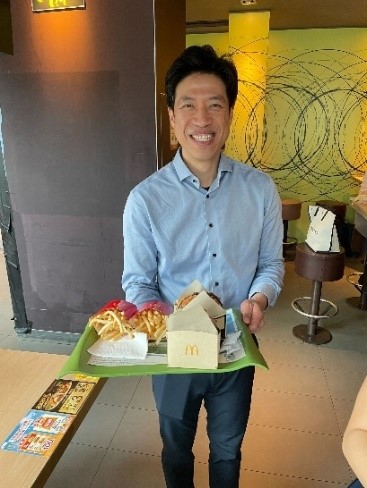
Dashing around Chinese cities for research meetings is hard work.  More often than not, we have to make do with quick bites in between the busy schedules.

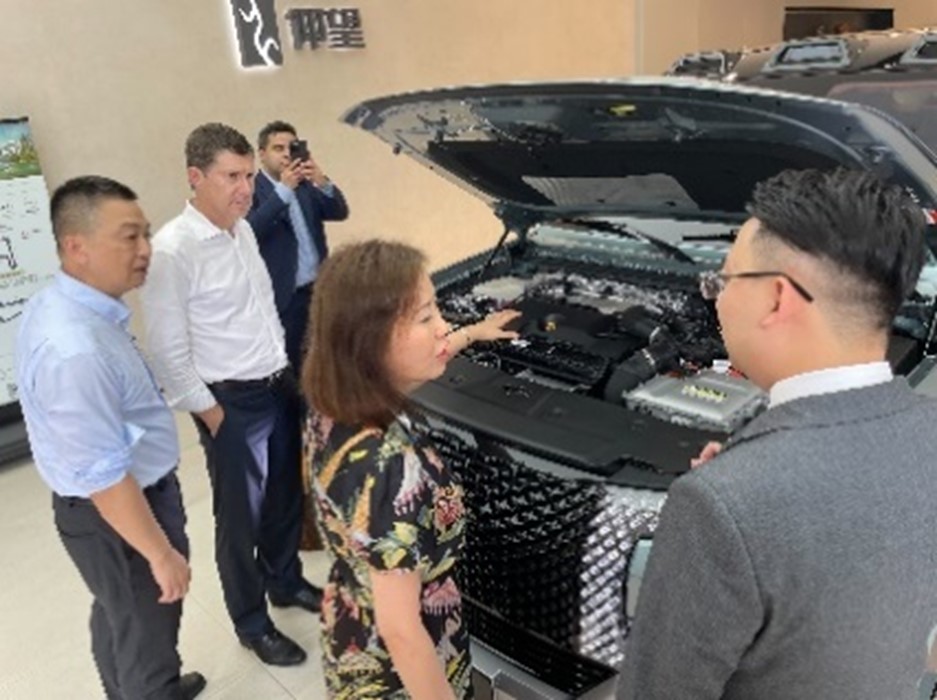
What better way to fight off the post-lunch food coma than with a visit to BYD’s luxury showroom and a test drive of the Yangwang U8 — a name that translates roughly to “Looking Up” or “Aspire” in English. This 3.5-ton beast of a vehicle is BYD’s answer to the ultra-premium SUV segment, and it wouldn’t look out of place next to a Chevy Suburban or a Mercedes G-Wagon. But don’t let the size fool you — according to William and Guang, who took the wheel, the U8 handles with surprising agility.

Under the hood (and floor), the U8 packs a jaw-dropping 1,300 horsepower thanks to its hybrid setup: four electric motors paired with an internal combustion engine that acts as a generator. It boasts a 1,000 km range on a full charge and tank, and can rocket from 0 to 100 km/h in just 3.6 seconds — though why anyone would need to do that in a vehicle this size is anyone’s guess. We even tested the autonomous driving mode, which performed smoothly, and with the voice-activated massage seats kicking in, we didn't want the test drive to end.

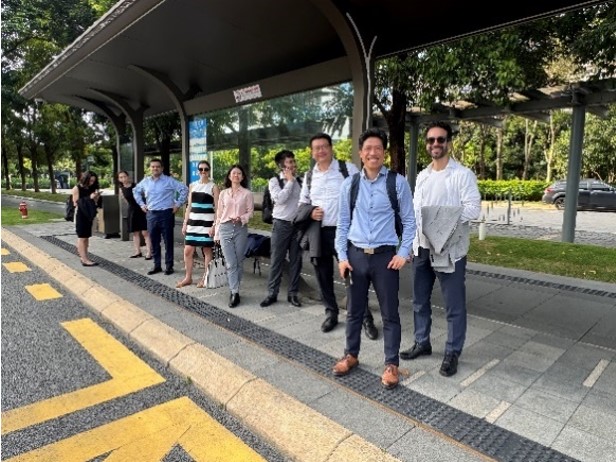
Our testing didn’t end with the RMB 1 million Yangwang U8 — next up were Shenzhen’s robo taxi and robo bus, both of which are now legally operating in the city’s Nanshan district. The robo taxi experience was a glimpse into the near future, though not without its quirks. It took a while for the vehicle to locate us, and while it’s not fully autonomous (a safety driver still sits behind the wheel), once we were on the road, the car handled itself impressively well. The ride was smooth and uneventful — exactly what you’d want from a self-driving vehicle — though clearly, the pick-up logistics still need some fine-tuning.

We also boarded an autonomous bus operated by Shenzhen Bus Group, which follows a similar model: a human driver is still present, but the vehicle largely drives itself. While the service still feels experimental, the ride was again remarkably smooth and stable, even through turns and stops. It’s early days, but these pilot programs show how Shenzhen is quietly becoming a real-world lab for autonomous mobility — and the future is arriving faster than many might expect.

All that test driving can be thirsty work — especially in 30°C heat and high humidity. So what better way to quench our thirst and do some field research than by ordering an ice-cold bubble tea from Chagee (a recent IPO) via Meituan’s drone delivery service?

We had a classic three-birds-one-stone moment: we got to test a cutting-edge logistics solution, support a newly listed consumer brand, and cool off with a refreshing drink. The process was seamless — we placed the order through the Meituan app, selected drone delivery, and within minutes, the tea was dropped off at a nearby kiosk. The drone’s flight path was fully automated, and the delivery was contactless and efficient. It’s a small but powerful example of how China’s tech ecosystem continues to blur the lines between convenience, innovation, and everyday life.

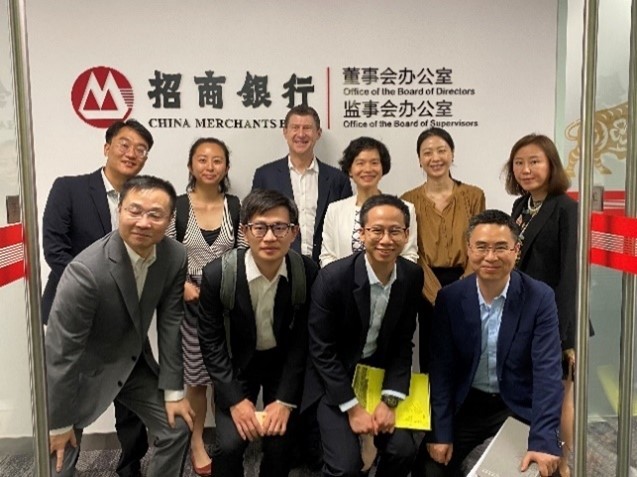
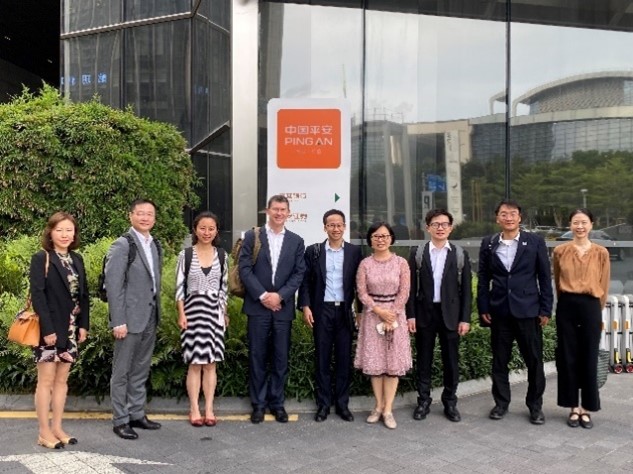
We wrapped up Day 2 with meetings at Ping An Bank and China Merchants Bank, two of China’s most prominent retail-focused financial institutions. Both banks painted a cautious but stabilizing macro picture. Since COVID, Chinese retail investors have remained conservative — favoring liquidity, safety, and short-term products like deposits, bonds, and gold. Appetite for higher-risk products such as private equity and structured credit remains weak, though there’s some hope for a modest recovery in the second half. Both banks noted that mortgage activity is showing tentative signs of bottoming, and while retail consumption and credit card usage remain soft, microfinance and secured lending are holding up better. Neither bank sees a direct impact from U.S. tariffs yet, but both acknowledged the uncertainty facing exporters, especially SMEs, and the potential for second-order effects on consumer sentiment.

Where they differ is in strategy and positioning. Ping An Bank is leaning into bancassurance and precious metals, with a focus on managing funding costs and improving cross-sell efficiency through mortgages. China Merchants Bank, on the other hand, is doubling down on AI-driven wealth management and maintaining one of the lowest NPL ratios in the industry. CMB’s tech-forward approach — including partnerships with DeepSeek and a strong FOF platform — is helping it navigate a tough environment while keeping HNW clients engaged. Both banks are prioritizing asset quality over aggressive growth, and while the near-term outlook remains challenging, they’re positioning themselves for a more stable 2025, supported by policy easing and gradual consumer normalization.


Best,
John Lin
Chief Investment Officer – China Equities
AllianceBernstein

Click here to read about Day 1.
Click here to read about Day 3.

The views expressed / information contained here may change at any time after the date of this email. This email is provided by AllianceBernstein Australia Limited (ABN 53 095 022 718 AFSL 230 698) (“ABAL”). This email does not constitute “personal advice,” as defined in the Corporations Act 2001. This email content has been provided to you for use in a private and in confidence to discuss a potential or existing investment advisory relationship. This email is not an advertisement, is not intended for retail or public use or distribution beyond our private meeting and must be returned to us immediately upon demand.

References to specific securities are presented to illustrate the application of our investment philosophy and portfolio construction process and are not to be considered recommendations by ABAL. The specific securities identified and described in this presentation do not represent all of the securities purchased, sold or recommended for the portfolio, and it should not be assumed that investments in the securities identified were or will be profitable.  The views of any specific securities identified and described in this document are those of a specific portfolio management team and portfolio strategy at a point in time and which may differ from the views of other portfolio managers managing other strategies.

No reproduction of the materials in this email may be made without the express written permission of ABAL. This information is provided for persons in Australia only and is not being provided for the use of any person who is in any other country.

For wholesale use only. Not for inspection by, distribution or quotation to, the general public.


About the Author