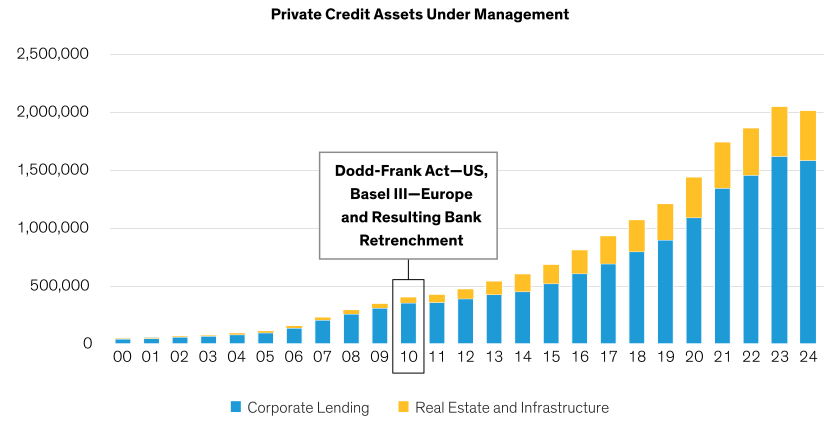
Banks still lend, but more selectively. A bank might refuse to make a loan above a certain multiple of a company’s earnings before interest, taxes, depreciation and amortization. These restrictions are often applied universally: A profitable tech firm with steady revenues might be treated as cautiously as an oil-field services firm exposed to oil price fluctuations, regulatory risk and geopolitical risk.
Diverse Opportunities in Private Corporate Lending
This led to the rise of direct corporate lending. Here’s how it usually works: A private equity fund buys a company and provides 60% of the purchase price, financing the rest with private debt. That 40% comes from a private loan that puts a lien on all assets. That legal structure puts the private lender first in line to be repaid if the company is sold—important protection for lenders.
These investments are less liquid than those in public high-yield corporate bonds or syndicated bank loans, so they offer a floating interest rate and higher yields. We see the most attractive opportunities in core middle-market companies with enterprise values between $100 million and $1.5 billion. In the US, that’s about 200,000 firms with nearly 48 million jobs—roughly one-third of total private-sector employment. If the middle market were a country, it would have the world’s third-largest GDP.
Individually, these companies are usually not large enough to access the broadly syndicated loan market, which usually means more attractive pricing and better terms for lenders—and investors. Terms can include protective covenants such as caps on the amount of leverage a borrower can have, which may improve downside risk mitigation.
Beyond Direct Lending: Financing the Real Economy
But there are other flavors of private credit with diverse levels of return potential and risk. For example, much consumer and small-business spending is financed privately, and we think investment strategies focused there offer attractive return and diversification opportunities.
The $6-trillion-and-growing asset-based finance market offers consumer, residential and small-business lending that fuels the real economy. The financing usually comes from purchases of existing loans for autos, homes and commercial properties, credit cards, and more. Private lenders can also agree to buy pools of future loans from the non-bank financial institutions that make them. Sometimes, loans are backed by income-generating physical assets, such as energy infrastructure or leased airplanes.
The loans are highly diversified, given the underlying assets’ diverse economic drivers. Pools of consumer loans often include thousands if not tens of thousands of loans in each deal. The loans are also self-amortizing—they repay their principal gradually over time, becoming less risky as they do.
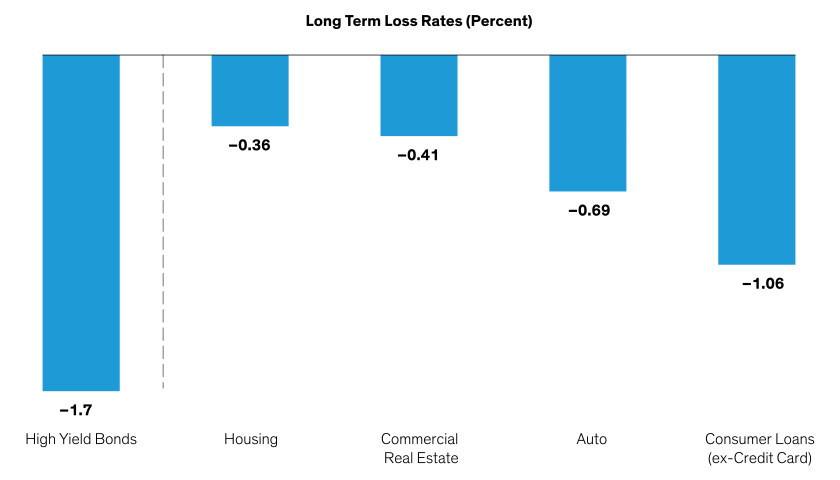
And like direct corporate loans, they too come with important structural protections that may help to mitigate losses. For one thing, the loans are backed by physical collateral. As a result, recoveries in the event of default have historically been strong.
We see asset-based finance as a strong complement to direct corporate lending. And we expect the market to keep growing. The massive amount of capital needed to finance the energy transition and the digital infrastructure and data centers that power AI rely heavily on private lenders that can customize loans and provide other benefits. Borrowers increasingly include firms that also tap public debt markets.