Bonds’ traditional role in pension allocations is over. But they have a new purpose in a lifetime income strategy.
Fixed income has always played a key role in building diversified retirement strategies that both deliver real returns and manage risk in the approach to retirement. But it’s time to reconsider their purpose in DC retirement strategies as bonds face a much tougher investment regime.
We believe that DC fiduciaries should prepare for a world in which secular headwinds could reduce the benefits of fixed-income investments in their members’ accumulation phase. In the new environment, we envisage a more comprehensive DC retirement strategy in which bonds will make up a smaller component of the accumulation journey.
A Benign Regime Is Ending
We’ve argued for some time that macro mega-forces herald a change in the investment environment. Increased longevity, higher equilibrium inflation and lower growth rates imply that pension systems’ strategic asset allocations must change. Fixed-income assets will likely face challenges on three fronts:
- higher inflation will reduce their real returns
- in a return to long-run norms, equities and bonds will mostly be modestly positively correlated, reducing fixed-income assets’ diversification benefits
- similarly, bond volatility will be higher, limiting fixed income’s downside mitigation properties
What does this mean for DC savers invested in basic equity-bond glide path strategies?
To answer that question, we’ve applied our forecasts for asset-class real returns to a saver earning a median salary and paying 8% of it each year into a simple target date structure that de-risked in the mid portion of their career before they retired at 65. The result? That person, if they are early in their career, would have a savings pot consistent with a hardship outcome below the “minimum” level deemed necessary for retirement in PLSA’s Retirement Living Standards.
Future Returns Are Likely to Disappoint
DC default funds have maintained a large allocation to risk assets overall, but their glide paths tend to reallocate into bonds as savers get closer to retirement.
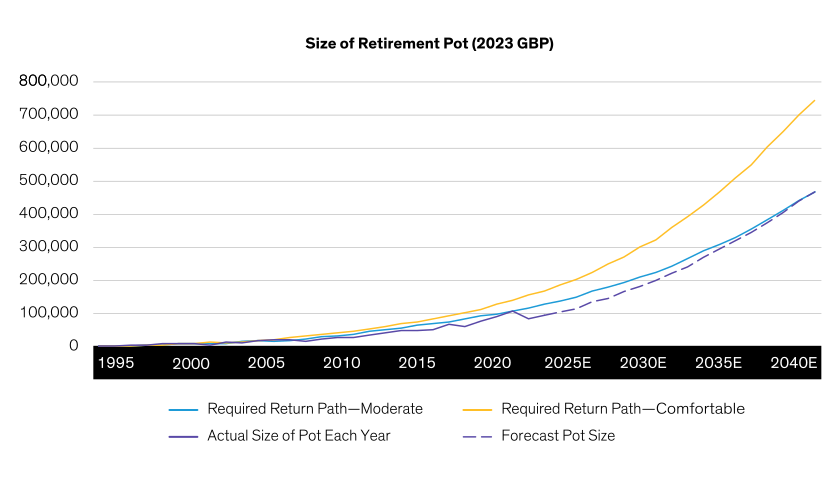
In the display below we chart the size of a total pension pot required to achieve a “comfortable” or “moderate” retirement and how the path to that level should ideally evolve over the course of a working life. We also take 2040 target date funds (TDFs) as a case in point, plotting the achieved return for an average of 2040 TDFs from their inception until the present. This cohort of TDFs delivered an average real return of 4.25% annualized since inception—a good outcome, in our view. However, there’s no cushion to help weather the prospect of lower real returns in the future. From today’s level, such funds would have to generate a real return of 7% annualized to achieve a “moderate” level of retirement assets, a level that we regard as unattainable at mass scale.