Aircraft undersupply is outweighing slower economic growth.
Commercial air travel has endured its share of turbulence in recent years, from a global pandemic that suppressed travel to US tariffs that are raising costs for airline operators. There have been high-profile airline bankruptcies, too. But for investment strategies rooted in leasing in-service aircraft to airlines that need them, we still see blue skies.
Aircraft financing, in our view, remains an attractive way for investors to generate steady cash flow with a return profile that’s uncorrelated to broad market indices, including the listed commercial airlines sector . It does so in part by providing investors with long-term exposure to global growth and to consumer spending in emerging markets, where rising income levels are making it possible for people to spend more on leisure travel.
For investors in aircraft-financing strategies, we think a cycle of reorganizations at airlines will create opportunities to provide much-needed liquidity to operators in need. We see several recent developments that suggest investing in a global portfolio of airplanes—hard assets with intrinsic value—and leasing them to airline operators may generate attractive returns, even as concern about trade and global growth increases.
Capitalizing on Constrained Aircraft Supply
The first development is simple: serviceable aircraft are in short supply. There are fewer than 30,000 commercial jets in operation today, and about half are leased. Production cuts at Airbus and Boeing during the pandemic worsened shortages, and new deliveries remain well below their pre-pandemic trend. These cuts have resulted in a “lost generation” of almost 3,000 aircraft. By our estimate, orders made today may take as long as six years to deliver.
As a result, industry experts believe the global aircraft shortage may persist for another decade—a period during which demand for travel and global income levels are likely to grow. The International Air Transport Association forecasts air traffic will increase on average by 3.6% annually through 2043, driven in large part by passengers from Asia and the Middle East.
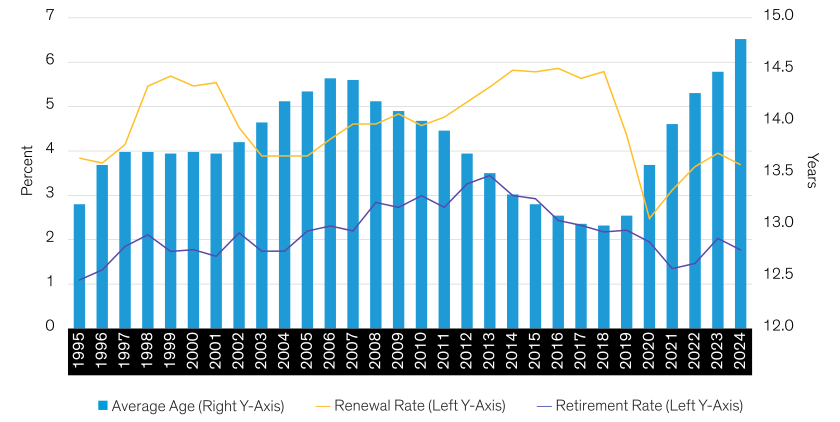
To meet that demand, carriers are keeping planes in service for longer (Display), disrupting the natural replacement cycle.