The Middle East conflict has sparked inflation fears. Defensive stocks could provide some relief.
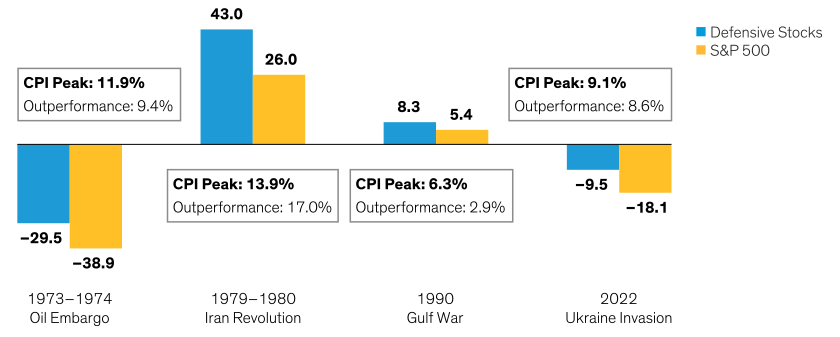
Equity markets have come under pressure amid growing concerns about the conflict in Iran and its effects on energy prices and inflation. For investors seeking refuge from volatility and rising prices, a defensive posture may provide some relief. In fact, our research suggests that defensive stocks have outpaced the broader market during every major energy shock since 1973.
Headline Inflation Is on the Rise
Investors don’t need to look far for evidence of inflation. As of April 21, Brent crude oil futures were trading at just under $100 per barrel—up more than 60% on the year. And in the US, the average price for a gallon of unleaded gasoline has climbed past $4 for the first time in four years.
There are other warning signs beyond headline inflation.
For example, in the commodities market, the copper/gold ratio is down 4.5% over the past month. Copper is a classic growth bellwether, and when its price falls relative to gold, the market is often signaling that growth expectations are deteriorating. In addition, real (inflation-adjusted) bond yields are rising, the Fed is holding off on rate cuts and we’re seeing a growing divergence in oil prices relative to equities. These are all textbook signs of an inflation shock pattern.
Sustained increases in energy costs could push inflation higher, complicating the outlook for interest rates at a time when markets were anticipating monetary relief. Inflation could, in turn, put a damper on economic growth, potentially leading to stagflation—the rare but dreaded concurrence of elevated inflation and high unemployment.
Equities Have Been Volatile Through the Middle East Conflict
Global equity markets have whipsawed since the conflict in Iran began in late February. Equities have frequently sold off over tensions around the Strait of Hormuz—a vital chokepoint through which one-fifth of the world’s oil is shipped. Conversely, the fragile ceasefire announced on April 7 prompted a rally, though uncertainty around energy markets and risk pricing persists.
In volatile times like these, it can be tempting for investors to head for the exits, and it’s certainly understandable to feel anxious. But chasing headlines and trying to time the markets is never a prudent investment strategy. Reducing equity exposure can be counterproductive because it’s nearly impossible to time market inflection points. The challenge is to find a strategy that can help you stay invested through bouts of volatility—and beyond.
How Have Defensive Stocks Performed During Energy Shocks?
In our view, one of the most effective approaches to weathering inflation is to identify stocks with solid defensive characteristics, attractive upside potential and a history of beating back the corrosive effects of inflation. These hallmarks can all be found in the shares of quality companies with low beta (less correlation to the market) and attractive valuations. We call this set of features “QSP” for its combination of quality, stability and price. Examples include banks, grocery chains, defense contractors and pharmaceutical companies.
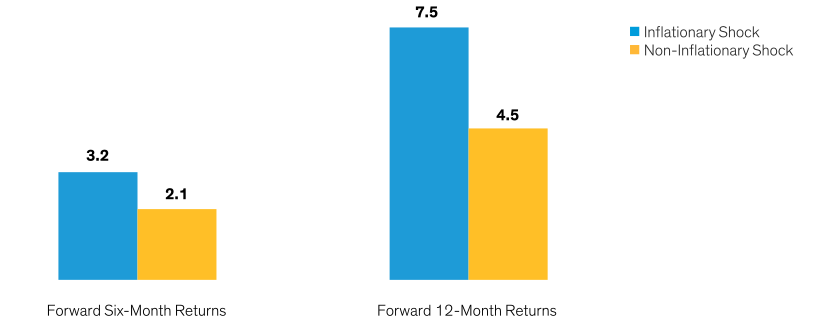
QSP stocks have a particularly strong track record during inflationary periods. Across four separate oil shocks, defensive stocks outperformed the broader market by an average of 9.5%. What’s more, the level of outperformance was closely correlated to inflation. The greater the degree of inflation, as measured by the Consumer Price Index, the more defensive stocks outpaced the S&P 500 (Display).