
Why Factor Selection Is Vital in Systematic Fixed Income

09 January 2026
1 min read
A Multifactor Approach in Action
Change in a Bond’s Multifactor Score Triggers a Purchase
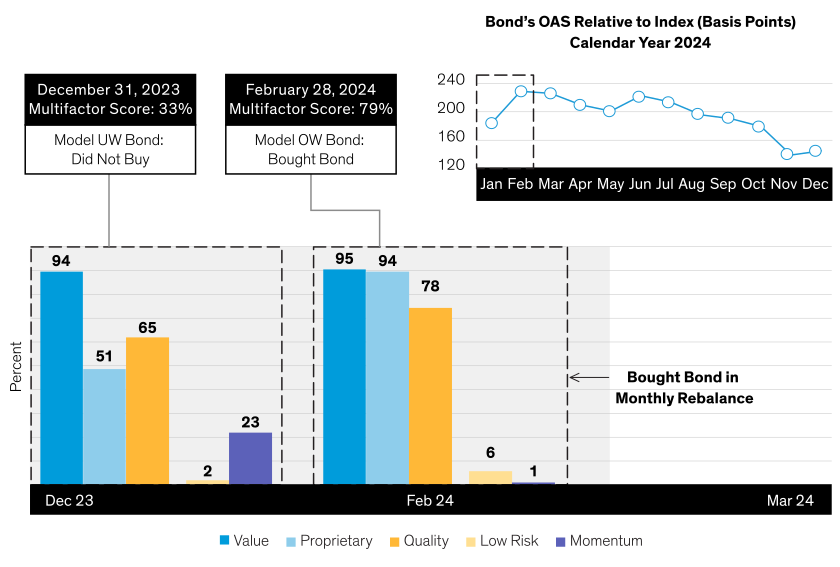
Showing factor percentile scores, the chart illustrates how the change in a bond’s multifactor score triggered a purchase.

Past performance does not guarantee future results.
OAS: option-adjusted spread; OW: overweight; UW: underweight
Factor scores are represented by percentiles. Only a selection of factor styles are shown for simplicity. 
Bond OAS represented by Bloomberg Bid OAS in basis points. Index represents Bloomberg US Corporate Bond Index. 
Source: Bloomberg and AllianceBernstein (AB)

Systematic fixed-income investing is an active approach that aims to beat bond-market returns by identifying and harnessing the factors that drive bond-market performance.

Well-known factors such as value and momentum are widely recognized to have predictive power. Advanced systematic approaches, however, seek to identify additional drivers of performance—including proprietary factors—to integrate into their multifactor models.

Using a specific bond as a case study, the display above shows how a multifactor model determined a total score for the bond based on its underlying factor scores.

At the start of the year, the bond scored highly on well-known factors such as value and quality. However, it scored low on some of the other factors. This reduced the total multifactor score, avoiding a premature purchase.

By the end of February, several of the factors’ scores had improved significantly, leading to a higher total multifactor score and to the bond being added to the portfolio. 

The views expressed herein do not constitute research, investment advice or trade recommendations, do not necessarily represent the views of all AB portfolio-management teams and are subject to change over time.