
What You Need to Know

We expect the extraordinarily low volatility that markets exhibited in the second half of 2025 to give way to more normal back and forth activity in 2026. Stretched valuations mean that investors should be cautious in their return expectations, too. With a lot of good news already priced into markets, even the generally positive news we expect may not drive large asset price returns.

Key Forecast Trends

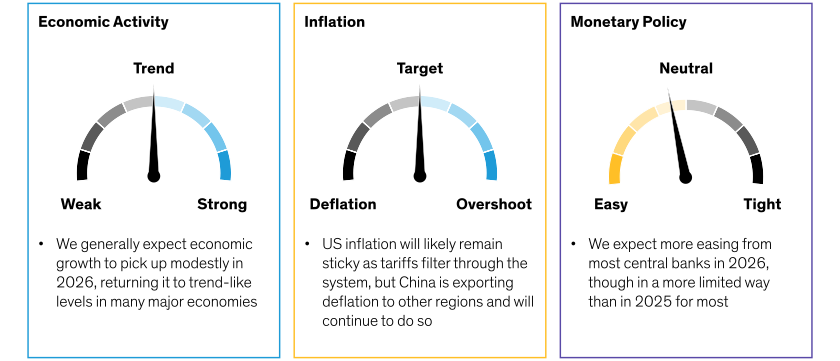
  • We continue to believe that the global economy will expand in the coming months and quarters, although that expansion may not be robust by historical standards.
  • Neither a collapse in financial markets nor a major labor market disruption is our base case, which lies somewhere in between.
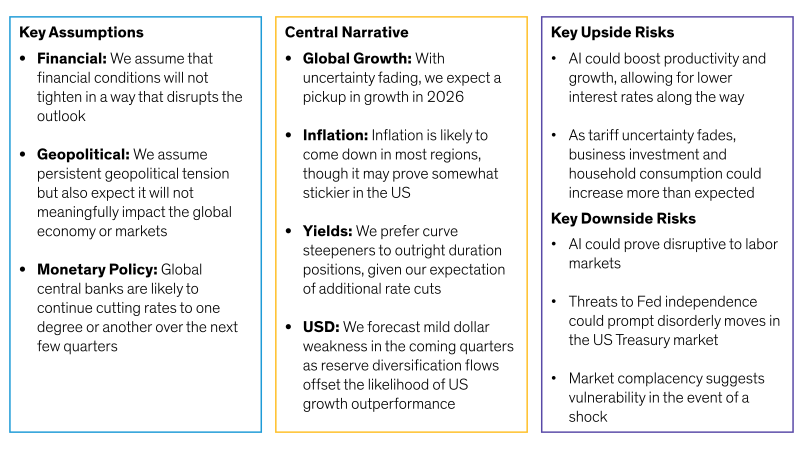
  • The case for market acceleration rests on the growing adoption of AI, the adjustment of companies to a more settled tariff regime and the accumulated impact of monetary easing.
  • If optimism over AI fades and financial market volatility increases, it could slow growth in the tech sector and generate a negative wealth effect in which consumption slows in response to lower financial asset prices.
  • While US intervention in Venezuela could be seen as idiosyncratic, we believe it reflects broader geopolitical risks that might be contagious and should, therefore, not be ignored.
  • We believe the risks in the near term are tilted enough toward the labor market that we expect the Fed to cut rates 2026 by more than the market is currently pricing in.
Global Macro Outlook: The Next Six Months
Current analysis and forecasts do not guarantee future results.
Source: AllianceBernstein (AB)

Global Forecast

Forecast Overview
Current analysis and forecasts do not guarantee future results.
Source: AB

The views expressed herein do not constitute research, investment advice or trade recommendations, do not necessarily represent the views of all AB portfolio-management teams and are subject to change over time.