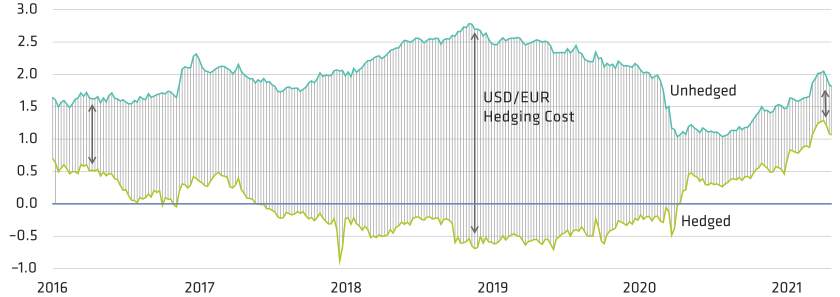
Bond investors in low-yielding regions like Europe and Japan have long had problems finding enough income. Diversifying into higher-yielding markets such as US dollar bonds can help—but the cost of hedging foreign currency risk is a central factor. Now here’s the good news: the cost of hedging US dollars into euros is the lowest in years.
Bond yields have risen in the US on expectations of faster growth and potential inflation. Although US 10-year Treasuries have backed off from their recent peak of 1.74%, they still yield significantly more than the mostly ultra-low to negative-yielding 10-year government bonds of Japan and Europe. And with the annualized cost of hedging the US dollar risk for euro investors currently at around just 0.75%, this yield gap represents a potential opportunity to earn extra income while being protected against exchange rate fluctuations.
Some investors are worried about more inflation in the US, and about further US rate rises hurting the capital value of their US bonds. But we believe the US inflation picture is a lot more nuanced than it may appear. After very subdued consumer prices during the pandemic, we expect inflation numbers to pick up strongly as economies across the States reopen and demand strengthens in the second half of this year. But once supply rebounds, we think US inflation will fall back. So upward pressure on US bond yields should moderate as investors look through the current higher inflation numbers. We expect 10-year US Treasury yields to settle between 1.5% and 2.0% by year-end.
With central banks across the developed world eager to keep base rates anchored at very low levels for several years ahead, the US Federal Reserve has also recently affirmed that it does not expect to hike interest rates anytime soon. And because interest-rate differentials are the primary driver of hedging costs, we believe that the cost of hedging USD investments into euros is also likely to stay modest for quite some time.
Of course, there’s no need for bond investors to focus exclusively on Treasuries or on longer-dated bonds. A wider range of government and corporate bonds can help spread portfolio risks across interest-rate sensitivity and credit exposures and generate extra yield. And US bonds include some niche areas with very little interest-rate risk—sectors that we think are particularly attractive now, notably the mortgage market.
In the current environment, a risk-balanced portfolio of US investment-grade and high-yield credit hedged back to euros yields almost 3.4%.* For euro-area investors facing low nominal yields into the foreseeable future, we think that this type of portfolio may represent a useful way to diversify risk as well as increase income.