

-
Past performance does not guarantee future results.
European Credit
Is There Still Value in AT1s?
18 febrero 2020
3 min read
AT1 Valuations Remain Attractive
Spreads Are Still Wide Relative to Other Fixed-Income Classes
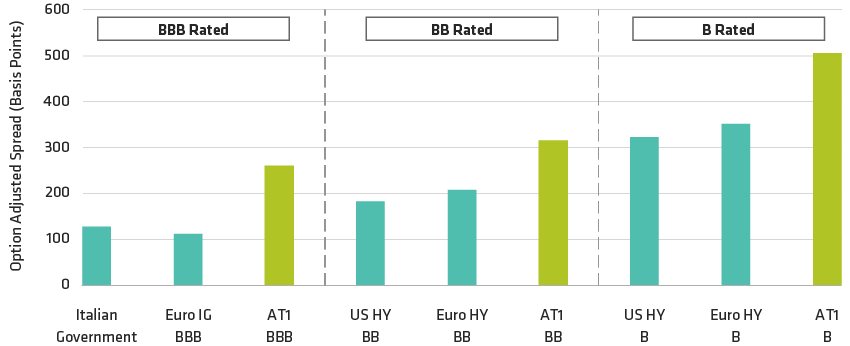
As of 31 December 2019
Analysis provided for illustrative purposes only and is subject to revision.
Source: Bloomberg Barclays and AllianceBernstein (AB)
AT1s Provide Better Upside/Downside Capture
European Banks AT1 vs European Banks Equities

As of 31 December 2019
Past performance does not guarantee future results.
European Banks' equity returns based on SX7E Euro STOXX Banks Index
European Banks' AT1 returns based on Bloomberg Barclays European Banks CoCo hedged in EUR
Source: Bloomberg Barclays and AB
-
The views expressed herein do not constitute research, investment advice or trade recommendations and do not necessarily represent the views of all AB portfolio-management teams and are subject to revision over time. AllianceBernstein Limited is authorised and regulated by the Financial Conduct Authority in the United Kingdom.